The crisis of education cannot be understood merely as a crisis of curricula or examinations. At its core, education is not simply a service provided by the state; it is one of the most important unwritten contracts between the state and its citizens. Through education, the relationship between effort and opportunity is supposed to be established. The school is expected to convince children and their families that the future can be fairer than the present.
When families lose trust in education, they do not lose trust in schools alone. They lose trust in the very idea of merit. People begin to feel that success is no longer linked to effort, that certificates no longer guarantee upward mobility, and that class differences have become stronger than the school’s ability to overcome them. At that point, the crisis of education becomes a political and social crisis, because it touches the meaning of justice in society.
During my membership in the Egyptian Senate, I followed the education file closely, particularly through my work in the Education and Scientific Research Committee, as well as through public discussions with education ministers and parliamentary proposals related to the philosophy, fairness, and stability of education. One of the issues I have always considered highly dangerous is the frequent and rapid change in Egypt’s educational system, as if every new minister begins from zero rather than from a stable national vision.
Egypt is a major country, and its educational system should not change with every ministerial change. This contradicts the most basic principles of strategic planning and the idea of a state that builds its policies on accumulated knowledge and experience, not on temporary judgments or short-term solutions. Education cannot be managed through constant experimentation on entire generations.
In this context, I submitted a request for a general discussion in the Senate, addressed to the Minister of Education, to clarify the government’s policy regarding the exclusion of the second foreign language from the overall high school grading system, a decision that effectively marginalised it academically.
This happened in Egypt, a country with African ties that extend into an important Francophone sphere; a Mediterranean country surrounded by a highly diverse linguistic environment; a tourism-based economy that depends significantly on engagement with foreigners; a large country that should be translating knowledge from and into its own language; and a country with major agreements with European partners to promote the teaching of their languages.
For me, this was not a defence of a single subject. It was a defence of an entire educational philosophy. Language is not merely vocabulary and grammar. It is a cultural and intellectual bridge, a window to the world, and a tool for understanding others without dissolving into them.
The Senate also played an important role in confronting another dangerous proposal: an amendment to the Education Law that would have allowed students to retake the general secondary school exam in return for a financial payment. The core objection was that educational opportunity should not become a commodity, and that a student’s ability to try again should not depend on the financial capacity of his or her family. When money becomes a gateway to improving one’s chances in a decisive exam, we are not reforming education; we are opening a new door to class discrimination.
The school is not merely a place for transferring knowledge. It is a major institution for producing society’s understanding of itself. Inside the school, the child learns the meaning of authority, discipline, opportunity, and fairness. The child learns whether rules apply to everyone or only to the weak. The child learns whether effort is rewarded or whether outcomes are already determined by class, money, and social connections.
For this reason, education reform requires governance, not fragmented experiments. It requires stable policies, clear indicators, real accountability, and serious social dialogue. Above all, it requires the state to understand that the school is not just a building, the curriculum is not just a book, the exam is not an end in itself, and the student is not merely a number in a database.
Technology may help, but it cannot solve the crisis of trust by itself. It may provide more data, but it does not automatically guarantee greater justice. The teacher, too, is not merely an implementer of the curriculum. The teacher is a social actor who helps shape, inside the classroom, the meanings of justice, opportunity, and trust.
In the end, education is not merely a service. It is a promise. A promise that effort has meaning, that poverty is not a final destiny, and that society does not leave its children trapped in the places where they were born. When this promise is broken, we do not lose only an educational system; we lose one of the pillars of public trust.
Therefore, a country like Egypt should not only ask how to reform education. It must ask how education can once again become a reasonable and fair path to the future. This, in my view, is one of the most important questions facing the modern state.
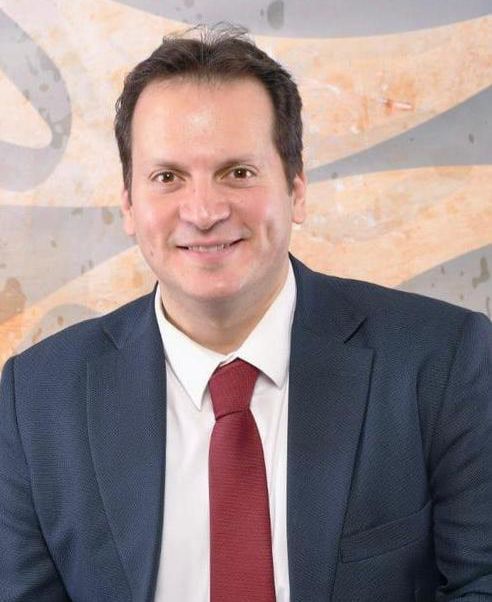
Dr Ramy Galal is a governance and institutional reform specialist focusing on state capacity, accountability, and the design of effective public institutions. His work examines how institutional arrangements shape policy outcomes and government performance, particularly in emerging and middle-income contexts. He also engages with the concept of governance of meaning as an analytical lens for understanding how authority, narratives, and interpretation influence policy environments.
He is an Assistant Professor and a former Senator, bringing a combination of academic expertise and hands-on experience across both legislative and executive domains. He previously served as an advisor and official spokesperson for Egypt’s Ministry of Planning and Economic Development, with direct involvement in policy design, government decision-making, and implementation processes at the centre of government.
He holds a PhD from Alexandria University, a master’s degree from the University of East London, and a diploma in public administration from the University of Chile.