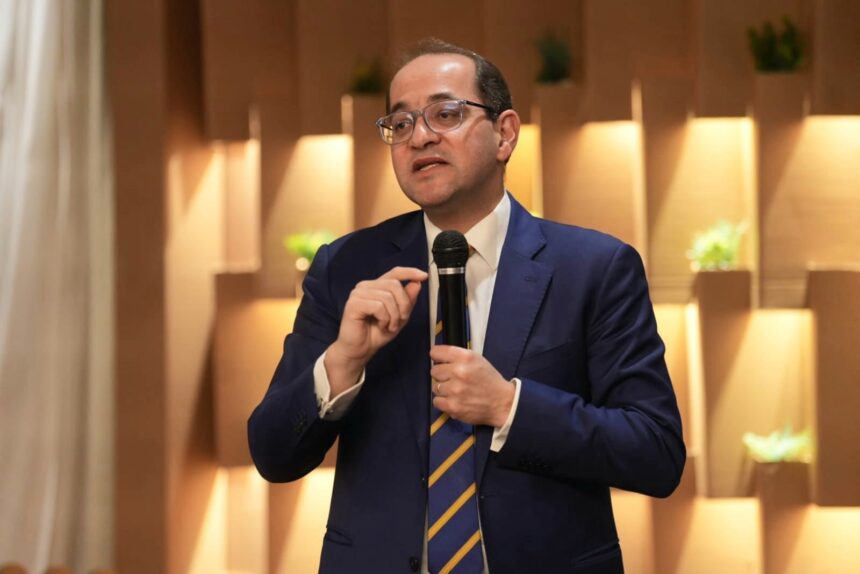
Egypt’s Minister of Finance Ahmed Kouchouk said that the Egyptian government is maintaining direct communication with investors to tackle tax, customs, and financial challenges through practical, actionable solutions. Speaking at the annual conference of the Federation of Small and Medium Enterprises Investors, which brought together entrepreneurs from across the governorates, Kouchouk praised the open dialogue with “ambitious investors” seeking to expand and grow.
“Last year, we promised the first package of tax facilitation measures, and together we delivered on that promise,” Kouchouk said, noting that the positive results confirm that “betting on the private sector always pays off.”
He explained that 120,000 taxpayers have voluntarily joined the simplified tax system. Additional financing initiatives have also been introduced to encourage further participation in this advanced and incentivised framework. Under the programme, taxpayers voluntarily submitted around 660,000 new and amended tax returns, reported business volumes amounting to EGP 1trn, and paid approximately EGP 80bn in additional taxes.
“We are proud of this valuable trust from our partners in the tax facilitation journey,” Kouchouk added. He also noted that a second package of tax facilitation measures will be presented to the House of Representatives after Eid Al-Fitr.
The Finance Minister highlighted that the government continues efforts to stimulate economic activity, expand initiatives in industry, tourism, and exports, and reduce customs clearance times to ease costs and burdens on investor partners.
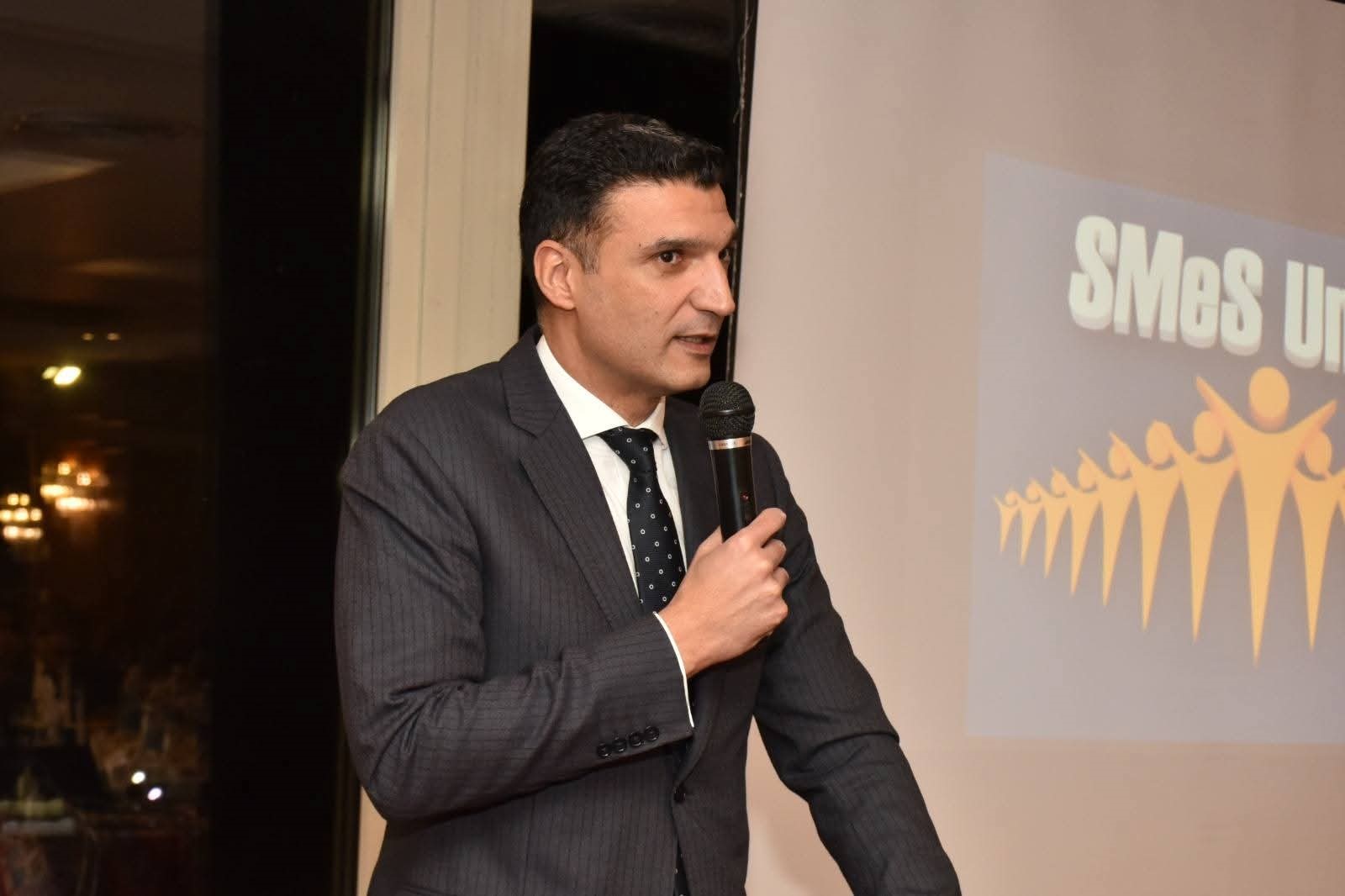
Khaled Hashem, Minister of Industry, emphasised the ministry’s commitment to strengthening communication with owners of micro, small, and medium enterprises (MSMEs), describing them as a vital link between large-scale projects and micro-enterprises, and a cornerstone of the productive economy system. He noted that sustainable industrial development requires integration and coordination across all sectors.
Hashem stressed the importance of accurate data on markets, commodities, and industrial activities. The ministry is developing mechanisms to collect and analyse economic data scientifically and systematically, linking it within an integrated knowledge framework. This will allow the private sector to utilise data for investment planning and production expansion while supporting policymakers in setting industrial priorities, identifying production gaps, and targeting investments toward high-growth sectors.
He added that the availability of a precise database on production volumes, domestic demand, and export demand will help build a clear vision for industrial development, guide investments toward sectors with the greatest need and growth potential, and boost exports.
Hashem also underlined that the ministry will focus on developing productive activities in villages and rural areas to improve household incomes, create jobs, and reduce migration to major cities. Expanding productive activities in rural regions, he said, is a key pillar of balanced economic development across governorates.
Regarding exports, Hashem explained that Egypt’s upcoming strategy will prioritise increasing the local content ratio in exported products, aiming to deepen domestic manufacturing and reduce reliance on imported inputs. Strengthening feeder industries and raising the added value of Egyptian products will enhance the competitiveness of Egyptian exports in regional and international markets.
Alaa Al-Saqti, Chairperson of the federation, noted that the current phase requires coordinated efforts between all state institutions and the business community to support the national economy and expand productive sectors, thereby increasing employment rates.
Al-Saqti praised the Finance Minister’s field-oriented approach, highlighting his ability to understand and address the challenges faced by small investors. He described this as a positive model of direct communication between government and business, and expressed hope that it could be replicated across other ministries.
He also stressed the federation’s aspiration to maintain direct and continuous engagement with the Ministry of Industry, noting that its role extends beyond highlighting challenges to actively contributing to the formulation of solutions.