Egypt has announced a suite of austerity measures and extended import facilities for basic food staples until March 2027, as the government moves to insulate the economy from surging global energy prices and regional military developments.
The Central Bank of Egypt (CBE) on Tuesday extended an exemption for rice, beans, and lentils from the 100% cash cover requirement for trade imports. The waiver, now effective until March 15, 2027, is intended to ease financing burdens for importers and ensure the steady flow of essential commodities.
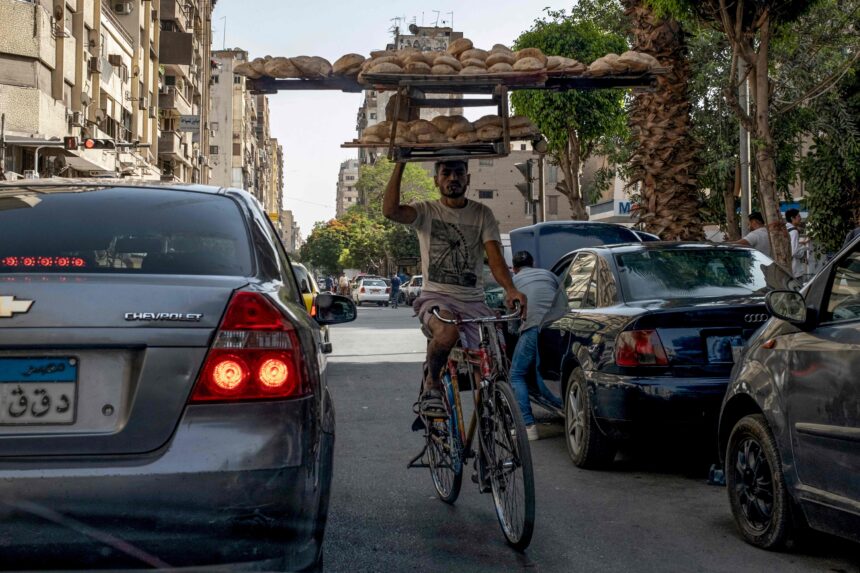
Supply Minister Sherif Farouk said on Tuesday that the price of subsidised bread remains unchanged and that strategic reserves for all commodities are at secure levels. Speaking at a press conference led by the Prime Minister, Farouk added that authorities would strictly monitor markets to prevent price manipulation or the hoarding of goods.
Fuel and natural gas prices hike
Egypt raised fuel and gas prices by between 14% and 30% early Tuesday, as regional military tensions drove the national currency to EGP 52 per US dollar.
The Ministry of Petroleum and Mineral Resources said the price adjustment—the third in 12 months—was necessitated by “exceptional circumstances in global energy markets.” The increase added EGP 3 per litre to all petrol grades. Under the new pricing, 95-octane petrol rose 14.29% to 24 EGP per litre, 92-octane increased 15.58% to 22.25 EGP, and 80-octane rose 16.9% to 20.75 EGP.
The hikes come as the Egyptian pound lost 4.6% of its value against the dollar in a single week, erasing eight months of gains. CBE data showed the pound traded at an average of EGP 51.93 for purchase and EGP 52 for sale per dollar on Tuesday. Analysts attributed the pressure to the exit of “hot money” from local treasury bills following the escalation of conflict between the United States and Iran.
No room for price manipulators
The measures coincide with a directive from President Abdel Fattah al-Sisi for the government to study the referral of price manipulators to military courts. Al-Sisi stated that the country is in a “near-emergency state” and warned against the exploitation of current exceptional circumstances to raise prices or meddle with the needs of citizens.
The government’s central crisis committee has implemented a package of “temporary” precautionary steps to manage the fallout of regional instability. This includes a decision to re-price certain petroleum products to reflect global market shifts, according to a Ministry of Petroleum statement issued Tuesday morning. The government noted it would continue to bear a significant portion of energy costs to maintain market stability.
To support vulnerable populations, Prime Minister Mostafa Madbouly announced an extension of additional cash support for beneficiaries of the Takaful and Karama programme and eligible ration card holders for two months. The government also plans to announce an early package of wage improvements for state employees for the 2026/2027 fiscal year, which will include a rise in the minimum wage.
The Prime Minister issued a decree to rationalise public spending across all state administrative units and economic authorities. The decree mandates the re-prioritisation of expenditure, the postponement of non-urgent costs, and restrictions on travel, conferences, and advertising. Investment spending will now focus on projects that are nearing completion to maximise resource efficiency.
“The state begins these measures with itself,” the government stated, adding that governors will conduct daily monitoring of electricity consumption, specifically for street lighting, public squares, and commercial billboards.
The government is coordinating with the Central Bank to increase foreign exchange resources by engaging with international financial institutions to accelerate scheduled financing tranches. Plans are also underway to expand the government IPO programme, attract direct foreign investment, and support commodity and service exports.
Monetary policy will remain focused on targeting and reducing inflation in line with CBE goals, while ensuring exchange rate flexibility based on market mechanisms. The government confirmed it is moving forward with financial reforms, including the approval of a second package of tax facilities and the implementation of recent real estate tax reliefs.
Officials stressed that these measures are temporary responses to exceptional conditions in global energy markets. The government stated it remains ready to review these policies should international market conditions improve, while maintaining that the protection of economic and social stability remains its primary priority.