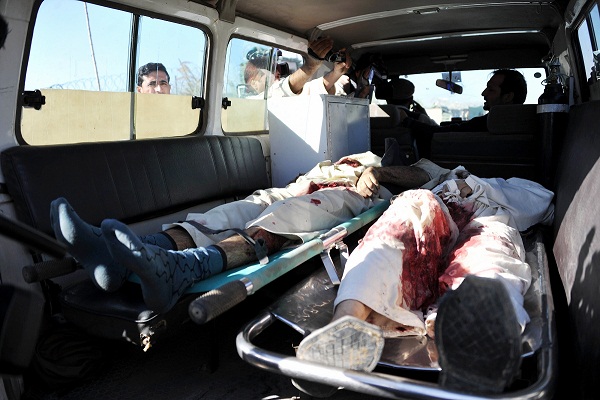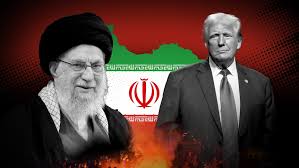
The buildup of U.S. military power in the Middle East is approaching its peak, as uncertainty hangs over the outcome of ongoing negotiations between Washington and Tehran in the Omani capital, Muscat. The world is watching for an answer to one decisive question: is this a tactical manoeuvre designed to force Iran into negotiating under fire from a position of weakness, or a strategic move aimed at fundamentally reshaping the regional balance of power by toppling the rule of the Ayatollahs?
In recent weeks, widespread speculation has suggested that a potential U.S. attack on Iran would focus on dismantling the regime through intensive airstrikes. Yet one critical reality must be acknowledged: the U.S. administration understands—through close monitoring of Iranian protests—that there is no genuine prospect of overthrowing the Khamenei system through street demonstrations alone.
Regime change by force is hardly a departure from American foreign policy tradition. Washington has a long record of intervening to replace governments it deems a threat to its interests or to global security, whether through direct military action or covert intelligence operations. The U.S. military has been deployed for this purpose in Panama (1989), during Operation Just Cause to remove General Manuel Noriega; in Afghanistan (2001), to overthrow the Taliban after the September 11 attacks; in Iraq (2003), to depose Saddam Hussein under the pretext of weapons of mass destruction; and in Libya (2011), where a NATO-led intervention culminated in the fall of Muammar Gaddafi.
During the Cold War, the CIA was even more active in orchestrating or supporting coups against—often left-leaning—governments to prevent the expansion of Soviet influence. These included Iran (1953), when Prime Minister Mohammad Mossadegh was overthrown in Operation Ajax and the Shah restored; Guatemala (1954), with the removal of President Jacobo Árbenz to protect U.S. corporate interests; and Chile (1973), through backing the military coup led by Augusto Pinochet against the democratically elected President Salvador Allende.
President Donald Trump, who embraces and promotes the doctrine of “using force to impose peace,” places few limits on the application of power and shows little commitment to the shifting conditions of peace itself. He has already tested this approach to regime pressure in Venezuela, on his own terms and by his own rules. Nor should it be forgotten that last June he took a step no previous U.S. administration had dared to take, ordering American forces to join Israel’s campaign against Iranian nuclear sites in what became known as the 12-day war. Yet a one-off, calibrated strike is not comparable to a comprehensive and systematic assault aimed at remaking an entire political order.
Should negotiations fail, the options before both sides would narrow dramatically. For Trump, the choice would be stark: either risk launching an attack with unpredictable consequences—potentially igniting multiple regional conflicts that could target American interests across the Middle East, while leaving a power vacuum in Iran that may prove impossible to fill given the country’s geopolitical position and complex social fabric—or settle for a flawed deal that could provoke backlash from regional and international actors and grant Iran renewed economic and political breathing space.
Tehran’s options are no less dire. It can absorb a military strike fraught with unlimited risks, including external support for domestic protesters—an outcome that could open the door to the collapse of the regime and everything it has built since 1979. Or it can agree to blunt its ambitions by relinquishing its nuclear and missile programmes and dismantling its regional proxies, a move that would strip the regime of its ideological armour and leave it exposed before an Iranian public it has mobilised around these ambitions for five decades.
History shows that pursuing objectives divorced from real power balances turns strategy into fantasy; clinging to them breeds rigidity, stagnation, and ultimately collapse. The negotiations between Iran and the United States are, at their core, a clash of wills: between Iranian national aspirations that may exceed the country’s capabilities and collide with regional realities, and the vision of an American president overseeing a region that supplies roughly 30% of the world’s oil—a vision rooted in brute force and reinforced by a regional ally, Israel, eager to position itself as the Middle East’s chief enforcer.
At the same time, Israel is increasingly anxious about the possibility of a deal with Tehran that sidelines Iran’s long-range missile programme. The anticipated meeting between President Trump and Prime Minister Benjamin Netanyahu on Wednesday is likely to address this scenario, which Tel Aviv categorically rejects—particularly Iran’s refusal to abandon uranium enrichment. Yet Israel also acknowledges Washington’s willingness to consider progress on certain fronts, even if that means postponing others.
Accordingly, the chances of success for the Muscat talks may evaporate unless all participants embrace the principle that “necessity demands flexibility,” particularly as U.S. military support continues to flow into the Gulf. If this principle is ignored, a U.S. strike on Iran becomes only a matter of time—driven by President Trump’s apparent willingness to wager on failure as the trigger for a new military campaign against Tehran’s regime, which he views as a necessary evil.
Ultimately, the region does not appear to be drifting towards a routine political agreement, but towards a historic collision between two irreconcilable projects. As Oman bears witness to attempts at taming the storm within negotiation rooms, U.S. warships in the Gulf continue to draw new boundaries for the region—etched in gunpowder. The “flexibility” imposed by necessity today is not a diplomatic luxury or a tactical choice; it is the final lifeline. If it snaps, the region will not face a “deal of the century,” but a “war of the century”—one that Trump appears ready to wage in pursuit of his own version of peace.
Prof. Hatem Sadek – Helwan University