


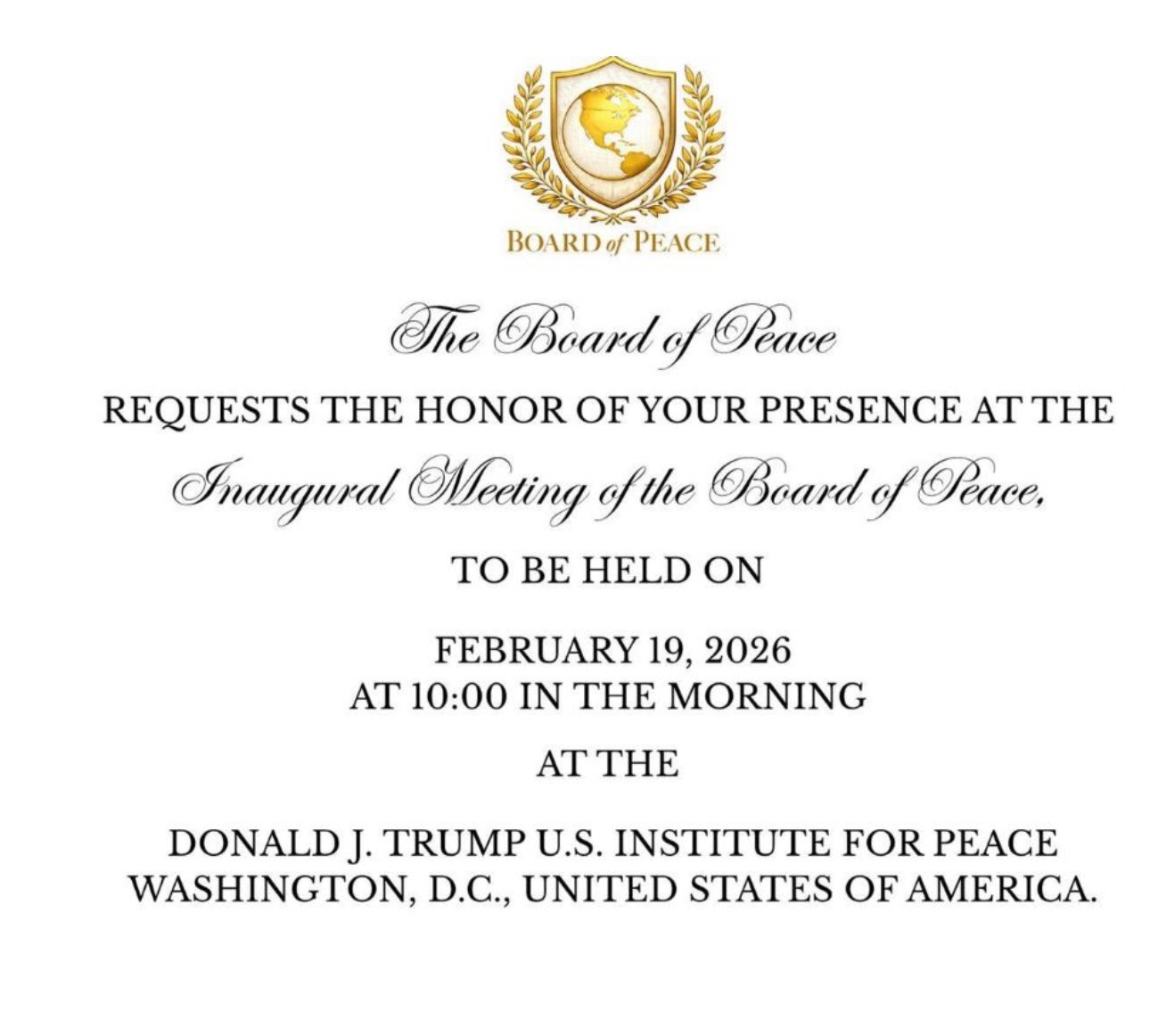
On the banks of the Potomac, within the freshly rebranded Institute of Peace, the traditional language of diplomacy is being replaced by the lexicon of the boardroom. “The Council will do a great job in Gaza,” Donald Trump had declared in the thin mountain air of Davos just weeks ago, and now, the invitation lists are being finalised for a 19 February summit that seeks to turn that rhetoric into brick and mortar. For the 27 inaugural members of the “Peace Council,” the Washington gathering is no longer a theoretical exercise—it is the moment the “business of peace” meets the reality of the rubble in the Gaza Strip.
The summit follows a whirlwind of activity that began at the World Economic Forum in Davos this January. There, the American president signed the Council’s charter, transforming a conceptual proposal into what the White House now calls an “active international organisation.” With 27 members already on board and a mandate from the UN Security Council to oversee Gaza’s governance and recovery, the February summit represents the first real test of whether Trump’s “business-first” approach to Middle Eastern peace can translate into stability on the ground.
Why Now?
The Washington summit serves as the critical “why now” for regional stability, marking the formal activation of the Peace Council’s executive power to manage Phase Two and Phase Three of the Gaza ceasefire. By centralising reconstruction funds and offering permanent membership for a $1bn fee, the Trump administration is attempting to bypass traditional multilateral delays. This effectively creates a new template for global conflict resolution that prioritises financial commitment and executive speed over historical diplomatic precedent.
A New Architecture for Global Diplomacy
The Peace Council is designed with the structure of a corporate board rather than a traditional assembly, reflecting a shift in how Washington intends to manage international crises. While its current focus remains strictly on the Gaza Strip, President Trump has indicated that the Council’s remit will eventually expand to solve other conflicts across the globe.This corporate-style governance is reinforced by an Executive Committee that includes US Secretary of State Marco Rubio, special envoy Steve Witkoff, Jared Kushner, and former British Prime Minister Tony Blair.
Rubio has been quick to dismiss concerns from Western allies who fear the Council is a shadow UN Security Council, asserting that it was established by a UN resolution and is not a replacement for the United Nations. He maintains that its mission is focused exclusively on managing the second and third phases of the Gaza plan, though the Council’s charter provides the US President with broad powers that have caused some hesitation among traditional European allies.
The financial framework of the Council is equally unconventional, as it introduces a “pay-to-play” model into the realm of international peace-building. While standard memberships are granted for three-year terms, the charter specifies that any nation willing to contribute $1bn to the Council’s activities will secure a permanent seat. This mechanism is designed to generate the massive capital required for the Gaza rebuild, though it has drawn criticism for potentially sidelining nations with significant diplomatic weight but smaller treasuries.
Regional Alignment and the Ljubljana Consensus
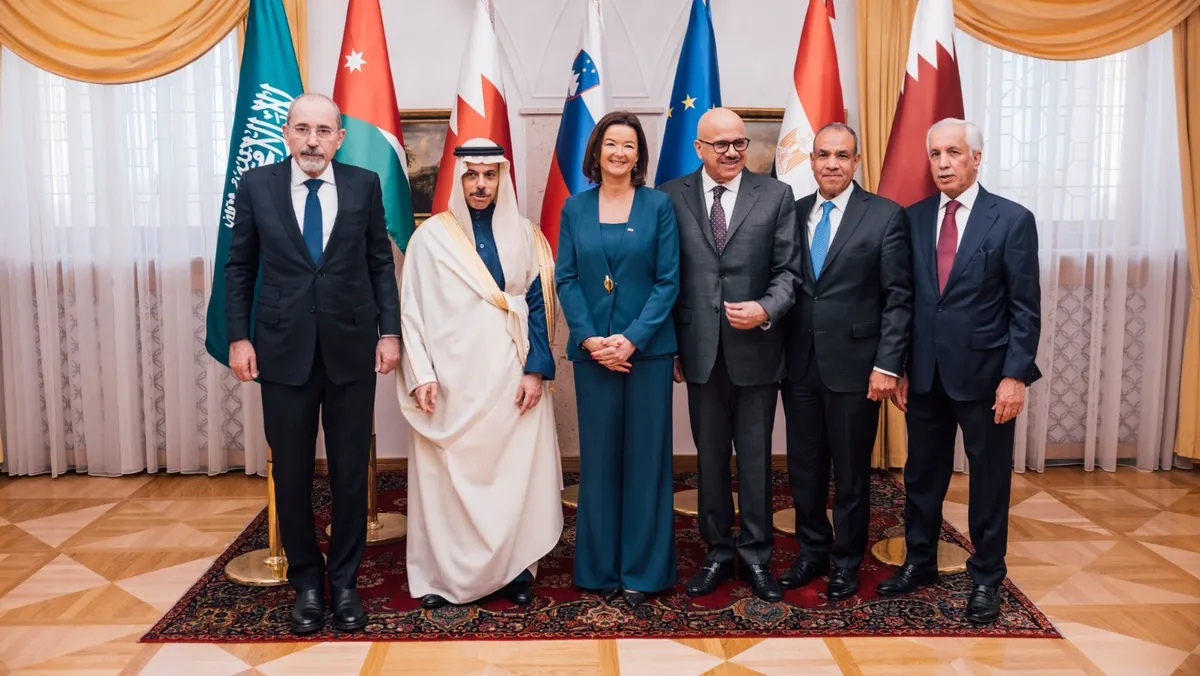
While Washington prepares for the summit, the Arab-Islamic Ministerial Committee met on Friday in Ljubljana, Slovenia, to coordinate a unified regional stance. The session, convened by Slovenian Foreign Minister Tanja Fajon, included high-level representation from Egyptian Foreign Minister Badr Abdelatty, Saudi Foreign Minister Prince Faisal bin Farhan, and Jordanian Foreign Minister Ayman Safadi. Their discussions focused on the practicalities of governance, specifically the empowerment of the National Committee for Gaza Management and the necessity of an international stability force to oversee the ceasefire and the unrestricted flow of humanitarian aid.
Minister Abdelatty expressed Egypt’s appreciation for Slovenia’s support of Palestinian rights and underscored the importance of maintaining the territorial integrity of the Palestinian lands. He argued that the transition to Phase Two must involve the deployment of international monitors and the training of Palestinian police to ensure a smooth transition of power. This regional consensus appears cautiously optimistic, provided that the Peace Council’s framework remains tethered to a sovereign Palestinian state based on the 1967 borders.
The diplomatic movement in Europe suggests that regional powers are looking for a pragmatic path forward. Prince Faisal bin Farhan noted that the meeting focused on how to support the Trump peace plan to end the bloodshed, while Ayman Safadi highlighted the urgency of stabilising the ceasefire before the humanitarian situation worsens further. Both leaders emphasised that while the Peace Council offers a new mechanism, the ultimate goal must remain a comprehensive political settlement that addresses the root causes of the conflict.
The Israeli Factor and the 18 February Prelude
The timing of the Washington summit is surgically precise, with a critical precursor scheduled just twenty-four hours earlier. Israeli Prime Minister Benjamin Netanyahu is set to meet President Trump at the White House on 18 February to discuss the specific security arrangements required for the transition. While Netanyahu has accepted the invitation for Israel to join the Council, he has notably not yet signed the charter, making this one-on-one meeting a pivotal moment for the success of the subsequent summit.
Negotiations are expected to centre on the “Phase Two” transition, which includes the sensitive issue of security corridors and the presence of international monitors. These points remain contentious within Netanyahu’s own cabinet, and the outcome of the 18 February meeting will likely dictate the tone of the broader Peace Council assembly the following day. For Trump, securing Netanyahu’s signature on the charter would be a significant diplomatic victory and a signal to other hesitant nations that the new system is viable.
Gaza: From Ruins to Reconstruction
As the 19 February summit approaches, the focus is shifting from the mechanics of conflict to the logistics of recovery. The Peace Council’s success hinges on its ability to turn billion-dollar membership fees into the roads, schools, and hospitals of a reconstructed Gaza. Whether this boardroom diplomacy can succeed where decades of traditional statecraft failed remains the defining question of 2026. As President Trump remarked during the charter signing in Davos, the goal is to succeed in Gaza before moving on to other global files, leaving the international community to watch whether this new model of “investment-based peace” can deliver on its ambitious promises.


