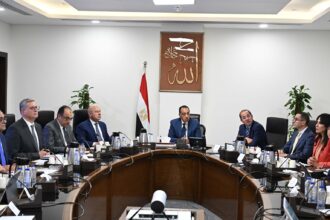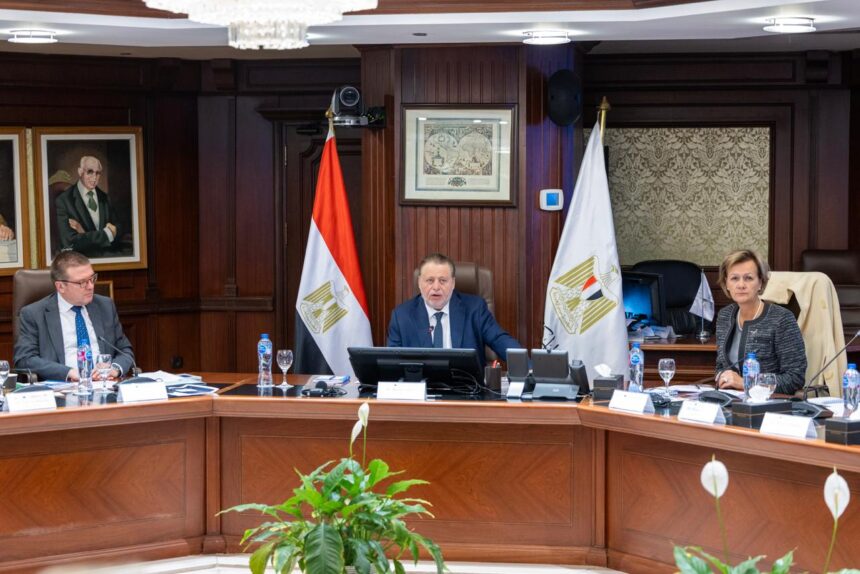
Hassan Abdalla, Governor of the Central Bank of Egypt (CBE), and Angelina Eichhorst, European Union (EU) Ambassador to Egypt and the League of Arab States, inaugurated the 9th Steering Committee Meeting of the EU-funded regional initiative to support African central banks through capacity building, titled “Strengthening Financial Stability, Resilience, and Governance – Towards an Enhanced European System of Central Banks (ESCB) Dialogue with Africa”.
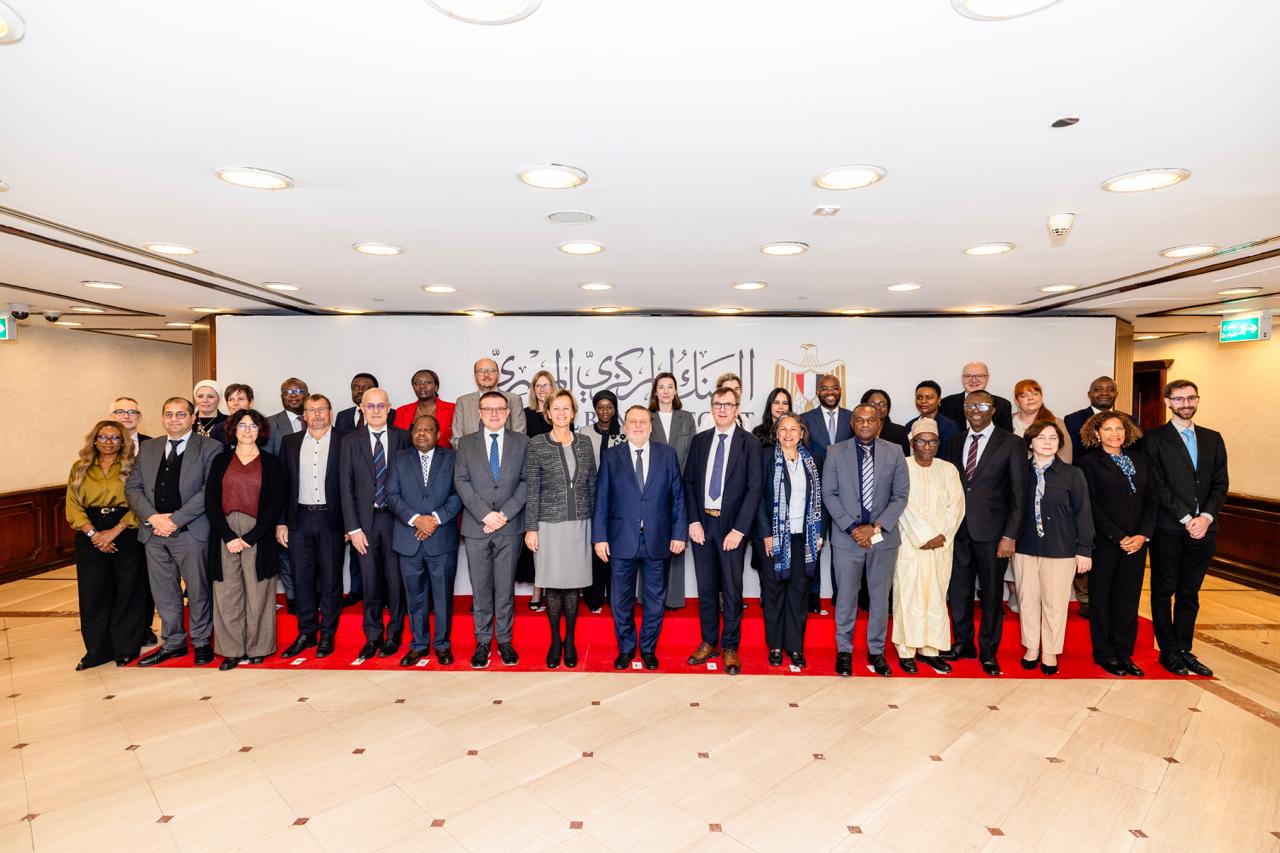
The meeting was hosted at the CBE’s headquarters on Tuesday, 20 January 2026, with the participation of representatives from a number of European and African central banks.
During the meeting, participants announced the extension of the programme for an additional two years, until December 2027, with the aim of further fostering macroeconomic and financial stability across the African continent.
On this occasion, CBE Governor Hassan Abdalla said that since the programme’s launch in December 2023, it has demonstrated the importance of peer-to-peer cooperation between African and European central banks. He noted that the initiative has delivered tangible benefits for African central banks, including capacity development, knowledge exchange, and support for reform efforts to address global economic challenges.
Abdalla added that extending the programme will enable the expansion of technical assistance and capacity-building activities, while strengthening policies and frameworks that promote financial stability, transparency, and sustainable economic growth.
The EU-funded ESCB programme aims to support reform efforts and enhance financial resilience, thereby contributing to multilateral trade, investment, and sustainable development. It also focuses on several priority areas, including climate change, digitalisation, artificial intelligence, governance, and anti-money laundering.
The initiative is implemented by the Deutsche Bundesbank and the Banque de France, in partnership with the European Central Bank, the National Bank of Belgium, Banco de España, Banca d’Italia, Lietuvos Bankas, Banco de Portugal, and Národná banka Slovenska.
The programme benefits a number of African central banks, including the Central Bank of Egypt, the National Bank of Angola, the Central Bank of West African States (BCEAO), the Bank of Central African States (BEAC), the Bank of Ghana, the Central Bank of Kenya, Bank Al-Maghrib, the Bank of Mozambique, the Bank of Namibia, the South African Reserve Bank, the Bank of Tanzania, and the Central Bank of Tunisia, covering a total of 24 African countries.