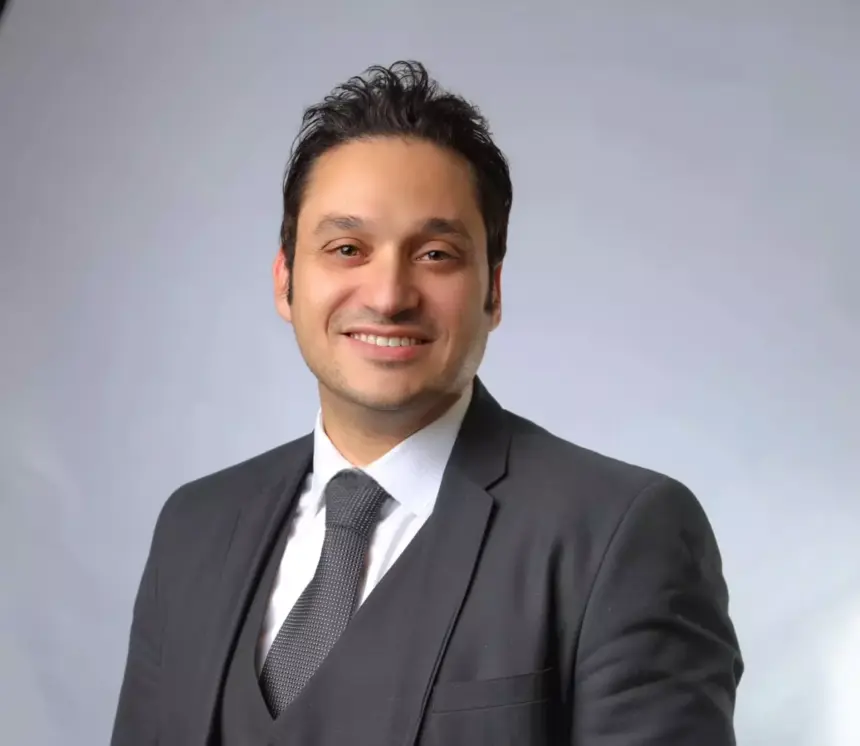
Egypt’s mortgage finance sector remains severely underdeveloped, accounting for only 0.3% of gross domestic product, compared with around 41% in markets such as Morocco and South Africa and nearly 50% in the United States, according to Ihab Omar, Managing Director and CEO of Qasatli Mortgage Finance.
In an interview with Daily News Egypt, Omar said the stark disparity underscores the vast untapped potential of Egypt’s real estate finance market and highlights the urgent need for legislative reforms and targeted incentives to revive mortgage lending activity.
He noted that existing regulatory constraints significantly limit mortgage finance companies’ ability to serve individual homebuyers, forcing many firms to redirect a substantial portion of their operations towards financing developers’ portfolios rather than end-user demand.
Omar explained that Qasatli supports low-income clients by guiding them towards suitable financing programmes in cooperation with banks, particularly within state-led housing initiatives. The company prioritises ready-to-deliver units in order to minimise risks for all parties involved.
Financing challenges
Despite strong underlying demand, real estate developers continue to face major difficulties in securing financing, Omar said. Bank approval processes can take up to eight months, while mortgage finance companies are regulated under the same framework as consumer finance firms, despite fundamental differences between the two activities.
“Unlike consumer finance, mortgage lending is backed by fixed assets rather than consumable goods,” he explained.
Omar also pointed to the reliance on a single foreign credit rating agency to assess mortgage finance companies, with fees charged in U.S. dollars. As a result, only firms with portfolios exceeding EGP 1bn are able to absorb these costs, while small and mid-sized companies face financial pressures that may outweigh potential returns.
Ending the ‘developer as a bank’ model
Omar stressed that restoring discipline to the real estate market requires ending the practice of the “developer as a bank”. He called on developers to halt direct instalment sales and instead delegate financing and collection to banks and specialised financial institutions, ensuring proper governance of cash flows and preventing the commingling of project finances.
He outlined several risk-mitigation mechanisms for financing under-construction units, including the use of escrow accounts, whereby a portion of the financing portfolio is set aside as a reserve to address potential defaults. This mechanism, he said, acts as a safety valve for all stakeholders.
Omar also advocated activating irrevocable letters of guarantee (LGs) as a genuine test of developers’ financial strength, limiting reliance on paper sales or unrealised revenues.
Innovative solutions for distressed clients
Omar noted that distressed buyers—particularly those who purchased units years ago and are no longer able to meet delivery payments—often face contract termination, losses of up to 10% of unit value, and lengthy refund timelines.
To address this challenge, Qasatli has introduced innovative solutions, including rescheduling instalments over 10 to 15 years instead of the typical four, significantly reducing monthly payments and giving clients a realistic opportunity to retain their units.
In a first for the Egyptian market, the company has also launched a “resale instalments” model, under which Qasatli settles the client’s outstanding dues to the developer and then resells the unit to a new buyer through an instalment plan. The structure is designed to create a win-win outcome for all parties.
Omar cited an example in which a unit originally priced at EGP 6m, with EGP 2m already paid by the buyer, could be resold for EGP 8m. The original buyer recovers their down payment, while the remaining amount is paid by the new buyer in instalments, with Qasatli managing risk and overseeing the transaction.
He concluded that such solutions help unlock stagnant inventory, stabilise the market, and prevent price collapses driven by individual defaults, reinforcing the resilience of Egypt’s real estate sector as a long-term investment destination.
Market outlook
Looking ahead, Omar expects property prices to rise by 15% to 20% in 2026, with potential increases reaching up to 40% by year-end, driven by higher construction costs, sustained demand, and improved financing mechanisms should the proposed reforms be implemented.