

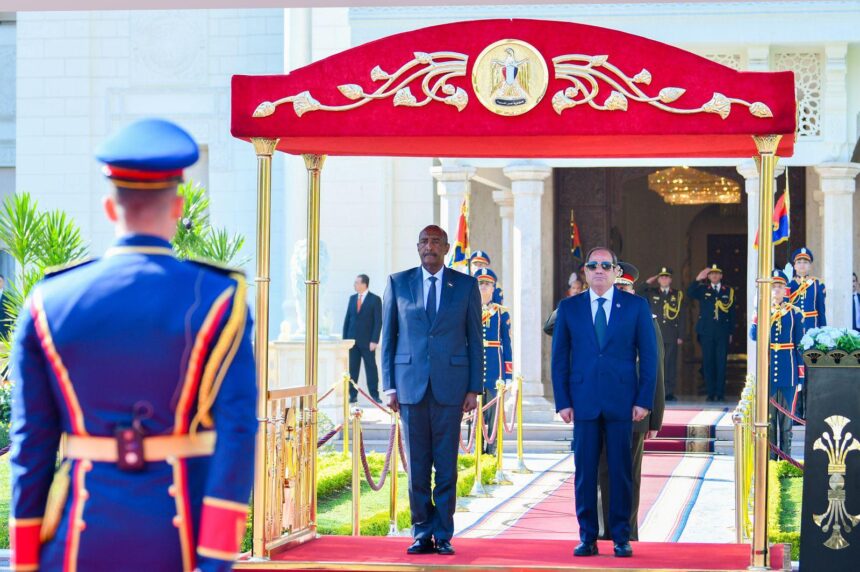
What is unfolding in Sudan amounts to the suicide of all values and norms traditionally associated with the very concept of the state, whether in peace or in war. Regrettably, this scene has been repeatedly reenacted across the Arab region in recent years. The stability and peace of any state rest on three fundamental pillars: first, an element of interests that are, at the very least, non-contradictory; second, an element of security that does not reach the point of collision; and third, a cultural element that is organically connected and not fragmented.
In times of conflict, additional conditions must be met: there must be decisive popular support, a clearly defined and realistically attainable objective, and, finally, that objective must be morally justified and at least legally defensible. All of these conditions have collapsed, or have been deliberately dismantled with premeditation and intent.
The figures circulated by international media regarding the war in Sudan reflect the sheer magnitude of the catastrophe. More than 15 million people have been internally displaced, over 4 million Sudanese have been forced to seek refuge outside the country, and nearly 25 million are suffering from food insecurity. These indicators render the Sudanese situation the largest humanitarian disaster in the world today, imposing an urgent need for collective action—one that is not merely political, but moral and humanitarian as well.
Much water has flowed under the bridges in Sudan’s unfolding events. Necessities have become entangled with prohibitions, to the point where no single compass now guides the country toward independence and stability.
Sudan has been torn apart by an unnecessary proxy war, fuelled by external conflicts and agendas that have exceeded even what their architects initially aspired to achieve.
Egypt’s position in any regional or international conflict is grounded in firm and enduring principles, foremost among them the preservation of the state’s constants and achievements, its official institutions, the national army, the unity and independence of its territory, and adherence to relevant international legal frameworks governing the conflict in question.
For Egypt, however, Sudan represents far more than these general principles: it constitutes a strategic depth and a matter of national security directly linked to the very survival of the Egyptian people through the lifeline of the Nile waters. As the conflict in Sudan reached its peak, with all moral and humanitarian constants collapsing amid horrific massacres and unprecedented violations of the most basic human rights, particularly in Darfur’s El-Fasher, it became imperative for Cairo to step forward and declare its red lines, which it will neither allow to be crossed nor tolerate any leniency regarding them. Any breach of these lines constitutes a direct threat to Egypt’s national security, which is inextricably linked to Sudan’s own national security. Egypt thus reaffirmed its right to take all measures guaranteed by the Joint Defence Agreement between the two countries to ensure that these red lines are not violated.

The Egyptian statement conveyed clear political messages and opened the door to an in-depth reading of its implications and potential repercussions on the political landscape, without ambiguity. It renewed Egypt’s full support for U.S. President Donald Trump’s vision for achieving security, stability, and peace in Sudan, within what it described as the U.S. administration’s broader orientation toward peacebuilding, de-escalation, and conflict resolution worldwide. Preserving Sudan’s unity and territorial integrity, and preventing any tampering with its resources or those of the Sudanese people, stand at the forefront of these red lines—explicitly affirming the rejection of “the establishment or recognition of any parallel entities, or the secession of any part of Sudanese territory.”
The most decisive and unprecedented element of the statement lay in its explicit affirmation of Egypt’s “full right to take all necessary measures and procedures guaranteed by international law and by the Joint Defence Agreement between the two countries to ensure that these red lines are neither breached nor violated.” It is worth recalling that this agreement was concluded in the context of strengthening bilateral ties following the signing of the Political Action and Economic Integration Programme in February 1974, as part of broader efforts toward military and security integration. Its objective is to coordinate efforts to safeguard the security and stability of both countries and to enhance their defensive capabilities in the face of regional challenges, particularly those confronting the Arab nation.
This is the decisive message that warrants careful and prolonged reflection. It grants Egypt, by virtue of its legitimate right to protect its security and stability, the authority to employ all “measures and procedures” at its disposal. Several lines must be firmly drawn beneath this phrase, for it encompasses the full spectrum of Egypt’s capabilities in safeguarding its national security. Egypt has previously employed the very same formulation with regard to the Nile waters, as articulated by the Egyptian Minister of Foreign Affairs, Badr Abdel Aaty.
Nevertheless, Egypt will continue to prioritise diplomatic engagement within the framework of the international quartet, with the aim of reaching a humanitarian truce that leads to a ceasefire. Such a truce would include the establishment of safe humanitarian corridors and shelters to ensure security and protection for Sudanese civilians, in full coordination with Sudanese state institutions.
Regional conditions in the Nile Basin, extending to the Red Sea coast and the Horn of Africa, are far from stable. There are actors seeking to undermine security in these areas in service of non-national agendas, while others are attempting to exploit the security vacuum created by weakened state authority, stemming from internal and tribal conflicts, to establish a foothold extending toward the Red Sea. Egypt has repeatedly warned that the security of the Red Sea is the exclusive responsibility of its littoral states, in accordance with United Nations rules and international law.
Within this context, Cairo also shares a common vision with the countries of the Horn of Africa regarding national security priorities. This vision rejects any unilateral measures that seek to reorder regional realities at the expense of others and emphasises the necessity of respecting international law in a manner that serves the collective interests of all states involved.
The United States shares this vision, particularly in its pursuit of a humanitarian truce in Sudan “without preconditions, to end the suffering of the Sudanese people,” and to halt the ongoing war and conflict.
Accordingly, the international quartet initiative (the United States, Saudi Arabia, Egypt, and the United Arab Emirates) remains the most acceptable framework for reviving the political process in Sudan and launching a transitional phase that places the country on the path toward civilian governance, away from attempts by certain actors to destroy what remains of Sudanese state institutions under the pretext of combating militias and terrorist organisations.
At this critical juncture, it is imperative to present a clear and well-defined roadmap based on three tracks: first, the declaration of a truce and the initiation of humanitarian arrangements to alleviate civilian suffering and ensure the delivery of aid; second, a comprehensive ceasefire; and third, the launch of an inclusive political process that lays the foundations for a genuine democratic transition capable of salvaging what remains of this country.
Prof. Hatem Sadek – Helwan University

