

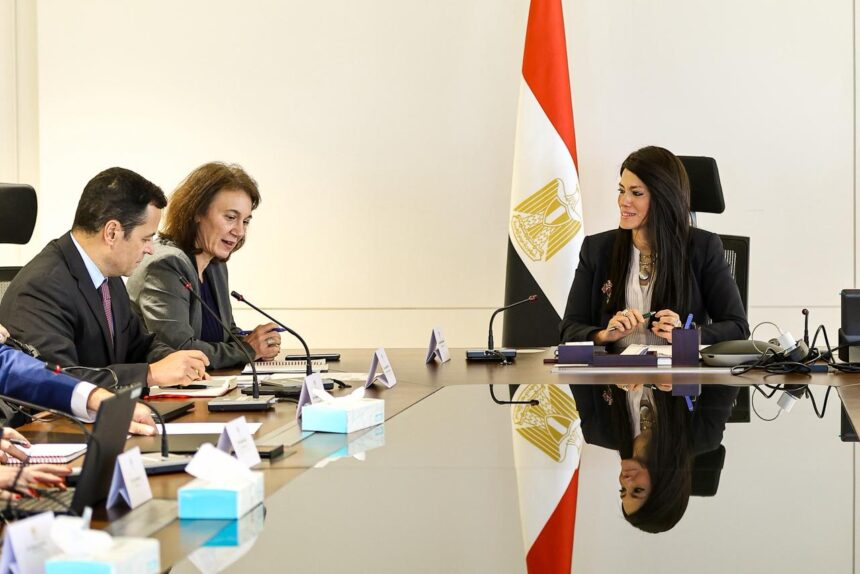
Egypt expects its economy to grow by at least 5% by the end of the current fiscal year, supported by a continued pace of structural reforms, Planning Minister Rania Al-Mashat said on Saturday.
Speaking during a meeting with an International Monetary Fund (IMF) mission in Cairo, Al-Mashat reported that Gross Domestic Product (GDP) growth reached 5.3% in the first quarter of the year, a figure she described as exceeding expectations.
The talks were held as part of the fifth and sixth reviews of Egypt’s economic reform programme.
Al-Mashat attributed the first-quarter performance to improvements in industrial production, citing increased growth rates in sectors such as vehicles, textiles, and ready-made garments. She stated this indicates a shift toward high-productivity, tradable sectors.
To maintain macroeconomic stability, the minister highlighted the government’s adherence to a public investment ceiling of EGP 1trn last fiscal year. She noted that limiting public spending had “opened the way for more private-sector investments”.
On structural reforms, Al-Mashat pointed to the establishment of a State-Owned Enterprises Unit. The unit has been granted a mandate to maximise asset value and determine the most appropriate scenarios for state-owned companies, in line with the State Ownership Policy Document aimed at empowering the private sector.
The minister also presented “Egypt’s Narrative for Economic Development,” a framework designed to transform the economic model to focus more on production and exports. She added that the ministry’s “Quarterly GDP Note” now includes data on structural reforms to improve transparency.
Regarding climate policy, Al-Mashat told the mission that two new projects had been added to the “NWFE” country platform to support the transition to renewable energy. She also outlined efforts to integrate environmental dimensions into public investment criteria to address climate risks to assets.
The ministry is currently implementing the “Adaa” system to monitor national and sectoral policies, aiming to link allocated appropriations to specific results and ensure public spending efficiency, Al-Mashat said.
