

Egypt on Wednesday rejected Israeli claims that the two sides had reached an agreement to reopen the Rafah crossing in one direction to allow Palestinians to leave the Gaza Strip, stressing that no coordination or discussions had taken place, according to the State Information Service (SIS).
Diaa Rashwan, Head of SIS, said Egypt’s position has been “clear since the beginning of the crisis,” recalling President Abdel Fattah Al-Sisi’s repeated assertion of two red lines: rejecting any form of forced or voluntary displacement of Palestinians, and preventing any threat to Egyptian national security. Rashwan said the Rafah crossing had been open from the Egyptian side early in the war, including to allow Palestinians stranded in Egypt to return to Gaza, before Israel “unilaterally closed and then destroyed it” on the Palestinian side.
His remarks followed an announcement by Israel’s Coordinator of Government Activities in the Territories (COGAT), which said it was preparing to reopen the crossing in the coming days to allow Palestinians to exit Gaza toward Egypt. COGAT said departures would require Israeli security approval and coordination with Cairo, under European Union supervision, but did not specify when the crossing would reopen or who would be eligible to leave.
After Egypt’s denial, Israel’s Channel 12 quoted an unnamed Israeli official as saying Israel had already opened crossings to facilitate Palestinian departures, adding: “If the Egyptian side does not want to receive them, that is their problem.” Another Israeli official told the Associated Press that all Palestinians wishing to leave Gaza would be able to do so “as long as Egypt agrees to receive them,” but confirmed that Rafah would not reopen for those seeking to return to the enclave.
Palestinian factions urged international mediators and guarantor states to pressure Israel to implement its commitments under the October ceasefire agreement reached in Sharm El-Sheikh and UN Security Council Resolution 2803. In a statement released by Hamas, the factions called for Rafah to reopen in both directions and warned against Israeli attempts to limit movement to outward departures only.
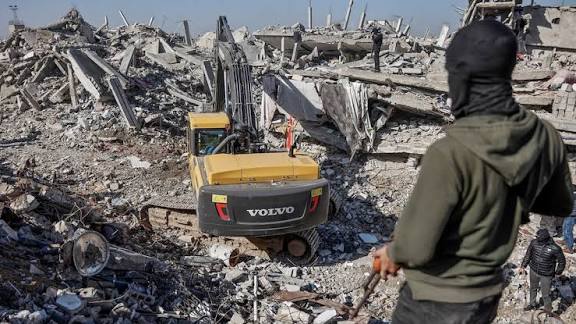
The diplomatic tensions escalated as Israeli forces intensified operations in eastern Gaza City, particularly in the Tuffah, Zeitoun and Daraj neighbourhoods, with heavy gunfire, home demolitions and expanded artillery and airstrikes, according to residents. Gaza’s Health Ministry said five people were killed, including one whose body was recovered from the rubble, and 13 others injured over the past 48 hours. Since the ceasefire began, 360 people have been killed and 922 injured. The overall death toll from the war has reached 70,117, with 170,999 wounded since October 2023.
Hamas spokesperson Hazem Qassem accused Israel of committing “serious violations” of the ceasefire, including attacks on shelters and displacement camps in central Gaza and the deliberate killing of a journalist in Khan Younis. He said continued killings, home demolitions and restrictions on aid show that “the occupation is pursuing the same goals of its war of extermination, even if the pace has changed.”
Meanwhile, Hamas’s armed wing, the Izz Al-Din Al-Qassam Brigades, and Islamic Jihad’s Al-Quds Brigades said they had located the body of an Israeli captive in northern Gaza and would hand it over Wednesday as part of the “Al-Aqsa Flood” prisoner exchange arrangements.
Humanitarian conditions in Gaza continue to worsen. The United Nations said on Tuesday that more than 16,500 Palestinians still require life-saving medical treatment outside the enclave. UN spokesperson Stéphane Dujarric said humanitarian agencies are scaling up assistance as winter conditions intensify, distributing thousands of essential items, including clothing, blankets and hygiene supplies, and deploying 160 “activity tents” to provide psychological support for children. The World Health Organization evacuated 18 patients and 54 companions on Monday for treatment abroad.
Rafah, once a critical humanitarian lifeline for residents and aid agencies, briefly reopened during a short January truce before being closed again after Israeli forces seized the Palestinian side of the crossing in May, claiming it had been used “for terrorist purposes.” Its future now hinges on the unfolding diplomatic standoff and the ability of mediators to enforce commitments under the ceasefire agreement.

