

During 2025, the American Jewish Committee repeatedly appeared in statements issued by Egypt’s Ministry of Foreign Affairs: twice following meetings between Foreign Minister Badr Abdelatty and Jason Isaacson, AJC’s Chief Policy and Political Affairs Officer, and once after a meeting with senior AJC leaders in New York. These encounters raise a question deeper than approval or rejection: How did this organization become a regular interlocutor for Cairo while Arab public knowledge of it remains limited?
Founded in 1906, AJC evolved into a global advocacy organization that places support for Israel, combating antisemitism, and international engagement at the heart of its work, without representing all American Jews. It says it engages leaders in more than 110 countries through 40 offices and dozens of partnerships. By 2023, its Arabic video series About the Jews had received more than 45 million views. These are not isolated details; they reflect an organization able to turn its worldview into durable relationships supported by personnel, institutional memory, and strategy.
Dialogue in international relations is sometimes treated as little more than a polite conversation between well-intentioned people, or even as a moral concession granted by one side to another. In reality, dialogue is an arena of power: narratives are tested, trust is built, and channels of influence are opened. A party that enters this arena without knowledge or institutional capacity does not become more open-minded; it simply becomes less able to explain and defend its position.
AJC’s division of responsibilities illustrates this point. Benjamin Rogers, Director of Middle East and North Africa Initiatives and Deputy Director of the Center for a New Middle East, works across the region’s political and civil-society networks. Natan Gorod, the Center’s Assistant Director, focuses on diplomats, people-to-people relations, and regional integration. Sara Coodin, Director of Academic Affairs, leads AJC’s engagement with university administrators and faculty. Three individuals working across three arenas: politics, society, and knowledge. This is how a narrative ceases to be merely a message and becomes an institution.
In the Arab world, many of our positions rest on powerful moral and historical foundations, foremost among them the rights of the Palestinian people. Yet the justice of a position does not guarantee that it will be heard or understood. Its effectiveness depends on the ability to articulate it in terms that can travel across political and cultural contexts, to establish a sustained presence within universities, research centers, media circles, and policy institutions, and to maintain relationships beyond the lifespan of individual conferences or meetings. Institutions do not end occupation or correct an imbalance of power, but they shape how realities are interpreted, framed, and communicated within decision-making circles.
Understanding AJC does not mean adopting its narrative. It is decidedly pro-Israel, and its views of the conflict, Hamas, Hezbollah, and Iran differ sharply from those held by broad sections of Arab public opinion. Cairo, meanwhile, has used meetings with AJC to reject the displacement of Palestinians, call for an end to the war, and support the establishment of a Palestinian state. This is where dialogue acquires value: carrying disagreement into spaces where influence exists rather than keeping it safely within circles of those who already agree.
There is, perhaps, a personal irony in my arriving at this conclusion. I grew up in Alexandria’s “Haret al-Yahud”, the old Jewish Quarter, where I lived until I was about thirty. It is a long street branching into smaller alleys that for generations formed part of Egyptian Jewish life. Today, that street bears the name of my father, Galal Amer, who served as a company commander in Egypt’s 18th Infantry Division during the October War, took part in the liberation of Qantara East, and was awarded the October War Combatants Medal. In 1974, during the postwar arrangements, he was also assigned to oversee the handover of the remains of Israeli soldiers in the presence of the Red Cross. Shimon Peres, then Israel’s defense minister, was present on the Israeli side; my father later recalled that he declined to shake his hand. He would later become one of the Arab world’s best-known satirical writers, and after his death, the street where I grew up was renamed in his honor. I am, in other words, the son of a man whose own life intersected directly with the Arab-Israeli conflict, and I was raised in a neighborhood where older residents still carried vivid memories of the Jews who had once lived there.
That history does not lead me to reject dialogue. It leads me to insist on a more serious kind of dialogue: one based on parity, self-respect, knowledge, and the ability to speak in our own voice.
I have written before that unconditional normalization and complete isolation are opposing errors. Dialogue without parity, transparency, and respect for rights becomes an empty image. Yet closing the door does not silence the other side’s narrative, while opening it without conditions may grant that side unearned moral legitimacy.
The lesson offered by AJC is not that its model should be copied or its positions admired, but that institutions matter. Without institutional support, a position remains a passing voice; an institution gives it memory, continuity, and reach. If we do not build the knowledge, institutions, and people capable of articulating our own narrative, others will continue to explain us to the world in our absence.
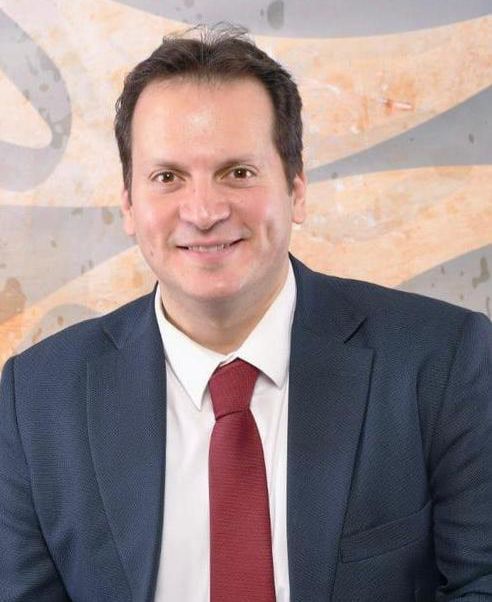
Dr Ramy Galal is a governance and institutional reform specialist focusing on state capacity, accountability, and the design of effective public institutions, with an interest in the governance of meaning.
He is an Assistant Professor and a former Senator, and previously served as an advisor and official spokesperson for Egypt’s Ministry of Planning and Economic Development, with direct involvement in policy design and implementation.
He holds a PhD from Alexandria University, a master’s degree from the University of East London, and a diploma in public administration from the University of Chile.

