Egypt has officially launched the Egyptian Red Sea Initiative, a national programme designed to protect coral reef ecosystems, strengthen climate resilience, and promote sustainable tourism and green investment along the Red Sea coast.
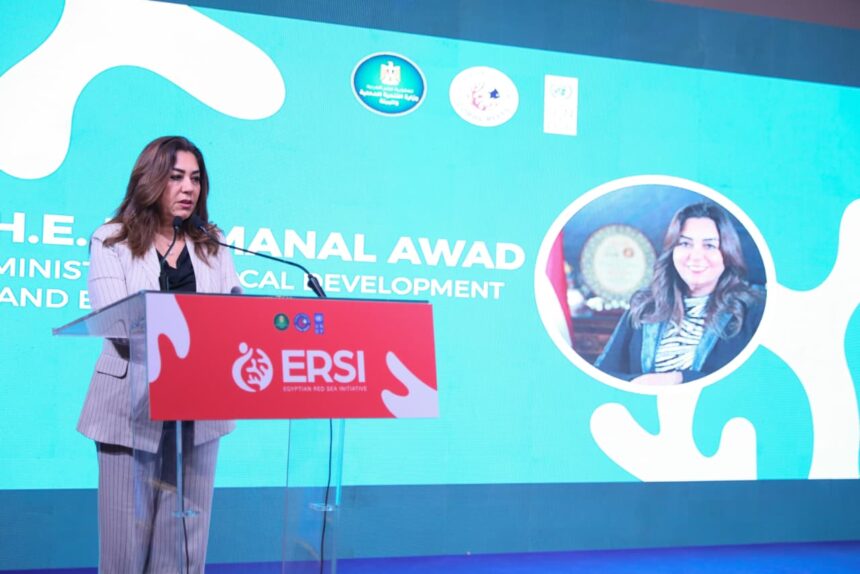
The initiative was unveiled by Manal Awad, Minister of Local Development and Environment, during celebrations marking World Environment Day 2026 in the Red Sea Governorate. The event brought together representatives from government institutions, the private sector, civil society organisations, local communities, and international development partners.
Awad described the initiative as a nationally driven programme aligned with Egypt’s priorities in biodiversity conservation, climate adaptation, sustainable tourism, and green economic development.
“The Egyptian Red Sea Initiative is a purely Egyptian initiative that translates national priorities into practical action to protect one of our most valuable natural assets,” she said.
The programme is being implemented in partnership with the United Nations Development Programme (UNDP) in Egypt and with support from the Global Fund for Coral Reefs.
Awad highlighted the ecological and economic importance of the Red Sea’s coral reef ecosystems, noting that they support tourism, employment, coastal livelihoods, and a wide range of private-sector activities.
“Protecting coral reefs means protecting local communities and strengthening their resilience,” she said.
The initiative includes a broad package of measures aimed at preserving marine ecosystems and promoting sustainable development. These include strengthening the management of protected areas, expanding coral reef monitoring programmes, establishing long-term financing mechanisms, promoting community-based ecotourism, supporting environmentally sustainable businesses, improving marine mooring buoy systems, and reducing waste and other pressures on coastal and marine environments.
As part of the programme, Awad announced plans to establish an Egyptian Coral Reef Fund, which will serve as a long-term financing mechanism to attract investment into conservation, sustainable tourism, and community development projects.
“Long-term sustainable financing is the real guarantee for effective conservation,” she said.
Red Sea Governor Walid El-Barqi underscored the governorate’s strategic importance as a global tourism destination and stressed the need to balance economic growth with environmental stewardship.
He said the initiative represents an important step towards implementing blue economy principles and innovative financing mechanisms to preserve the region’s unique coral reef ecosystems.
“Protecting natural resources is no longer simply an environmental choice; it is essential for strengthening local economic resilience and safeguarding the livelihoods of coastal communities,” El-Barqi said.
Chitose Noguchi, Resident Representative of the United Nations Development Programme in Egypt, said the initiative provides an opportunity to link coral reef conservation with broader sustainable development objectives.
“These unique ecosystems support tourism, local economies and livelihoods across coastal communities. Protecting them is an investment in the region’s future prosperity and resilience,” she said.
In a recorded message, Yabanex Batista, Deputy Head of the Global Team at the Global Fund for Coral Reefs (GFCR), highlighted the importance of innovative financing mechanisms and strategic partnerships in accelerating coral reef conservation efforts worldwide.
He noted that the initiative could contribute to protecting some of the world’s most resilient coral reef systems while supporting livelihoods, reducing poverty, and strengthening long-term social and economic resilience in coastal communities.
During the launch workshop, project officials presented the initiative’s strategic objectives, implementation framework, and expected outcomes. Discussions focused on coral reef conservation, climate adaptation, sustainable financing, and investment mechanisms to ensure long-term environmental protection across the Red Sea region.
Participants concluded that the initiative represents a new collaborative platform bringing together government agencies, local communities, financial institutions, development partners, and private-sector stakeholders to support a more sustainable and resilient blue economy while safeguarding one of the world’s most significant marine ecosystems.