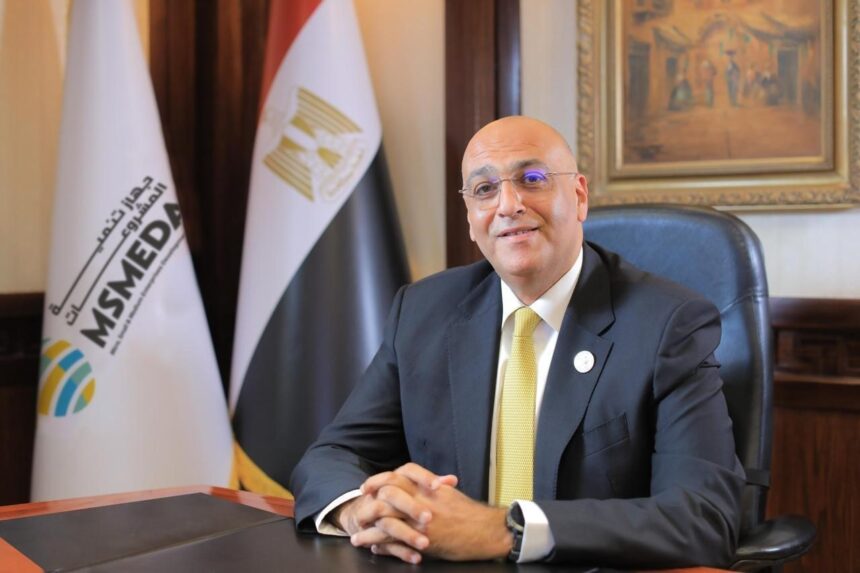
Bassel Rahmy, Chief Executive Officer of the Micro, Small and Medium Enterprise Development Agency (MSMEDA), announced that the agency has provided EGP 1.5bn in financing for green economy projects between July 2014 and April 2026, reflecting Egypt’s growing commitment to environmental sustainability and climate-conscious economic development.
Speaking on the sidelines of World Environment Day celebrations, observed annually on 5 June, Rahmy said the agency’s efforts are aligned with the political leadership’s focus on environmental issues and sustainable growth.
He revealed that MSMEDA has also allocated EGP 600m to support the Presidential Initiative for converting vehicles to operate on dual fuel; natural gas and petrol. The initiative is implemented in cooperation with the Ministry of Petroleum and Mineral Resources through its affiliated companies, Cargas and Gastec.
Rahmy explained that the programme aims to support national efforts to reduce harmful emissions, lower fuel costs, improve the profitability of small enterprises that depend on transportation, and enhance their operational efficiency.
The MSMEDA chief said the agency continues to promote sustainable environmental practices through an integrated environmental management strategy that prioritises the preservation of natural resources and incorporates environmental considerations into all financed and implemented projects. He noted that this approach supports sustainable development objectives and improves resource efficiency.
He affirmed MSMEDA’s commitment to expanding financing and support for green economy projects across various sectors, while also encouraging innovative start-ups operating in environmental and climate-related activities.
Rahmy stressed that all enterprises receiving MSMEDA financing are required to comply with Egyptian environmental legislation and internationally recognised standards. He added that the agency works closely with the Ministries of Environment and Local Development to ensure that funded projects meet environmental and social safeguard requirements.
He also highlighted MSMEDA’s active role in the Smart Green Projects Initiative (SGP), noting that the agency’s contribution extends beyond evaluating project eligibility for financial and non-financial support. It also provides technical assistance and capacity-building services, reflecting its broader commitment to environmental empowerment and sustainable economic development.
According to Rahmy, MSMEDA continues to support a wide range of environmental and development initiatives across Egypt’s governorates, helping entrepreneurs adopt more sustainable business models and improve their environmental performance.
He further pointed to the agency’s cooperation with the United Nations Development Programme (UNDP) through the Green Growth and Inclusive Development initiative, implemented in partnership with Banque Misr and Banque du Caire. The programme aims to raise awareness among green economy entrepreneurs about available government services and provide the support necessary to ensure business continuity, expansion, and greater economic impact.
Rahmy said MSMEDA is working to broaden access to green financing nationwide through its branch network. Each branch includes a trained environmental officer responsible for monitoring compliance with environmental and social standards and providing technical guidance to help entrepreneurs integrate climate considerations into their investment activities.
These efforts, he explained, contribute to building institutional and environmental capacities, strengthening climate resilience, and encouraging project owners to adopt more sustainable operating practices in line with Egypt’s broader sustainable development agenda.
He also revealed that MSMEDA has transformed its headquarters into an environmentally friendly building through the adoption of smart technological solutions, implemented in cooperation with the UNDP and the Industrial Modernisation Centre. The agency is now working to gradually replicate the model across its branches nationwide as part of a comprehensive institutional transformation strategy aimed at enhancing environmental sustainability and operational efficiency.