The Monetary Policy Committee (MPC) of the Central Bank of Egypt (CBE) is set to hold its second regular meeting of the year, on Thursday, to decide on key interest rates, which serve as a strong indicator of the direction of Egyptian pound short-term interest rates. There are firm expectations that rates will be kept unchanged this time, following two consecutive cuts in December 2025 and February 2026.
At its meeting on 12 February, the committee decided to cut rates by 1 percentage point, bringing them to 19% for deposits, 20% for lending, and 19.5% for the credit and discount rate and the main operation rate. It said the decision was appropriate to maintain a monetary policy stance that anchors inflation expectations and supports the downward trajectory of inflation.
The committee affirmed that it will continue to assess the pace of monetary easing based on forecasts, surrounding risks, and incoming data, while closely monitoring economic and financial developments and their potential impact. It added that it will not hesitate to use all available tools to achieve price stability and steer inflation towards its target.
At the time, the committee expected inflation to decline towards its target of 7% (±2%) on average in the fourth quarter of 2026, noting that the pace of decline remains somewhat constrained by the slow easing of non-food inflation and the impact of fiscal consolidation measures. It also warned that global geopolitical tensions continue to pose upside risks to inflation expectations.
Core inflation rate
The central bank revealed earlier in March that annual core inflation rose to 12.7% in February 2026, compared to 11.2% at the end of January.
It added that the monthly change in the core consumer price index stood at 3% in February 2026, compared to 1.6% in February 2025 and 1.2% in January 2026.
The Central Agency for Public Mobilisation and Statistics (CAPMAS) also reported that annual urban inflation rose to 13.4% in February, up from 11.9% at the end of January.
On a monthly basis, urban inflation increased to 2.8% in February, compared to 1.2% in January, while annual inflation for the total population stood at 11.5%, down from 12.5%.
New inflation figures for March are scheduled to be released on 10 April, in line with the usual monthly publications by the central bank and CAPMAS.
Geopolitical risks
Heba Mounir, a macroeconomic analyst at HC Securities, expects the MPC to keep interest rates unchanged at its meeting tomorrow.
She said this expectation takes into account geopolitical risks and their impact on Egypt’s foreign currency inflows, updated inflation estimates, the government’s desire to maintain the attractiveness of debt instruments, and efforts to preserve fiscal deficit targets relative to GDP.
She explained that regional geopolitical disruptions stemming from the US–Israeli war against Iran, which began on 28 February, are affecting both the global economy and Egypt. However, Egypt’s external position had shown strong indicators prior to the outbreak of the war, mitigating the impact of external shocks to some extent.

Among these indicators, she noted an approximately 11% year-on-year increase in net foreign reserves to a record $52.7bn in February. Non-reserve foreign currency deposits rose by 1.26 times year-on-year to $13.4bn, while net foreign assets in the banking sector increased significantly—by around 16% month-on-month and 3.39 times year-on-year—to reach $29.5bn in January.
She added that the war led to net foreign outflows of approximately $4bn from the secondary market for treasury bills since 1 March, contributing to a roughly 9% depreciation of the Egyptian pound against the US dollar since 28 February, to around EGP 52.6 per dollar—reflecting exchange rate flexibility.
Mounir also noted that the war has driven oil prices up by around 48% to $107 per barrel, prompting the government to raise domestic diesel, LPG cylinder, and petrol prices by an average of 19% on 10 March. This is expected to feed into inflation, leading the firm to revise its March inflation forecast upward to 14.3% year-on-year and 2.4% month-on-month.
As a result, it has raised its projection for average inflation in 2026 to between 13% and 14% year-on-year, compared to previous estimates of 10-11% prior to the conflict—a shift that could delay the monetary easing cycle.
Regarding treasury bill yields, Mounir noted that the central bank has raised returns to maintain the attractiveness of these instruments in the short term. The yield on 12-month treasury bills reached 23.4%, implying a positive real interest rate of 6.94%, based on a 12-month inflation forecast of around 13%, after accounting for a 15% tax rate applied to European and US investors.
The most prudent decision
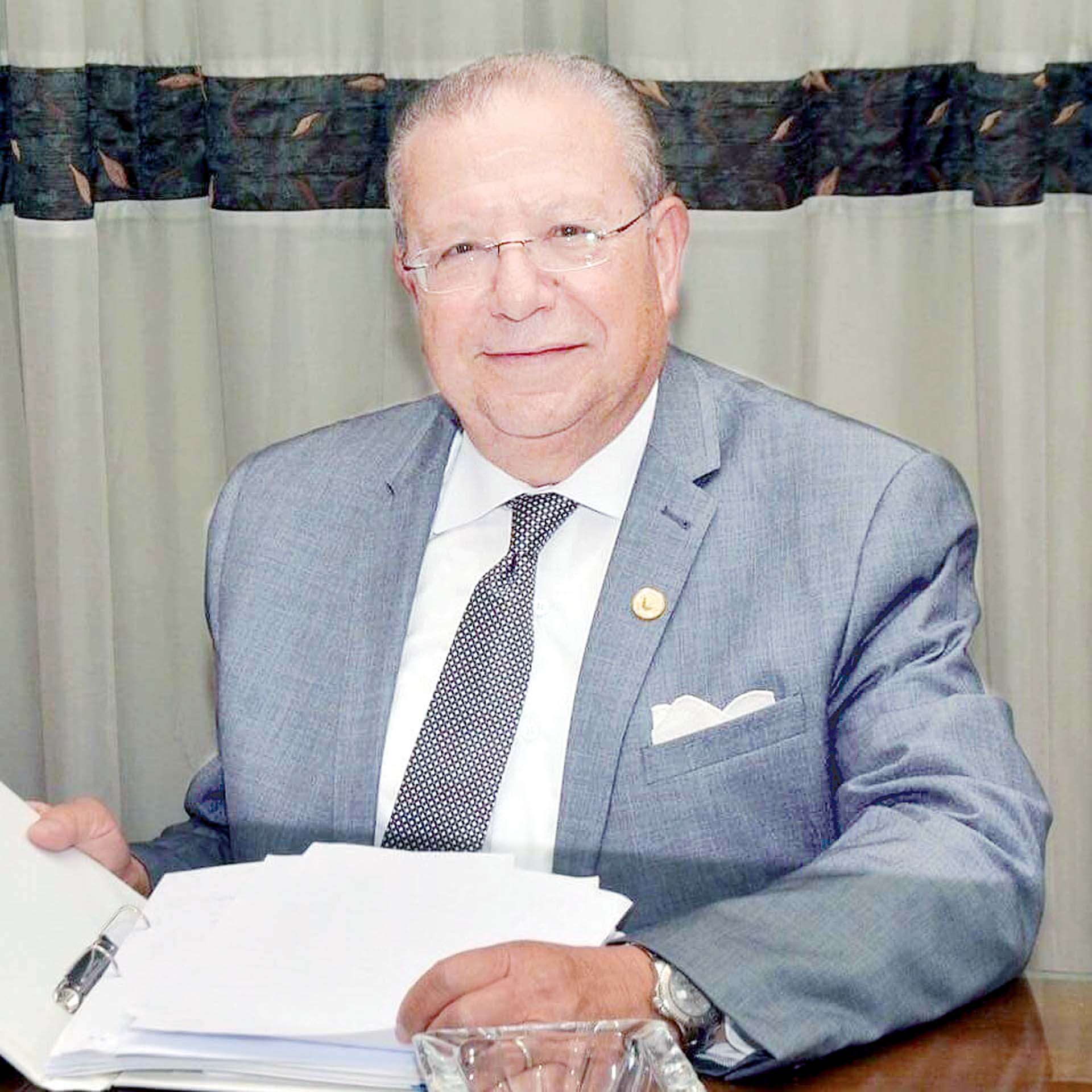
Banking expert Mohamed Abdel Aal said that not every decision to hold interest rates unchanged should be viewed as neutral. In certain circumstances, maintaining the status quo is the most prudent course of action, reflecting balanced judgement and careful timing.
He noted that, at a time when economic considerations are deeply intertwined with international and regional geopolitical developments, the MPC faces one of its most delicate decisions of 2026. The meeting comes amid not only potential domestic inflationary pressures, but also a volatile global environment oscillating between military escalation and signs of de-escalation, with uncertainty remaining the dominant factor.
Abdel Aal expects inflation to rise in the coming period, driven primarily by cost pressures—particularly fuel price increases of between 14% and 30%—which could add 2-3 percentage points to inflation. This is compounded by higher global oil prices and the depreciation of the Egyptian pound, which raises import costs.
He stressed that this type of inflation is cost-driven rather than demand-driven, placing policymakers in a classic dilemma, as interest rate tools are not designed to address such inflation. Raising rates in this context may not curb inflation, but could instead increase production and financing costs, potentially fuelling further inflationary pressures.
According to Abdel Aal, the Egyptian pound is under pressure, reflecting real challenges—whether from higher import costs or the exit of some short-term investments. However, these pressures remain reversible, as they are largely linked to capital flows that are sensitive to global confidence rather than underlying economic fundamentals. Any improvement in the international environment could quickly restore foreign currency inflows and stabilise the pound.
He added that international financial institutions expect continued global monetary tightening amid inflationary pressures and concerns over stagflation. While stable US interest rates support a strong dollar and put pressure on emerging markets, applying the same approach domestically in Egypt may not be optimal due to the differing nature of inflation.
Abdel Aal said the most decisive factor remains the trajectory of geopolitical tensions, particularly following repeated extensions by U.S. President Donald Trump of deadlines related to the crisis, suggesting that a swift resolution remains unlikely. This prolongs what he described as a state of “structured and extended uncertainty”, with markets caught between escalation and de-escalation scenarios.
He also highlighted the sensitivity of the situation in light of the Strait of Hormuz, a vital artery for global energy flows, where any disruption could push oil prices higher, directly impacting inflation both locally and globally.
In this context, he argued, it is difficult for policymakers to take a decisive stance on tightening or easing in an environment where the direction remains unclear.
He said the case for raising rates is based on tackling inflation and supporting the currency, but since inflation is cost-driven, rate hikes would not address its root causes and could increase financing burdens. Meanwhile, the case for cutting rates rests on relatively moderate inflation expectations and supporting growth; however, inflation is likely to rise and uncertainty remains elevated, meaning markets require stability rather than surprises.
“In light of the above, the most likely scenario is a freeze—that is, holding interest rates—but the distinction here is important. Holding reflects neutrality, while a freeze reflects a temporary, cautious stance that postpones the decision until the outlook becomes clearer, avoiding unnecessary tightening, preserving market stability, and maintaining flexibility for future action,” Abdel Aal said.
He added that the MPC is not dealing with conventional inflation that can be addressed through traditional tools, but rather a compound shock involving energy prices, exchange rates, and global uncertainty. Therefore, patience—or a “freeze with the flavour of a hold”—may be the most appropriate course in these complex conditions.
Ensuring inflation pressures don’t rebound
Banking expert Shaimaa Wagih said the expected decision to hold rates reflects a measured transition from directly confronting inflation to consolidating the gains already achieved. After an extended tightening cycle, the priority is no longer raising the cost of money, but preserving the impact of previous measures to prevent inflationary pressures from resurging.
Wagih noted that while annual inflation rates have declined, this is partly driven by temporary factors, with cost and exchange rate pressures still persisting. Holding rates therefore provides time to assess whether the decline is sustainable, as premature easing could reignite demand beyond supply capacity, pushing inflation higher once again.
She added that maintaining a positive real interest rate remains a key consideration, ensuring the Egyptian pound continues to be attractive to investors. Holding rates supports not only inflation control but also exchange rate stability by preserving an adequate yield differential compared to competing markets, thereby reducing the likelihood of short-term capital outflows.

She noted that high interest rates in recent periods have increased reliance on high-yield savings instruments, raising banks’ funding costs. Holding rates gives banks time to gradually restructure their deposit portfolios without additional pressure, while stabilising customer behaviour between saving and consumption.
She added that the banking sector is currently operating in an environment of high funding costs but strong returns on government debt instruments. Holding rates maintains this balance, allowing banks to sustain relatively stable profit margins without exposure to sharp repricing risks on either assets or liabilities.
Wagih also pointed out that higher borrowing costs have slowed productive credit growth, particularly in capital-intensive sectors. While holding rates does not fully resolve this issue, it prevents further deterioration and signals stability in financing costs, which may gradually encourage companies to revisit investment plans.
She stressed that interest rates are a key factor in debt servicing costs, and holding them helps limit additional burdens on the state budget while maintaining the attractiveness of government debt instruments—striking a delicate balance between fiscal sustainability and liquidity attraction.
She added that, despite ample liquidity in the banking system, its allocation remains skewed towards government instruments. Holding rates helps stabilise money market movements, reduces volatility in interbank rates, and improves the efficiency of liquidity distribution.
Wagih said monetary easing remains conditional rather than merely postponed. The decision does not rule out future rate cuts, but ties them to clear conditions, including sustained inflation stability, exchange rate stability, and improved foreign currency inflows. Any easing would therefore be gradual and carefully calibrated rather than abrupt.
She emphasised that monetary decisions cannot be separated from the geopolitical environment, particularly escalating tensions related to the Iran war, which continue to create uncertainty in global markets. These tensions directly affect energy prices and supply chains, generating imported inflationary pressures that may gradually feed into the Egyptian economy.
She concluded that, in this context, holding rates is the more likely option, as it provides stability in the face of unpredictable external shocks and gives the central bank greater flexibility to respond to sudden global developments.
According to Wagih, such a decision signals that Egypt’s monetary policy has become more disciplined and predictable—a crucial factor in assessing investment risk. Policy stability enhances confidence in local debt instruments and supports the economy’s ability to attract long-term investment, not just short-term flows.
She added that holding rates effectively reorders market priorities. It is not a passive stance, but a deliberate step to prioritise price stability, currency attractiveness, and banking sector balance, while postponing monetary stimulus until conditions become more stable. Through this approach, the central bank signals that the current phase is one of careful risk management, paving the way for a safer transition towards a future easing cycle.