

I recently decided to test the limits of today’s AI heavyweights—ChatGPT, Gemini, Grok, and DeepSeek—with a deceptively simple question: Who is the most misleading and dishonest president in U.S. history? The answers converged in analysis yet diverged in nuance. By sheer volume, Donald Trump topped the list. By impact, however, others remained formidable contenders.
First: The Numbers Game — “Firehose of Falsehood”
According to data compiled by outlets such as The Washington Post and FactCheck.org, Trump made 30,573 false or misleading claims during his first term—an average of 21 per day. This pattern suggests not merely a tendency to distort facts, but a systemic reliance on what his administration once framed as “alternative facts.”
In 2026, his second term appears to have introduced an upgraded model. In just the first three months, Trump has issued hundreds of contested claims on immigration and the economy, deploying what analysts call the “Firehose of Falsehood”—a strategy built on overwhelming the information space with rapid, high-volume misinformation, leaving fact-checkers perpetually on the defensive.
Second: Quantity vs. Consequence
While Trump dominates in volume, history is shaped by consequence. Several presidents told fewer lies—yet with far greater geopolitical impact:
– Lyndon B. Johnson leveraged misleading claims around the Gulf of Tonkin incident to justify deepening U.S. involvement in Vietnam.
– Richard Nixon famously declared, “I am not a crook,” even as the Watergate scandal exposed extensive abuse of power.
– George W. Bush advanced claims about Iraq’s possession of Weapons of Mass Destruction—a narrative that reshaped the Middle East and cost trillions.
Third: Contemporary Global Misinformation (2025–2026)
By the metric of international messaging “productivity,” Trump remains unmatched. Among the most prominent claims:
– Ending conflicts: Trump asserted that he “ended seven wars,” despite ongoing conflicts in Gaza and Ukraine.
– Presidential consensus: He claimed Barack Obama, George W. Bush, and Bill Clinton privately supported a strike on Iran—an assertion all three categorically denied.
– Zero-cost wars: Trump argued that allies had already covered the financial burden of military operations, even as Pentagon figures showed a $22 billion shortfall in just two months.
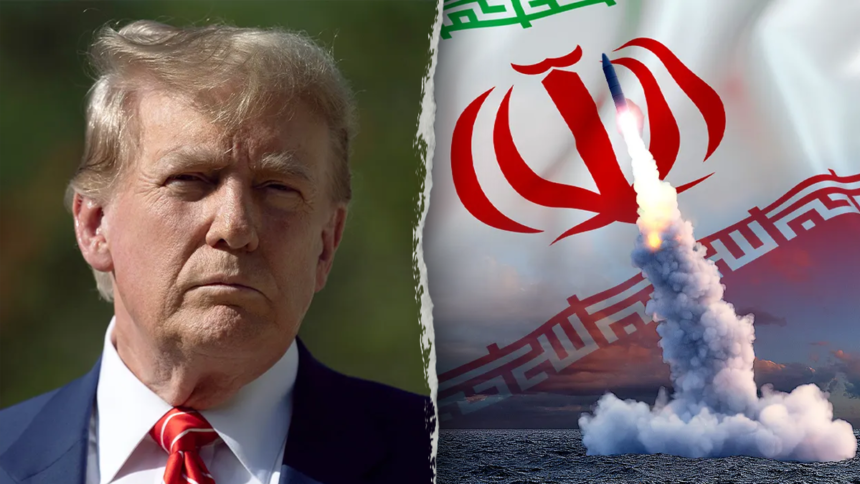
– Destruction of the Revolutionary Guard: He claimed the complete dismantling of Iran’s military structure, while intelligence reports indicated that core capabilities remained intact in fortified underground “missile cities.”

Fourth: International Fallout
– European Union: A sense of diplomatic shock has taken hold, prompting countries like France and Germany to accelerate efforts toward strategic autonomy from Washington.
– China and Russia: Both have capitalized on these inconsistencies, positioning themselves as more “rational actors” while portraying the U.S. system as fractured and unstable.
– Middle East: Claims that allies financed U.S. wars created quiet diplomatic friction, particularly in closed-door negotiations.
Fifth: Domestic Misinformation
– Investment claims: Trump touted $17 trillion in investments, while verified figures place the number closer to $8.8 trillion.
– Fuel prices: He claimed gasoline had dropped to $1.99 per gallon; the national average stands at $2.78.
– Inflation: He repeatedly declared inflation “dead,” despite official figures holding steady at 3%.
– Immigration: Estimates of undocumented immigrants were inflated from roughly 12 million to 25 million.
Sixth: Why His Popularity Endures
Polling organizations such as Gallup and Pew Research Center point to several factors behind his sustained support:
– Cognitive insulation: Supporters view mainstream media as adversarial, reframing fact-checks as political attacks.
– Alternative reality loops: Platforms like Truth Social reinforce repeated narratives until they solidify as perceived truth.
– Information fatigue: Constant fact-checking overwhelms the public, leading many to default to perceptions of strength and decisiveness over accuracy.
Final Assessment
Under the weight of what critics describe as a “Trumpian misinformation machine,” the United States faces a gradual erosion of core democratic norms. Internationally, American credibility continues to thin, as both allies and adversaries increasingly seek parallel channels of communication—far removed from the relentless “firehose of falsehood” emanating from the White House.
Prof. Hatem Sadek – Helwan University

