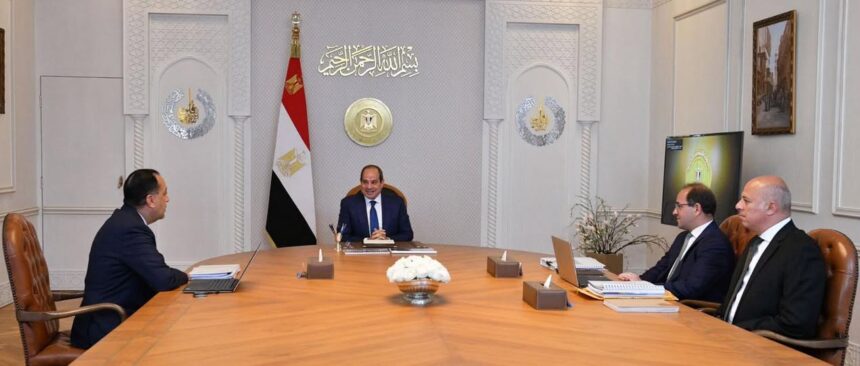
Egyptian President Abdel Fattah Al-Sisi reviewed the government’s fiscal policy priorities for the 2026/2027 budget during a meeting on Tuesday with Prime Minister Mostafa Madbouly and Finance Minister Ahmed Kouchouk, according to a presidency statement.
The draft budget targets economic growth of 5.4% and a primary surplus of EGP 1.2trn, reflecting a continued push to balance expansion with fiscal consolidation.
Discussions covered short- and medium-term fiscal frameworks, with a focus on strengthening partnerships with the business community, advancing tax and customs facilitation measures, and broadening the tax base through improved compliance—without imposing additional burdens on citizens or businesses.
Kouchouk said the policy framework aims to strike a balance between growth and fiscal discipline, with around EGP 90bn earmarked to support economic activity tied to measurable outcomes, while maintaining energy subsidies. He added that debt service indicators are expected to improve, supported by ongoing efforts to reduce the debt-to-GDP ratio.
The government also plans to increase spending on health and education, alongside higher wages for teachers and public sector employees. Real wage growth is expected to exceed inflation and be linked to performance.
The meeting further reviewed revenue and expenditure targets, as well as efforts to preserve fiscal balance amid mounting regional challenges, while continuing structural reforms to enhance economic stability and support private sector-led growth.
According to the presidency, the government is working to boost production, manufacturing, and exports through investment-friendly fiscal policies, including continued tax, customs, and real estate facilitation measures.
Al-Sisi stressed the importance of sustaining institutional reforms to reinforce fiscal discipline and good governance, including rationalising public spending, enhancing revenues, and reducing public debt. He also underscored the need to attract greater domestic and foreign investment, and to engage directly with international investors to communicate Egypt’s economic policies and mitigate the impact of regional pressures.