Along the quiet canals branching from the Nile River in Egypt, thick clusters of water hyacinth drift across the surface. For years, the fast-growing plant has been viewed largely as a nuisance; clogging irrigation channels and complicating farmers’ work.
But for a group of Egyptian women, the plant is beginning to tell a different story.
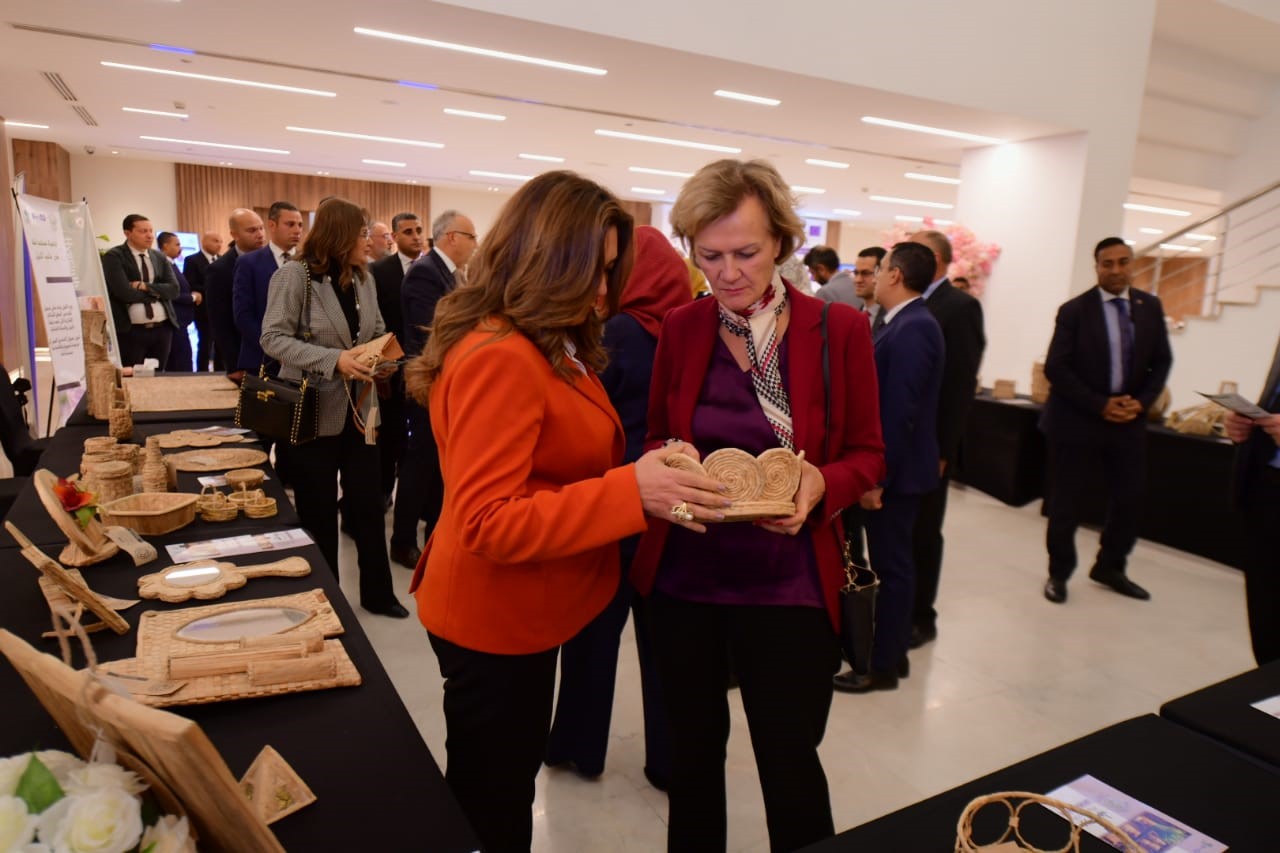
Through the “Ward El Kheir” programme, an initiative supported by the European Union, what was once considered an environmental challenge is being transformed into eco-friendly handcrafted baskets, lampshades, and decorative pieces, opening the door to new skills and potential livelihoods for Egyptian women.
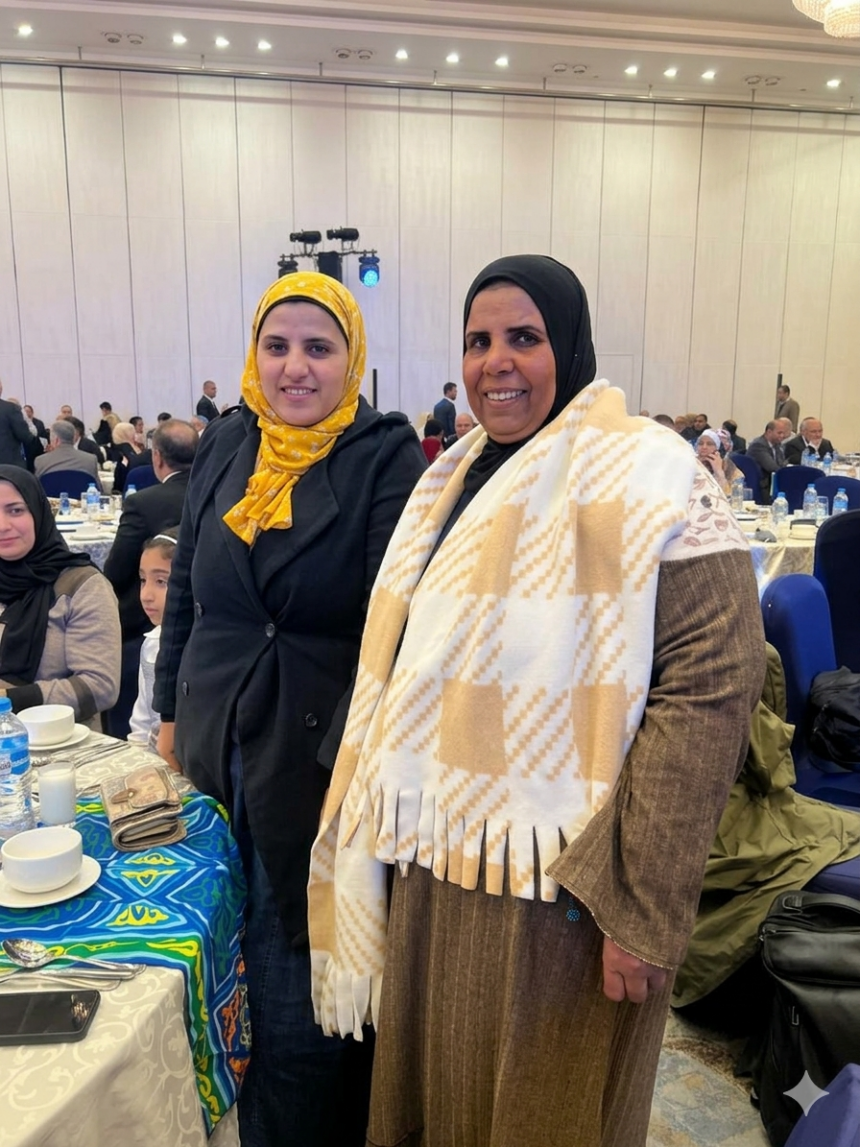
“I used to see water hyacinth in the canals when I passed by, but I never imagined I would hold it in my hands and turn it into something useful. Honestly, I was even afraid to touch it before,” said Rania Basyouny in an interview with Daily News Egypt on the sidelines of the World Water Day 2026 event, during which the “Ward El Kheir” programme was launched.
Now Basyouny carefully braids dried stems of the plant into patterns she learned during the programme’s training sessions.
“They showed us how to connect the pieces together,” she explained. “With simple tools like scissors and cutters, we can make many things—lamp baskets, carpets, and decorative vases. It just takes patience and practice.”
So far, participants have attended introductory training sessions that offered their first glimpse into how water hyacinth can be turned into handcrafted products. After the Eid holiday, the women will take part in more intensive hands-on workshops to deepen their skills and further develop their craft.
For Basyouny, a graduate of the Faculty of Commerce who had been unemployed for months after finishing her studies, the experience has already opened an unexpected door.
“I like trying new things,” she said with a hopeful smile. “Maybe one day this could become my own project.”
Learning for independence
For another participant, Fadia Saleh, the motivation to join the programme runs deeper.
“I wanted to learn something that could help me stand on my own feet,” she said.
Currently, she relies mainly on the national social protection programme Takaful and Karama, but she hopes the new skill will eventually provide a source of income.
“I don’t want to depend on anyone. I still have my health and the ability to work, so I want to learn something that can help me earn my own living, especially since my sons are married and have their own families. And as I get older, only God knows what the future will bring,” she explained.
Like many artisans starting something new, Saleh acknowledges that the greatest challenge lies beyond the craft itself.
“The challenge is how to market these products,” she said. “We can make beautiful items, but selling them is the difficult part.”
Still, she remains optimistic. As part of the programme, participants will also receive training on how to promote and sell their products.
“They told us they will train us on marketing as well,” she said. “Since this is something new in the market, it may take time. But with training and experience, we believe it can succeed.”
Saleh also hopes the knowledge gained from the programme will spread within the community.
“When I learn, my sister will learn too,” she said. “And if five of us learn, we can teach others. One woman teaches another, and soon many women will know this craft.”
Water, women and opportunity
The training forms part of broader efforts linking environmental solutions with women’s empowerment, supported by the European Union in partnership with Egyptian institutions.
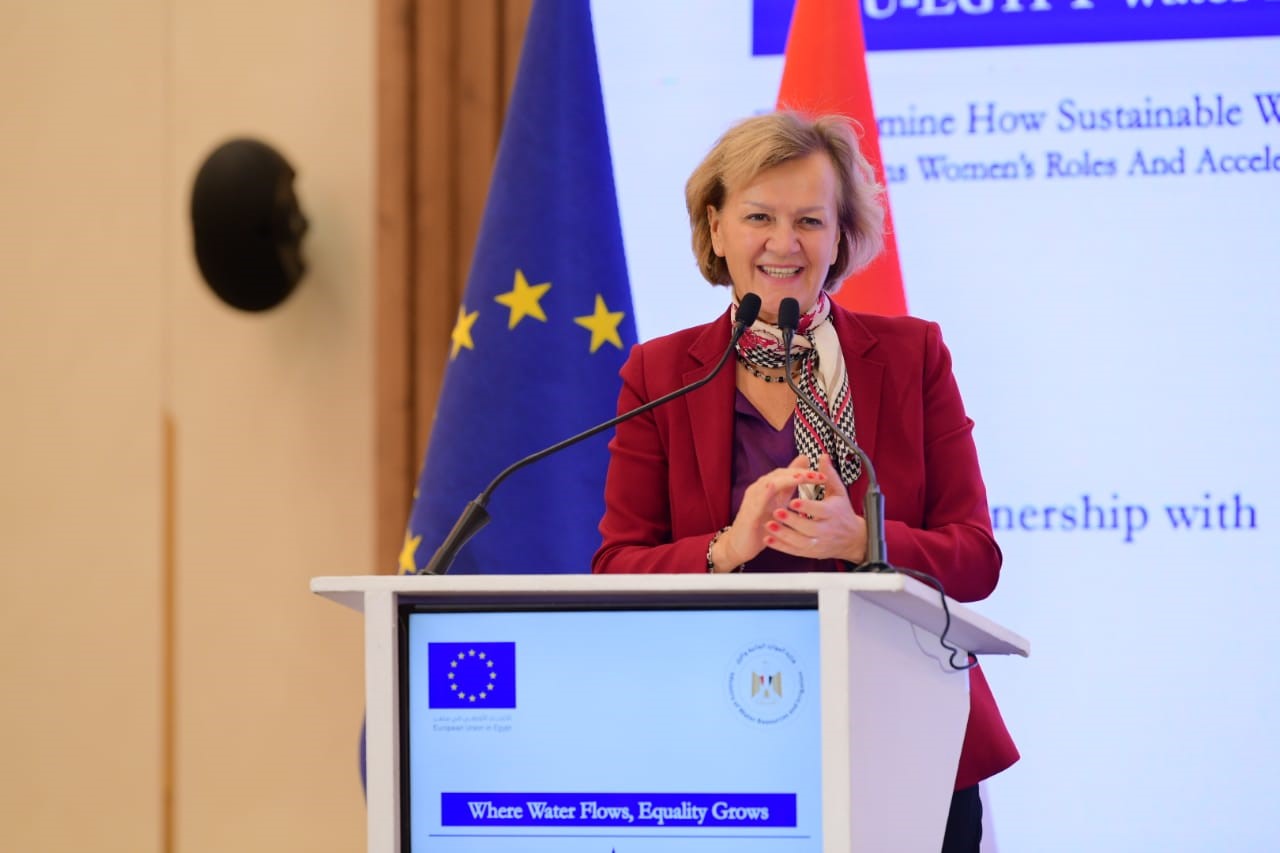
During the World Water Day event organised by the EU Delegation to Egypt together with Egypt’s Ministry of Water Resources and Irrigation, EU Ambassador to Egypt Angelina Eichhorst highlighted the deeper significance of water in a country shaped by the Nile.
“In a country where the Nile has shaped life, memory and civilisation itself, water is never only a resource,” she said. “It is dignity, continuity and shared destiny.”
She also noted that water challenges often affect women and girls most directly.
“When water is unsafe, unreliable, distant or unaffordable, women and girls carry the heaviest burden,” she said. “They lose time, opportunities, safety, health and income.”
Yet empowering women within water initiatives can help transform communities.
“When water services improve and women participate fully in decision-making, communities become healthier, more resilient and more prosperous,” she said. “Women are not only affected by water insecurity—they are part of the solution.”
A partnership that touches lives
Water cooperation has long been a cornerstone of the partnership between the European Union and Egypt.
Since 2007, the EU has contributed around €600m in grants to Egypt’s water sector, helping mobilise nearly €3.5bn in investment and benefiting around 25 million people through improved water and sanitation services.
Beyond the numbers, however, the impact can also be seen in stories like those of Rania and Fadia; women discovering new skills and new possibilities in something that once seemed like a problem.
For them, water hyacinth is no longer just a plant floating in the canals.
With patience, training and a little imagination, it may become something much more: a small craft, a future livelihood, and perhaps the beginning of a new chapter woven from the waters of the Nile.