

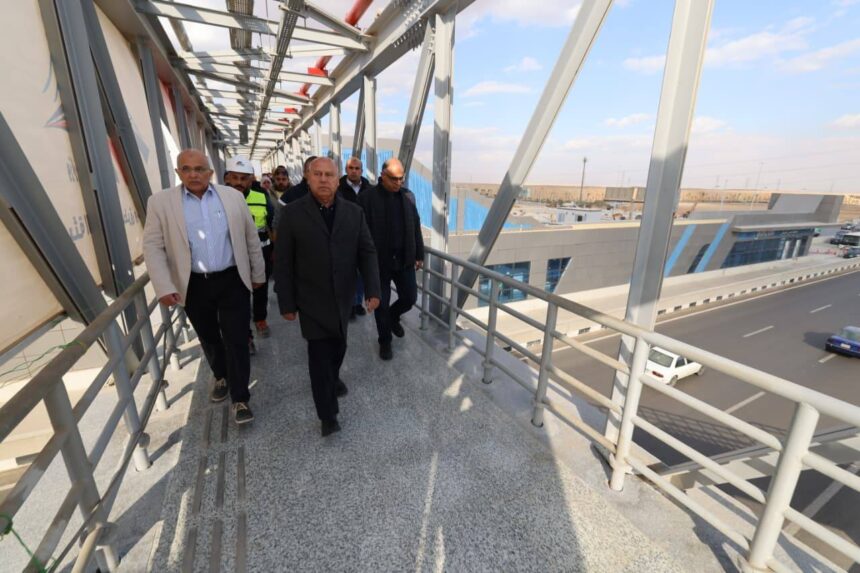
Egypt’s Transport Minister Kamel Al-Wazir conducted an inspection tour of the Bus Rapid Transit (BRT) project. The tour focused on the final touches and operational readiness of the second phase, extending 40 km from El-Moshir Tantawy Station to Sun Capital Station at the intersection of the Ring Road and Fayoum Road, covering 16 of the project’s total 48 stations.
Al-Wazir highlighted that the BRT project was implemented as a cost-effective alternative to the previously planned fifth metro line, which was designed to run 24 km from Al-Wafaa wal-Amal in Nasr City to the Coast with 17 underground stations, at an estimated cost of $6bn at current market prices.
In contrast, the 110 km BRT project, fully above ground and featuring modern electric buses, is projected to cost no more than $1bn, saving approximately $5bn.
The BRT stations have been designed with integrated waiting areas, bus terminals, and commercial zones to provide services for nearby residents and passengers.
During the inspection, the minister reviewed station layouts, pedestrian bridges and tunnels connecting parking areas beneath the Ring Road, ticketing systems, and electronic entry gates.
Al-Wazir emphasized the importance of the second phase, particularly given the high public usage of the first phase, which runs from the Ring Road–Alexandria Agricultural intersection to the Police Academy station.
The project has successfully reduced travel times and improved traffic flow by separating the dedicated BRT lane from other lanes on the Ring Road.
The BRT system connects major Ring Road intersections, including Suez, Adly Mansour, El-Marg, and Mostorod, linking East and West Cairo and extending to the New Capital.
It integrates with other public transport systems, including Metro Line 1 at Al-Zahraa and El-Marg stations, Metro Line 3 at Adly Mansour and Imbaba stations, and the LRT at Adly Mansour station, providing a fast, clean, and efficient alternative to private vehicles while supporting environmental and traffic management goals.


