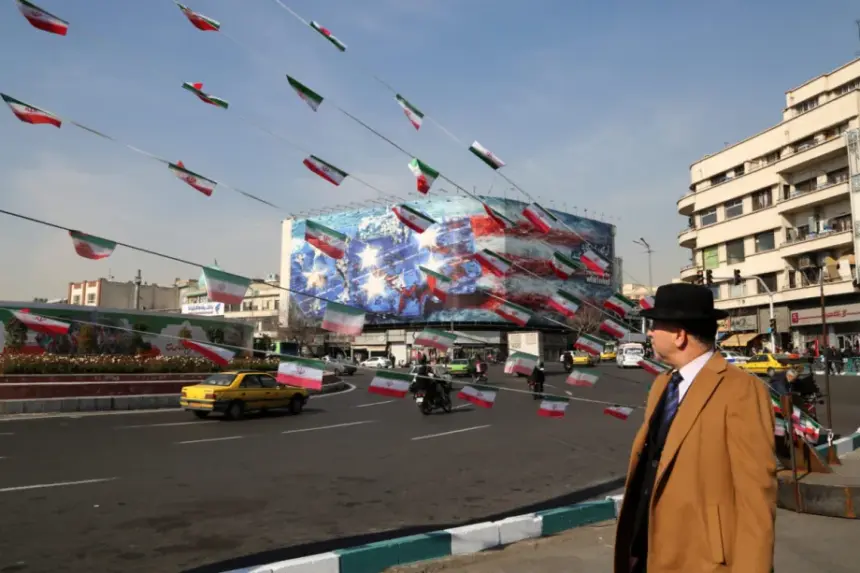
Venezuela and Iran are the countries most affected by the “peace through strength” doctrine inaugurated by U.S. President Donald Trump. The former faced maritime and aerial blockades, the kidnapping of its president, and the initiation of his trial in Miami, all without any effective global response. Now Tehran is on the same trajectory, at least for the time being. Interestingly, the link between these nations is not, as some claim, drug trafficking or support for terrorism and violence, but China–the single factor most unsettling for the United States’ economic and military future. Both countries serve as lifelines for China’s growth and prosperity, supplying roughly one-third of its oil needs to keep the engines of development running. Washington’s major challenge remains curbing China’s ascent.
China possesses nearly all the prerequisites for the future: from intellectual capital and rare earth minerals to semiconductors–except for “oil,” the lifeblood of industry and development, at least temporarily. As the world’s largest crude oil importer and Iran’s primary oil buyer, China is particularly vulnerable to any disruption in supply resulting from Middle Eastern conflicts. Beijing is also the leading buyer of Venezuelan oil, accounting for roughly 85% of the country’s exports, with imports exceeding 600,000 barrels per day in December 2025, representing about 7% of China’s total oil imports. Most of this oil is transported via a “shadow fleet” to circumvent U.S. sanctions. Historically, these shipments partially offset Venezuela’s debt to China, and this arrangement persists despite U.S. attempts to tighten restrictions.
Simultaneously, as the principal and near-exclusive buyer of Iranian oil, China receives between 80% and 90% of Iran’s seaborne exports. In 2024, Iran’s average oil exports to China reached approximately 1.38 million barrels per day, according to vessel-tracking data, with certain months, such as June 2025, peaking at over 1.8 million barrels per day. By 2025, reports indicated stabilization at around 1.38 million barrels per day–a slight decline of 7% from the previous year, despite ongoing international pressure. In December 2025, total Iranian exports (most of which went to China) reached approximately 1.56 million barrels per day.

Trade mechanisms and pricing operate within a risk-based economy: Iran offers significant discounts on its oil to attract Chinese buyers while assuming the risks of sanctions. The shadow fleet and ship-to-ship transfers remain essential in obscuring shipment origins.
The only agreement reached during Trump’s recent meeting with Israeli Prime Minister Benjamin Netanyahu was to escalate “maximum pressure” aimed directly at Iranian oil exports to China. Indeed, at the beginning of this month, the United States imposed sanctions on shipping companies and vessels (such as the tanker VICSCENE) for transporting Iranian oil, and Washington threatened to levy customs tariffs of up to 25% on China if it continued trading in Iranian oil.
Speculation has grown regarding Iranian oil production amid escalating unrest and social protests in Tehran, U.S. involvement in support of demonstrators, and threats to topple the ruling regime. Iran has faced increasing protests since late December 2025 due to currency devaluation and economic deterioration, though these demonstrations have yet to disrupt oil production.
Nevertheless, Trump’s involvement, threats of renewed military strikes, and intensified sanctions on Tehran’s exports have sparked varied forecasts regarding the future of Iranian oil production, with Beijing, as always, at the center of American targets.
In this context, the worst-case scenario predicts a drop in Iranian oil output of over a third–approximately 1.2 million barrels per day–should tensions with the United States escalate into military intervention aimed at overthrowing the regime. Under this scenario, total Iranian oil production would fall to 2 million barrels per day, compared with a 2025 average of 3.2 million barrels. Another scenario, assuming a negotiated understanding between the two countries, forecasts an increase of 200,000 barrels per day, bringing total production to 3.4 million barrels per day.
With the outlook constrained, both negotiation-based resolutions and U.S.-led regime change appear unlikely in the near term, suggesting that Iranian oil production may remain stable at 3.2 million barrels per day in 2026, according to Rystad Energy. This projection assumes that protests remain distant from exploration and production infrastructure and that Iran continues to export via commercial networks skilled at circumventing sanctions.
This analysis draws on China’s prior experience acquiring discounted oil from sanctioned producers, implying that altering the status quo would require broad external intervention. Despite tightened U.S. sanctions, Iran still exports approximately 1.5 million barrels per day–less than half its total output. Any reduction could negatively affect China’s economic growth due to lower oil imports, a scenario Beijing cannot afford. In the coming days, China’s strategic options–numerous and multifaceted–are expected to counter Washington’s attempts.
Professor Hatim Sadek – Helwan University