Egyptian Prime Minister Mostafa Madbouly has ordered the immediate suspension of utility services to any site where illegal construction on agricultural land is detected, describing the protection of farmland as a matter of “national security” linked directly to the state’s food security.
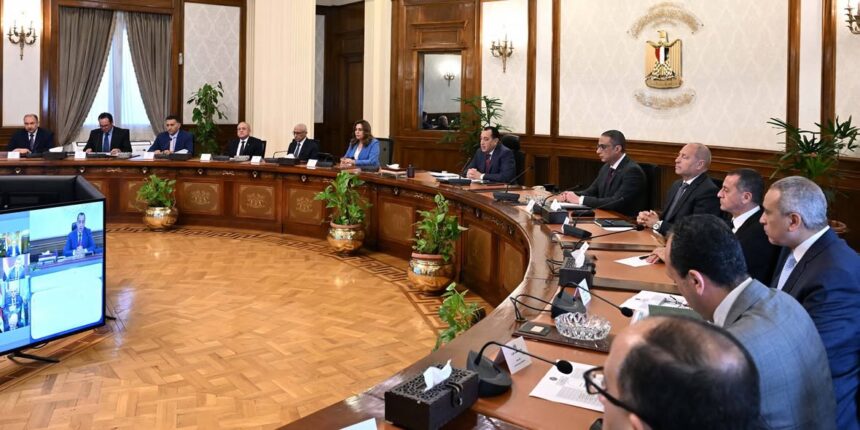
Speaking during the first meeting of the newly formed Board of Governors on Saturday, Madbouly stated that the preservation of every acre is no longer an administrative choice but a “national obligation.” He directed that utilities must be disconnected within 48 hours of detecting an illegal spatial change, with removals to be executed while structures are still in the “cradle” or foundation stage.
The cabinet has introduced four mandatory performance indicators to be measured monthly for all local officials to ensure compliance. These metrics focus on the speed of encroachment detection, the duration taken to implement removal orders, the frequency of repeat violations in the same area, and the total net loss of agricultural land area. Madbouly warned that he would not allow construction to exceed the foundation stage under any circumstances and noted that administrative delays in implementing removal decisions would be considered “gross negligence.”
Madbouly informed the governors—who recently took the constitutional oath before President Abdel Fattah al-Sisi—that their performance during the upcoming month of Ramadan would serve as an early “practical test.” He tasked each governor with daily personal monitoring of essential commodity availability and price stability. The Prime Minister ordered full coordination with supply and regulatory agencies to prevent monopolistic practices or unjustified price hikes. Each governorate is required to submit a brief weekly report during Ramadan detailing commodity status, implemented interventions, and existing challenges.
“The citizen is waiting for a direct impact on the ground. Therefore, our basic criterion will be what is actually achieved, not what is presented on paper,” Madbouly stated. He instructed every governor to identify three urgent files within their jurisdiction and establish a clear action plan and a shortened timeframe for results.
The Prime Minister outlined several key priorities for the coming period, designating the “Haya Karima” (Decent Life) project as the most significant initiative requiring diligent follow-up across all governorates. He further instructed governors to conduct a detailed inventory of all stalled or suspended projects to identify specific financial or administrative obstacles that need to be resolved. Additionally, local authorities were tasked with maximising internal resources and revenues from state property, advertisements, and markets, while incorporating digital transformation and data dashboards into daily executive decision-making to support evidence-based management.
Madbouly also stressed the necessity of “positive partnership” between the executive and legislative branches. He directed governors to hold regular meetings with members of the House of Representatives and the Senate to discuss pressing public issues and invite them to participate in field visits and project openings. He further emphasised that the Unified Government Complaints System should be used as an “early diagnostic tool” to identify recurring patterns of grievances and intervene before problems escalate.
The meeting was attended by Minister of Local Development and Environment Manal Awad, Giza Governor Ahmed al-Ansari, North Sinai Governor Khaled Megawer, Cairo Governor Ibrahim Saber, Luxor Governor Abdel Mottaleb Mamdouh, Aswan Governor Amr Helmy, and Qalyubia Governor Hossam Abdel-Fattah, with other governors participating via video conference.