

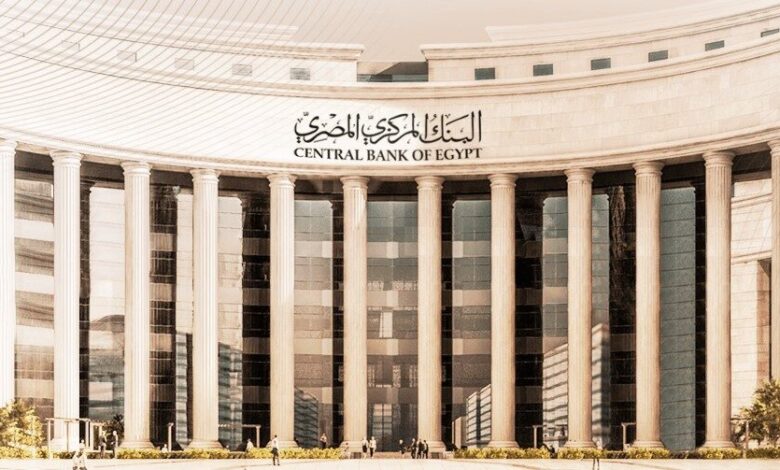
The Monetary Policy Committee (MPC) of the Central Bank of Egypt (CBE) is set to hold its first regular meeting of 2026 on Thursday to decide the fate of key policy rates – the main indicator of the short-term direction of pound interest rates – amid strong expectations of a cut ranging between 1% and 2%.
At its previous meeting on 25 December, the committee decided to cut rates by 1%, bringing the overnight deposit rate to 20%, the overnight lending rate to 21%, and the main operation and credit and discount rates to 20.5%. The CBE said at the time that the decision was appropriate to maintain a monetary policy stance capable of anchoring inflation expectations and supporting the disinflation path.
Annual core inflation eases
The Central Bank said on Tuesday that annual core inflation declined to 11.2% in January 2026, down from 11.8% in December 2025. On a monthly basis, core consumer price index (CPI) inflation recorded 1.2% in January, compared with 0.2% in December.
Meanwhile, the Central Agency for Public Mobilisation and Statistics (CAPMAS) reported that annual urban inflation fell to 11.9% in January, from 12.3% in December 2025. Nationwide annual inflation eased to 10.1%, compared with 10.3% a month earlier, while monthly headline inflation rose to 1.5% from 0.1%.
The CBE has previously projected that inflation would decline towards its target of 7% (±2%) on average during the fourth quarter of 2026. However, it noted that the pace of disinflation remains somewhat constrained by the gradual easing of non-food inflation and the impact of fiscal consolidation measures. Ongoing global geopolitical tensions also continue to pose upside risks to inflation expectations.
Pace of monetary easing
The central bank has stressed that decisions on the pace of monetary easing will be guided by inflation forecasts, surrounding risks and incoming data. It affirmed that it will continue to closely monitor economic and financial developments, assess their potential impact, and deploy available tools as necessary to ensure price stability and steer inflation towards its target.
Prominent banking expert Mohamed Abdel Aal said opinion is currently divided into two broad camps. One expects rates to remain unchanged as a precaution against potential inflationary pressures and regional risks, while the other believes the economy is now ready to continue the easing cycle that began in April 2025.
He said supporters of further easing point to several positive indicators, including an improvement in the pound’s performance, rising foreign exchange reserves, a significant increase in banks’ net foreign assets, and renewed momentum in non-resident portfolio inflows.

Cautious view
According to Abdel Aal, the case for holding rates – the “cautious view” – is linked in part to the maturity of 27% savings certificates, worth around EGP 1trn, which began maturing in January and will continue until April. Advocates of maintaining rates argue that allowing savers to roll over their funds at current yields would help prevent large liquidity shifts into non-banking channels at a sensitive juncture.
He added that despite the downward trend in inflation, limited price increases could emerge in February due to higher cigarette and mobile phone prices, as well as seasonal increases in consumer goods prices during Ramadan. For this reason, some analysts prefer to wait for additional confirmation that the disinflation trend is firmly entrenched before proceeding with another rate cut.
Abdel Aal also noted that rising geopolitical tensions in the region may restrict monetary policy flexibility, prompting some to favour maintaining the pound’s attractiveness as a stable savings instrument.
The logic of the real economy
In contrast, the case for cutting rates – which Abdel Aal describes as the “logic of the real economy” – rests on the argument that real interest rates have become excessively high. Rapid disinflation combined with elevated nominal rates has widened the real return gap, increasing financing costs and weighing on investment and production activity.
He also highlighted the potential fiscal benefits, noting that a 1% cut in interest rates would translate into meaningful savings on public debt servicing, creating additional fiscal space to redirect resources towards development priorities and social protection programmes.
Abdel Aal added that as the US Federal Reserve and other major central banks move gradually towards easing, maintaining an excessively wide interest rate differential between the Egyptian pound and major currencies becomes less necessary and may even undermine Egypt’s financing competitiveness.
“In my view, the balance of real economic and monetary considerations now tilts towards another rate cut, based on a comprehensive set of factors,” Abdel Aal said.
Supporting growth and employment
He explained that the economy has reached a stage where lower borrowing costs are needed to stimulate production and job creation, particularly after a prolonged period of monetary tightening. Supporting the private sector, he said, requires continuation of the easing cycle, alongside bolstering the stock exchange and government offerings, as high interest rates exert downward pressure on fair equity valuations.
Abdel Aal added that initiating a gradual easing path in 2026 would help channel liquidity from maturing certificates into the stock market and support the government’s privatisation and asset-offering programme.
He said base effects, the fading impact of earlier shocks and the cumulative effect of monetary tightening all point to continued declines in inflation during the first quarter of the year. The rise in foreign exchange reserves to $52.5bn, he added, provides a strong buffer, allowing for rate cuts without significant risks to exchange-rate stability.
He also pointed to the increase in net foreign assets at the CBE and commercial banks to $25.48bn, reflecting enhanced capacity to meet external obligations, renewed confidence and improved dollar liquidity in the banking system. The relative stability of the pound – supported by foreign portfolio inflows – further strengthens the market’s ability to absorb additional rate cuts without triggering currency pressures.
Taken together, Abdel Aal said, these elements form a solid defensive shield that enables the central bank to proceed with confidence in continuing the easing cycle while maintaining macroeconomic stability.
While acknowledging that holding rates remains the more cautious option, he concluded that improved monetary indicators, falling inflation, exchange-rate stability and rising net foreign assets make a measured rate cut the more logical choice. Thursday’s meeting, he suggested, could mark another step in the easing cycle launched last year.
Current economic data
Separately, banking expert Shaimaa Wagih expects the CBE to cut interest rates by between 1% and 1.5% at its meeting on Thursday, arguing that current economic indicators support such a calibrated move.
She said Egyptian monetary policy is now working to restore balance between maintaining macroeconomic stability and supporting productive and investment activity, following an extended tightening cycle aimed at curbing inflation and stabilising the foreign exchange market.
With improvements in monetary and financial indicators, she argued, the economy is better positioned to begin a phase of gradual easing, reflecting a shift in policy priorities from managing price pressures to fostering sustainable growth.
Wagih noted that inflation has been trending downward due to base effects, the dissipation of earlier price shocks and the cumulative impact of restrictive policies. This has widened the gap between nominal interest rates and actual inflation, pushing real returns on savings instruments to relatively high levels and giving the central bank room to recalibrate rates without jeopardising price stability.
A cut of 100 to 150 basis points, she said, would preserve the attractiveness of bank deposits while alleviating financing pressures across the economy.

Higher borrowing costs
Persistently high interest rates, Wagih said, have significantly increased borrowing costs for companies and the private sector, affecting expansion, investment and production decisions. Gradual rate cuts would improve access to finance, support higher output and expand operating capacity, thereby strengthening the private sector’s contribution to GDP.
She added that lowering financing costs is a key driver of new investment, particularly in industrial and technology sectors that rely heavily on bank credit.
Public debt service remains one of the most pressing challenges for public finances, with interest payments accounting for a substantial share of total government expenditure. A 1-1.5% rate cut, she said, would generate tangible fiscal savings that could be redirected towards public investment and enhanced social protection. It would also improve debt management by reducing government borrowing costs and supporting fiscal sustainability.
More flexible monetary policy
Wagih said positive developments in the external sector further enhance the central bank’s capacity to adopt a more flexible monetary stance. Higher foreign reserves provide a strong safety buffer supporting exchange-rate stability, while the improvement in net foreign assets across the banking system signals restored balance between foreign currency liabilities and assets.
Exchange-rate stability and improved pound performance – supported by non-resident portfolio inflows – reduce the risks associated with cutting interest rates. These inflows provide a key source of foreign currency liquidity, strengthening the economy’s ability to absorb the effects of easing without destabilising the local currency.
She added that monetary easing would help redirect liquidity from traditional savings instruments towards capital markets. High interest rates typically dampen equity valuations, whereas the start of an easing cycle would improve listed companies’ valuations, boost trading volumes and support the state’s government offerings programme by creating a more attractive investment environment.
Stimulating economic activity
According to Wagih, a 100-150 basis point cut would reflect a balanced monetary approach that supports growth while safeguarding stability. She said such a move would confirm that the Egyptian economy has entered a new phase requiring greater policy flexibility, allowing activity to be stimulated without disrupting macroeconomic balances or reigniting inflation.
Meanwhile, HC Securities & Investment expects the central bank to cut key policy rates by between 1.5% and 2% at Thursday’s meeting. The firm said Egypt’s external position has demonstrated notable resilience, supported by indicators that strengthened foreign exchange market stability and improved the pound’s exchange rate against the dollar.
Heba Mounir, the firm’s macroeconomic analyst, cited a roughly 2% month-on-month increase in net international reserves to a record $52.6bn in January, alongside a sharp 33% rise in deposits not included in official reserves – up by $3.4bn to $13.7bn. She also highlighted an 8% month-on-month increase in banks’ net foreign assets to $25.5bn in December.

State foreign-currency resources
She added that the case for a rate cut is reinforced by improvements in state foreign currency resources. Remittances from Egyptians abroad have increased by around 13% since the start of the year, despite a 3% month-on-month dip in November to $3.6bn. Suez Canal revenues rose by 18% year-on-year to $365m in January, tourism recorded record levels in 2025, and Egypt’s current account deficit narrowed by around 45% year-on-year to $3.24bn in the first quarter of FY2025/26.
Egypt’s one-year credit default swap (CDS) spread fell to 176 basis points from 336 basis points a year earlier, while the pound strengthened by approximately 8% year-on-year against the dollar.
Domestically, the Purchasing Managers’ Index (PMI) slipped to 49.8 in January from 50.2 in December, remaining close to the 50-point threshold. The reading reflected easing cost pressures, with total input costs rising at the slowest pace in ten months, enabling firms to cut prices for the first time in five and a half years.
Mounir expects average consumer inflation to range between 9.5% and 10% in 2026, with January inflation projected at 11.4% year-on-year due to favourable base effects, in line with the CBE’s target of 7% (±2%) by the fourth quarter of 2026.
Government debt instruments
On foreign appetite for Egyptian government debt, she noted that the latest 12-month Treasury bill auction yielded an average interest rate of 23.5%, implying a positive real return of around 8.99% based on a 12-month inflation forecast of approximately 11%, after accounting for a 15% tax discount for European and American investors. This suggests that treasury bills remain attractive.
The decline in the CDS spread, she added, should also lower the return required by foreign investors on Egyptian debt instruments.
Despite some easing in geopolitical tensions – including renewed US-Iran talks, indications of a potential end to the war in Ukraine by mid-2026, and a ceasefire agreement in Gaza reached on 10 October 2025 despite sporadic violations – risks remain present.
“Given the stability of Egypt’s external position, the appreciation of the pound, positive real returns on Treasury bills, slower input cost growth, relative easing in geopolitical risks and the expected decline in inflation, we believe the MPC has room to cut interest rates by 150 to 200 basis points at its upcoming meeting on 12 February,” Mounir said. “Such a move would support private sector activity, stimulate growth and reduce the government’s domestic debt service burden.”
A Reuters poll of 14 economists similarly forecast a 1% rate cut at Thursday’s meeting, extending the easing cycle as inflation continues to moderate.


