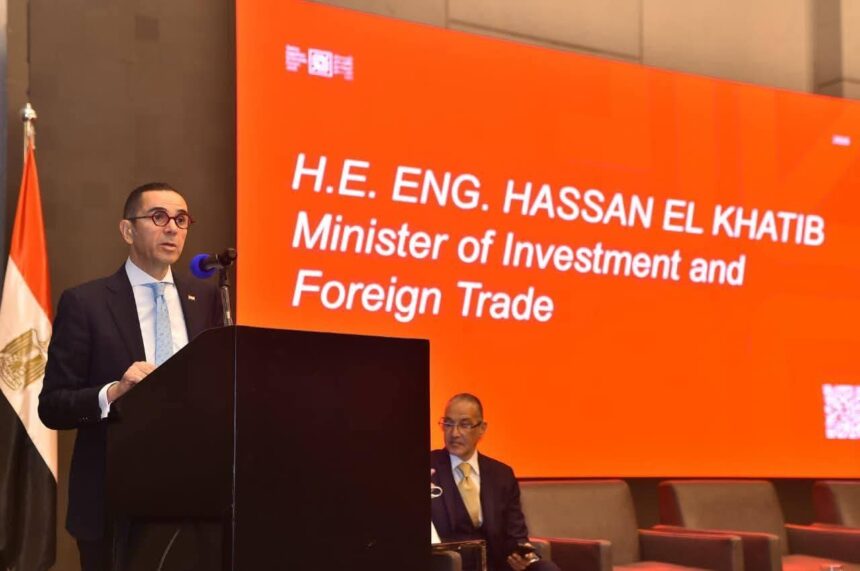
Hassan El-Khatib, Minister of Investment and Foreign Trade, took part in the Egyptian-Swiss Economic Forum organised by the Swiss Chamber of Commerce in Egypt, underscoring the depth and momentum of economic relations between the two countries.
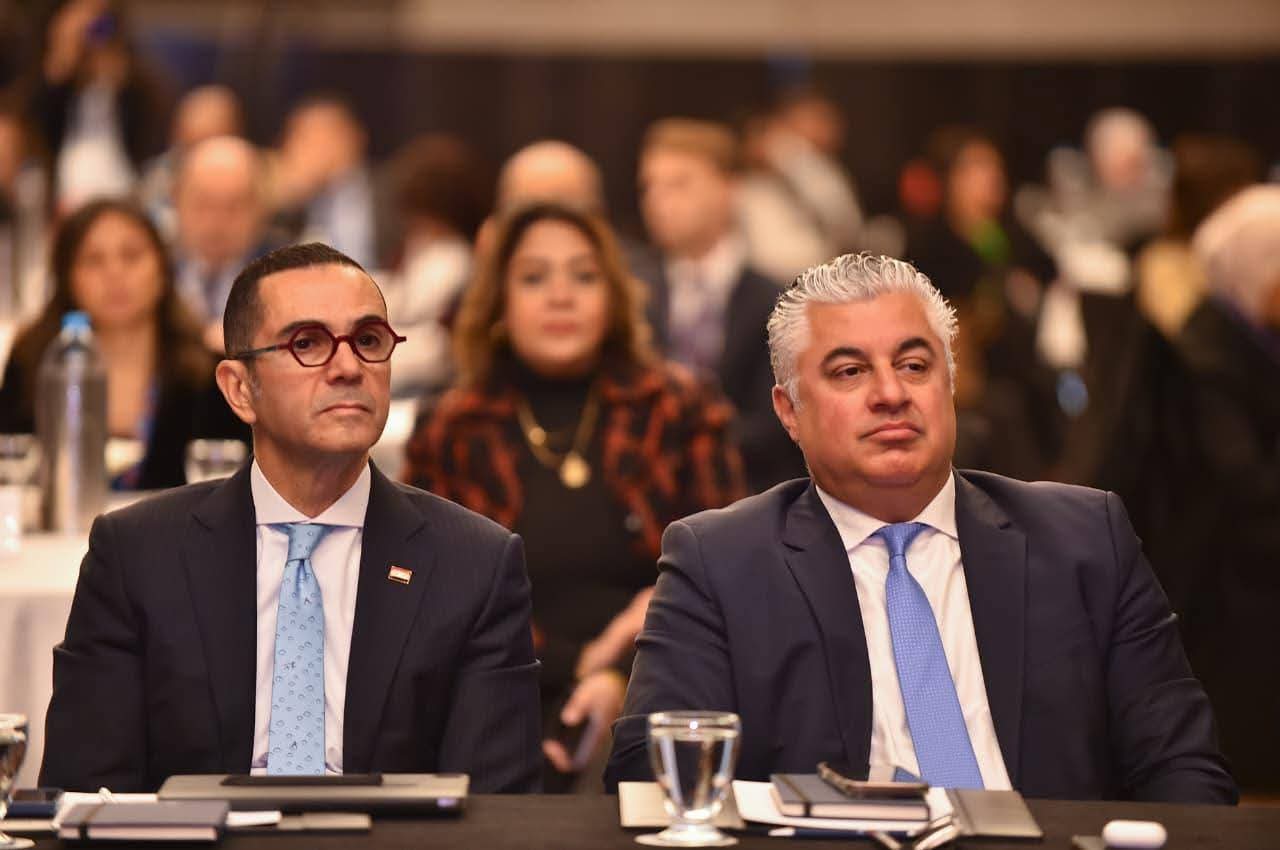
The forum was attended by Khaled Abdel Ghaffar, Deputy Prime Minister for Human Development and Minister of Health and Population; Ashraf Naguib, Co-Founder and CEO of Global Trade Matters; Andreas Baum, Switzerland’s Ambassador to Cairo; Helene Budliger Artieda, Swiss State Secretary for Economic Affairs; and Kamal Abdel Malek, Chairperson of the Swiss Chamber of Commerce in Egypt.
El-Khatib described the Egypt-Switzerland partnership as a distinguished model of bilateral cooperation, citing the diversity and strength of relations across precision industries, pharmaceuticals and heavy industry. He noted that the partnership reflects strong complementarity between the two countries’ industrial and technological capabilities.
He added that as European countries seek to enhance competitiveness and reorganise global supply chains, they increasingly require geographically closer and more flexible partners. In this context, El-Khatib said Egypt is a pivotal partner due to its strategic location and expanding productive capacity.
Trade relations between Egypt and Switzerland are gaining tangible momentum, the minister said, noting that bilateral trade exchange reached approximately $2.3bn last year, recording a surplus in Egypt’s favour. This, he explained, reflects the robustness of economic ties between the two countries.
El-Khatib highlighted that more than 100 Swiss companies currently operate in the Egyptian market across advanced industrial and technological sectors, serving as efficient production and export platforms. This presence, he said, reflects growing confidence in the Egyptian economy and opens the door to deeper partnerships, including local manufacturing and technology transfer.
The minister pointed to substantial state investments in infrastructure over recent years, including road networks, ports and energy projects, alongside the establishment of more than 22 new cities. He stressed that full coordination between the Cabinet and relevant ministries has helped create a supportive economic environment in which the private sector leads development efforts.
He noted that infrastructure investments over the past decade have laid the groundwork for a more sustainable economic take-off, while an integrated package of economic reforms launched around a year and a half ago has focused on enhancing competitiveness and improving the business climate.
On monetary policy, El-Khatib said the government adopted an approach prioritising inflation reduction rather than exchange-rate targeting. This contributed to lowering inflation from nearly 40% to about 12.3% over 18 months, with the Central Bank projecting inflation of between 7% and 9%.
He added that other indicators demonstrate the success of the reform programme, as foreign assets increased from around $18bn to nearly $30bn, while international reserves exceeded $51bn.
Fiscal policy has also undergone a qualitative shift, El-Khatib said, with the Ministry of Finance adopting a simplified, investor-friendly approach. Despite no tax increases, tax revenues rose by 35% in one year—the highest increase since 2005—reflecting improved efficiency and a broader tax base.
In terms of trade facilitation, El-Khatib said Egypt aims to rank among the world’s top 50 countries in trade competitiveness by reducing customs clearance time and costs. Within a single year, clearance time and costs were cut by 65%, generating direct savings of around $1.5bn and boosting the competitiveness of Egyptian exports.
He reaffirmed the government’s commitment to removing non-tariff barriers in cooperation with the European Union and international partners, and to opening a new chapter in investment relations. He added that Egypt recorded its lowest trade balance deficit since 2010 this year, while stressing the importance of completing deeper structural reforms to sustain growth.
Digitalisation, El-Khatib said, is a central pillar of the next phase, offering the fastest path to enhanced competitiveness. Over the past year and a half, a digital platform has been launched to provide licensing, fee payment and government services.
He explained that parliament has approved the establishment of a comprehensive “economic platform” that will cover all company incorporation services, supported by re-engineered procedures to reduce time and cost. The platform is expected to be fully implemented within 12 to 18 months and will integrate trade and investment services, linking the General Authority for Investment with other government entities.
El-Khatib also highlighted Egypt’s strategic geographic location, advanced infrastructure and extensive road network, alongside a wide network of free trade agreements with the European Union, Africa, the United States and Latin America.
He said Egypt enjoys a strong cost advantage, ranking among the lowest-cost production locations across the region spanning Europe, Africa and the Middle East, and pointed to the country’s significant solar energy potential, particularly in the Western Desert.
The minister added that Egypt aims to become a regional hub for the production and export of green energy and environmentally friendly products, as well as a net exporter of electricity, in line with the global transition to a green economy.
Concluding his remarks, El-Khatib emphasised that human capital remains Egypt’s most valuable asset. He noted that the education system includes around 25 million pre-university students and about 5 million university students, forming a base of 30 million young people driving future economic and technological growth. He reaffirmed the government’s commitment to deepening cooperation with Swiss companies through investment, technology transfer and job creation, and to providing a stable, transparent and attractive investment environment.