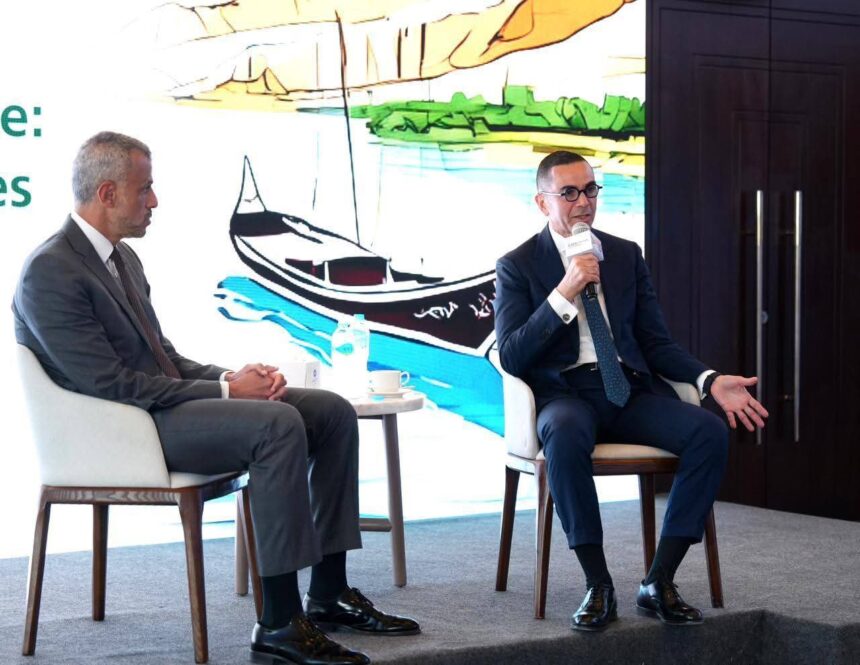
Hassan El-Khatib, Minister of Investment and Foreign Trade, said Egypt has decisively moved from a phase of stability to one of execution, noting that with macroeconomic stability restored, the focus has shifted to enhancing competitiveness, driving export-led growth and attracting private investment. These reforms, he explained, are aimed at supporting listed companies, deepening capital markets and creating sustainable long-term value for investors.
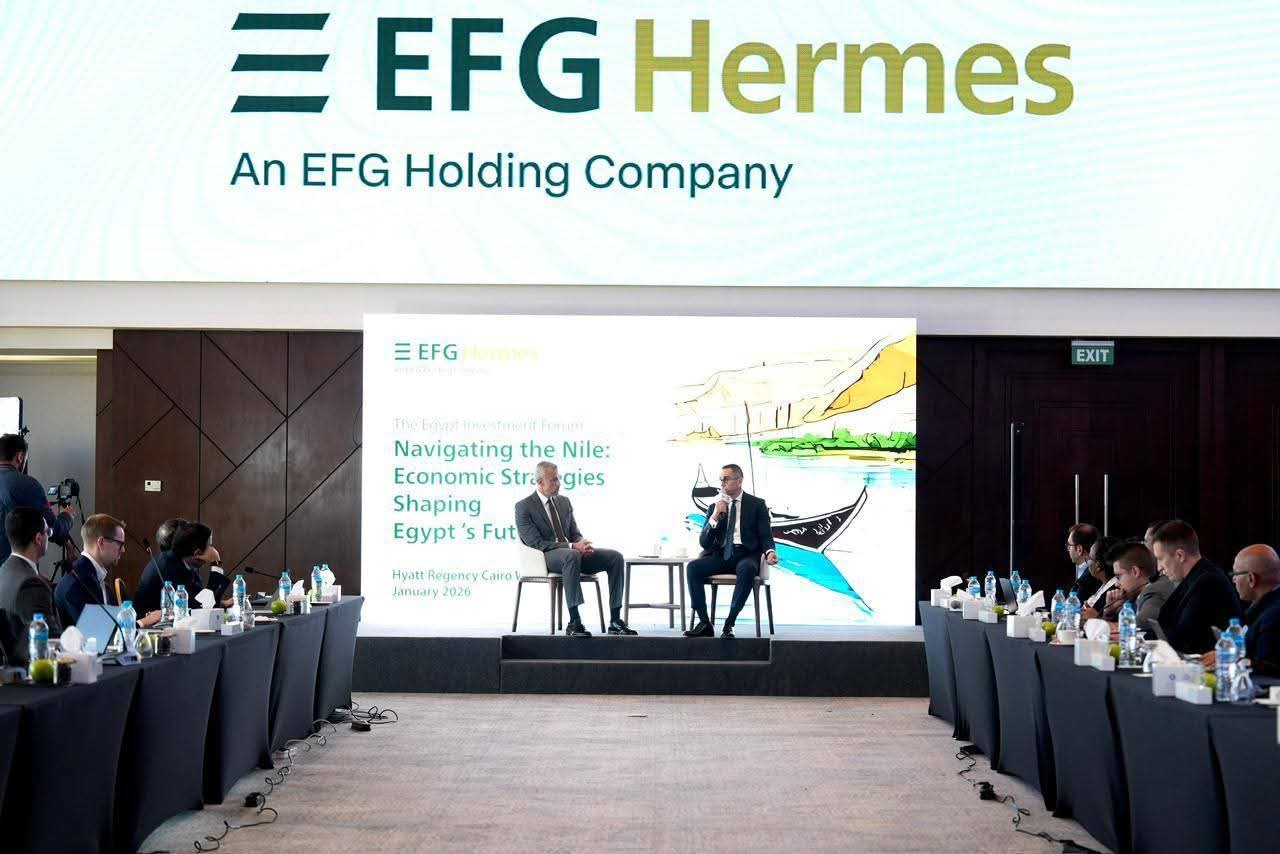
El-Khatib made the remarks during his participation in a meeting of leading global founding investors, organised by EFG Hermes—the investment bank of EFG Holding and a leading financial institution in the Middle East and North Africa—as part of the Egypt Investment Forum. The meeting was attended by Karim Awad, Group Chief Executive Officer of EFG Holding, alongside senior representatives of international investment institutions and Ghada Nour, Assistant Minister of Investment for Investment Affairs, Promotion and Government Offerings.
The minister said the Egyptian government has prioritised restoring confidence in the national economy over the past year, describing it as the essential gateway to achieving sustainable growth and enhanced competitiveness. He explained that current economic policies follow a logical sequence that begins with stability, progresses through reform and culminates in effective execution, ultimately delivering attractive investment returns.
El-Khatib pointed to more than $550bn in infrastructure investments implemented across ports, road networks, logistics, energy and digital infrastructure. He stressed that these investments were designed to address long-standing structural bottlenecks rather than achieve superficial expansion, noting that the current phase focuses on enabling the private sector to maximise returns from this ready infrastructure.
He said Egypt’s economic reform programme rests on four integrated pillars: monetary policy, fiscal policy, trade policy, and redefining the role of the state as a regulator and enabler of economic activity. These pillars, he added, are being implemented simultaneously to ensure a tangible and sustainable improvement in the investment climate.
On monetary policy, El-Khatib said the shift towards inflation targeting marked a pivotal step in restoring credibility, as reflected in improved macroeconomic indicators. Net foreign assets have returned to surplus, remittances from Egyptians abroad have risen to $36.5bn, inflation declined to around 12% in November, and foreign reserves increased to nearly $50bn—developments that have collectively restored confidence and stabilised the exchange market.
Regarding fiscal policy, the minister said it is being implemented under the leadership of the Minister of Finance with a focus on achieving discipline without undermining growth. Measures include simplifying the tax system, resolving tax disputes, expanding digitalisation and setting a clear cap on public investment to avoid crowding out the private sector. The objective, he said, is to achieve a competitive effective tax rate that enhances Egypt’s investment appeal.
El-Khatib also noted that, for the first time, the government has conducted a comprehensive inventory of all non-tax fees and charges to address a key concern for investors—namely, the multiplicity of fees and collection authorities. This step, he said, will help reduce costs and time while improving transparency.
On trade policy, El-Khatib described it as a central tool for supporting investment and export-led growth, noting that work is under way to finalise Egypt’s first trade policy document since 2002. The goal, he said, is to expand exports, stressing that Egypt does not suffer from an import problem, as around 85% of imports are production inputs and about 10% are essential goods, with additional imports supporting sectors such as tourism. He added that Egypt aims to rank among the world’s top 50 exporting countries.
“To achieve the required increase in export figures, we are working to boost both foreign and domestic direct investment by encouraging hundreds of companies to invest in Egypt,” El-Khatib said.
He added that customs clearance times have been reduced from 16 days to 5.8 days, with a target of reaching just two days by the first quarter of 2026. These reforms have already generated estimated savings of $1.5bn, expected to rise to $2.1bn once fully implemented. He also highlighted the launch of a new export rebate programme based on clear rules and a commitment to disbursement within 90 days.
El-Khatib said Egypt’s extensive network of trade agreements provides exporters with access to multiple markets, noting that Africa represents a major opportunity for expanding exports. Egypt’s geographic location and trade agreements, he added, position the country as a gateway to African markets.
He explained that the state has redefined its role in economic activity through the State Ownership Policy, which clearly sets out areas of government participation and exit, ensuring that the state no longer competes with private investors.
The minister stressed that digital transformation represents the main execution engine of reforms rather than a purely procedural exercise. He noted that the Business Ready 2026 programme includes 209 reforms based on private-sector-led standards, while platforms such as electronic licensing, the Egyptian Business Gateway and the National Trade Platform have unified the investor journey and reduced overlap among government entities.
During the meeting, El-Khatib addressed questions from international investors regarding private sector participation and measures to attract further investment. In this context, he said Egypt currently attracts average annual foreign direct investment of around $12bn, with a target to double this figure. Achieving this, he added, will depend on continued efforts to promote investment in priority sectors, particularly new and renewable energy, tourism and industry, supported by infrastructure development and port modernisation.
He concluded by noting that ongoing projects along the North Coast are set to transform Egypt’s tourism landscape, highlighting large-scale developments being implemented in partnership with the private sector, which contribute to job creation and broader development objectives.