The sun had barely risen over the dusty plains of Maskanah when the ceasefire, once hailed as a diplomatic breakthrough, dissolved into the rattle of machine-gun fire. For the soldiers of a Syrian Army patrol, Saturday was meant to be a day of orderly transition; instead, it became a lethal reminder of the fragility of the peace brokered last spring.
By the time the smoke cleared near the eastern Aleppo countryside, two government soldiers lay dead. The incident has instantly jeopardised a high-stakes territorial handover, turning a scheduled withdrawal into a volatile confrontation that threatens to reshape the power dynamics of northern Syria.
Why This Matters Now
The escalation marks a pivotal moment in the “10 March agreement” signed last year, which sought to integrate Kurdish-led territories back into state control. As the Syrian Army pushes to secure the region west of the Euphrates, the clashes in Maskanah and Deir Hafer suggest that the “goodwill” withdrawal of the Syrian Democratic Forces (SDF) is fraying. With Damascus declaring the area a “closed military zone,” the risk of a broader return to open warfare looms over a region where 90,000 displaced civilians have only just begun to return home.
A Rapid Advance and a Fractured Truce
The Syrian Army’s operations command moved swiftly on Saturday, reporting the capture of 34 villages and towns in the Aleppo hinterlands. Key strategic assets, including the Al-Jarrah military airbase and the city of Deir Hafer, were brought under state control within hours.
However, the speed of the advance has become a primary point of contention. The SDF, composed of Kurdish, Arab, and Syriac fighters, issued a sharp warning that government troops had entered urban centres before their own units could safely exit.
“The Syrian Army entered the cities of Deir Hafer and Maskanah before the completion of our fighters’ withdrawal,” the SDF leadership stated, describing the move as a “grave provocation” with “dangerous consequences.”
In response, the Syrian military has hardened its rhetoric, re-classifying its counterparts as “PKK terrorist militias” and “remnants of the old regime.” Despite this, the Syrian operations command maintains that it is attempting to avoid direct engagement, claiming they are entering areas without targeting SDF personnel in accordance with standing orders—provided the withdrawal continues.
Restoring Order Amidst Displacement
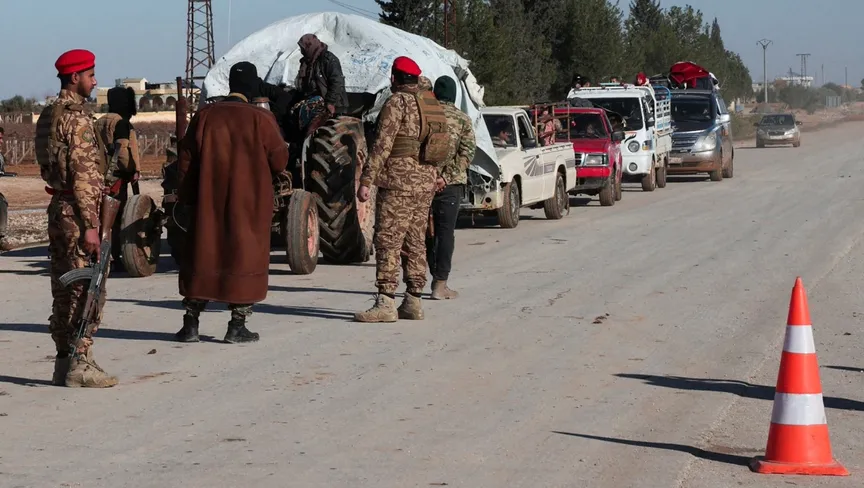
In the streets of Deir Hafer, the transition is already visible. Internal security units have begun field deployments to manage public facilities and provide a sense of normalcy to a population weary of shifting frontlines.
The humanitarian stakes remain high. Data from the United Nations Office for the Coordination of Humanitarian Affairs (OCHA) indicates:
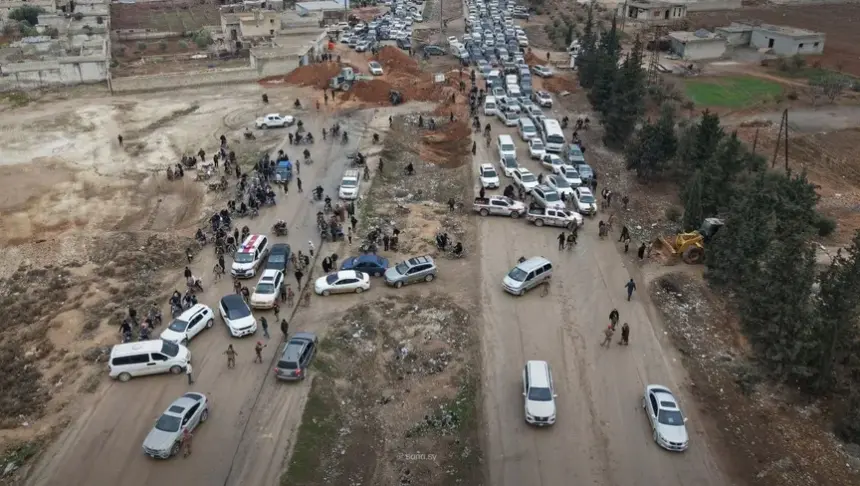
- 90,000people have returned to their homes in Aleppo following recent stabilisations.
- 58,000people remain internally displaced.
- The Syrian Army has issued urgent warnings for civilians to avoid “operation zones” until mine-clearing teams can neutralise war remnants.
International De-escalation Efforts
The breakdown in trust has triggered immediate international concern. Washington has moved into a “crisis management” role, with U.S. envoy Tom Barack confirming that American officials are working “around the clock” to salvage the integration talks.
“We are in close contact with all parties to prevent further tension and return to the integration framework,” Barack stated via the social media platform X, emphasizing that the focus must remain on preventing a resurgence of extremist elements in the vacuum of a state-SDF conflict.
As the Syrian Army continues its march toward the town of Dibsi Afnan, the spirit of the March 10 agreement appears thinner than ever. What began as a strategic effort to consolidate the Syrian state now rests on a knife-edge, where a single misfire in the Aleppo countryside could ignite a firestorm that neither Damascus nor the SDF is prepared to extinguish.