

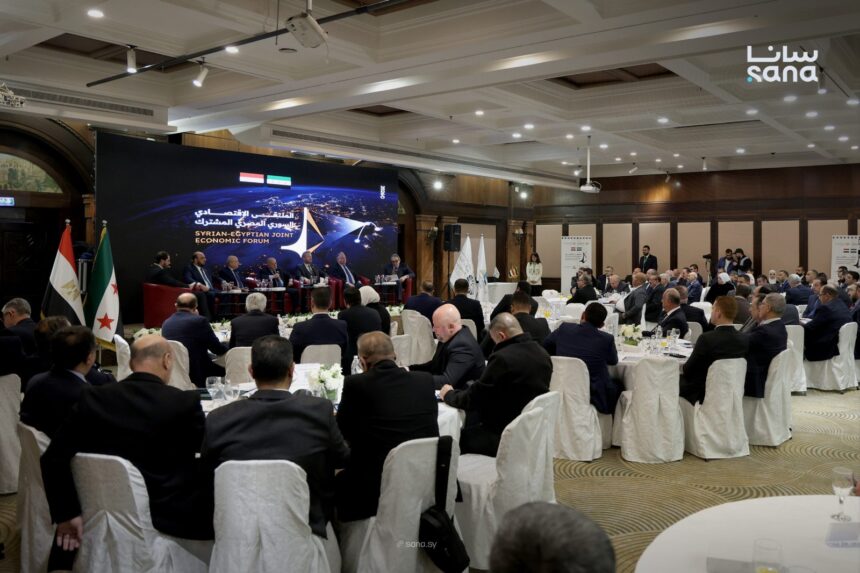
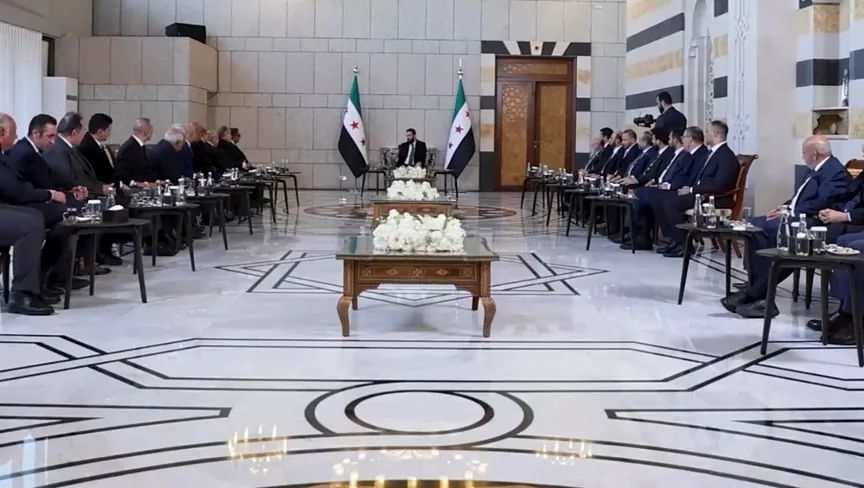
In the historic halls of Damascus, a city pivoting from the shadow of conflict toward the blueprints of reconstruction, a meeting took place on Sunday that had been 15 years in the making. As Interim Syrian President Ahmed Al-Sharaa welcomed a high-level Egyptian economic delegation, the atmosphere shifted from diplomatic formality to the pragmatic reality of industry and regional trade.
“The relationship between Syria and Egypt is not a luxury; it is a duty,” al-Sharaa told the assembled business leaders. It was a sentiment that echoed a bygone era of pan-Arab unity, now being repackaged for a 2026 economy hungry for investment, stability, and regional integration.
Why This Matters Now
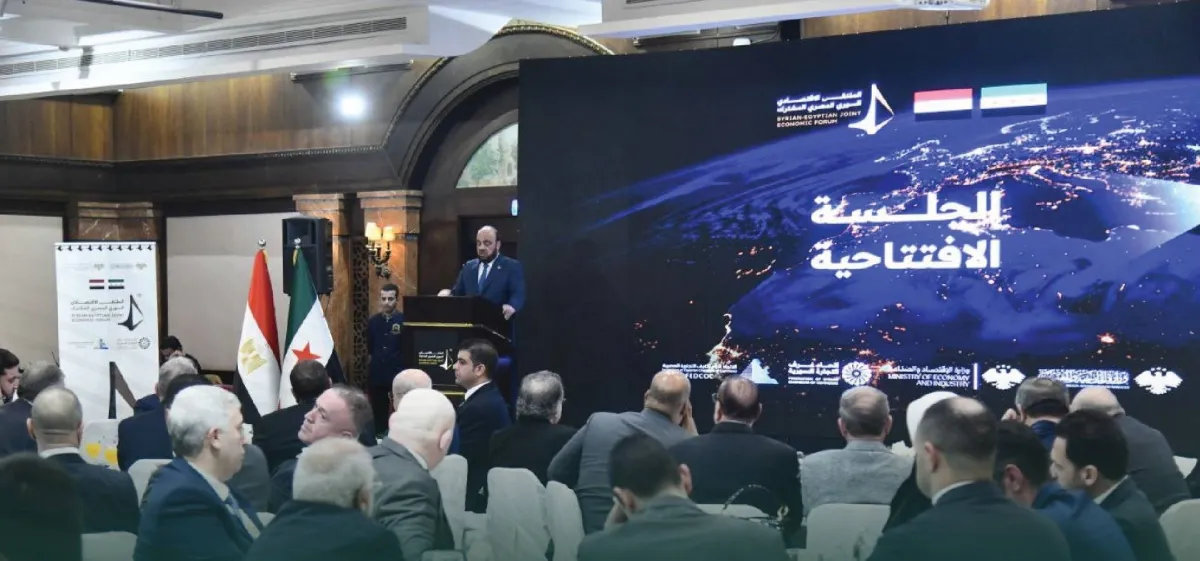
The Syrian-Egyptian Economic Forum marks the first high-level mission of its kind since 2011, serving as a critical turning point for regional commerce. With the signing of two landmark memoranda of understanding (MoUs) between national Chambers of Commerce, Cairo and Damascus are formalising an economic bridge that has operated in the shadows for over a decade. This move signals Syria’s transition toward a private-sector-led recovery, targeting a formalised trade volume of $1bn as international banking barriers begin to lift.
The “Invisible” $1bn trade path
While formal diplomatic ties were frozen for years, the pulse of commerce between the two Mediterranean nations never truly stopped. Alaa Ezz, advisor to the Federation of Egyptian Chambers, revealed that despite the historical closure of the SWIFT international payment system, bilateral trade remained resilient through indirect routes.
“The volume of trade between Egypt and Syria is approximately $1bn,” Ezz told Asharq. Much of this has been moving through Jordan and Turkey, meaning the figures were often attributed to third nations. Ezz anticipates that throughout 2026, with the reopening of SWIFT and the formalisation of direct trade corridors, the true scale of this economic engine will finally be visible on official balance sheets.
A Blueprint for Reconstruction and Energy
For the Syrian leadership, the Egyptian economic model over the last decade under President Abdel Fattah Al-Sisi serves as a template for rapid infrastructure development. President al-Shara’ specifically lauded Egypt’s strides in green hydrogen and renewable energy, describing the move as “far-sighted” and environmentally sound.
Syria’s emerging economic policy appears to be a mirror of this approach: moving away from state-dominated industry toward a private-sector-led recovery. “Syria has passed through multiple stages and is now ready for reconstruction,” al-Shara’ noted, acknowledging that while local expertise remains vast, the country requires “regional cooperation” to heal the structural damage of the last 15 years.
Strategic Investment Sectors
The synergy between the two nations is rooted in what Syrian Minister of Economy and Industry, Nidal al-Shaar, calls “natural integration.” The two countries share almost identical patterns of production, particularly in the textile and agricultural sectors.
Key areas for the new Egyptian-Syrian partnership include:
- Infrastructure & Real Estate:Companies like Mena Real Estate Development are already seeking clear investment laws to begin work on housing and urban projects.
- Energy and Ports:Modernising coastal infrastructure and gas exploration in the Mediterranean.
- Agriculture:A strategic priority to lower food costs by creating a regional supply chain involving Syria, Egypt, and Iraq.
- Logistics:Minister of Transport Yaarab Badr highlighted opportunities in phosphate transport and the potential for Syria to act as a land bridge connecting European markets to China.
The Future of the Axis
Ahmed El-Wakil, President of the Federation of Egyptian Chambers of Commerce, underscored the human element of this rapprochement. “Syria and Egypt are one people,” he said, noting that the Egyptian private sector is prepared to transfer its expertise in infrastructure and industry to its northern neighbour.
As the forum concluded, President Al-Sharaa thanked the Egyptian people for their “warm welcome” of Syrian refugees over the past decade, suggesting that this “emotional investment” is the foundation for the multibillion-pound projects to come. As the two nations move further into 2026, the goal is clear: to ensure that the “natural extension” of their markets finally matches the rhetoric of their shared history.


