

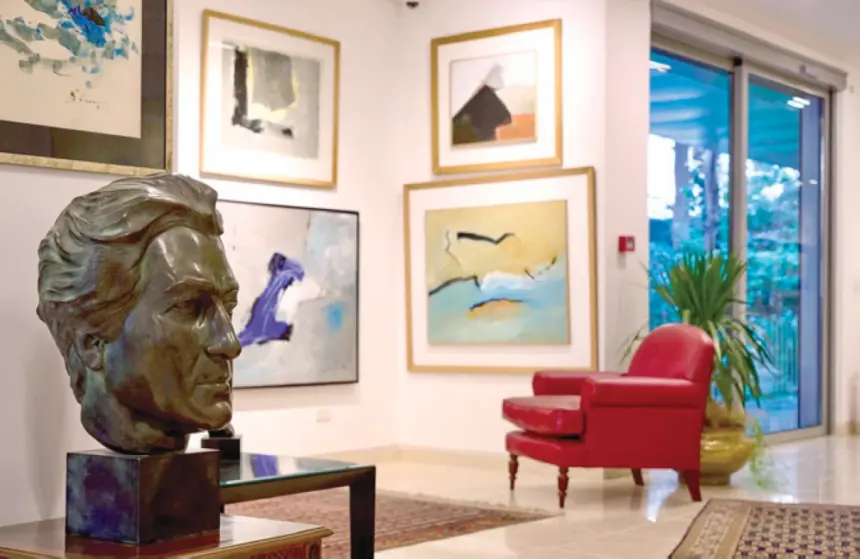
Egypt’s Minister of Culture Ahmed Fouad Hanno has inaugurated the Farouk Hosny Museum in Cairo’s Zamalek district, describing the preservation of creative memory as a fundamental pillar of cultural work.
The opening ceremony for the museum, which showcases the work of the artist and former minister of culture, was attended by several ministers, ambassadors, and cultural figures. Minister Hanno stated that the museum represents an inspiring addition to the cultural and artistic scene, noting that state institutions and the cultural community value Hosny’s decades-long career in Egyptian and Arab fine arts.
“Art is a great reality that flits between dreams and wakefulness; it touches us, yet we cannot grasp it,” Farouk Hosny said at the event. “It is a truth whose wisdom is only understood by those who listen well. Perhaps those who come to the museum will find an opportunity for internal dialogue, and to listen to the wisdom of colour, the secret of formation, and the innocence of vision.”
Hanno noted that highlighting the experiences of creators is essential for enhancing aesthetic awareness and allowing new generations to interact with influential artistic models. He also emphasised the importance of integration between state institutions and civil society, stating that cultural initiatives by non-governmental and private organisations expand the scope of creativity alongside official institutions.
The museum, which operates under the Farouk Hosny Foundation for Culture and Arts, features a selection of the artist’s works reflecting his various aesthetic transitions and creative stages. The collection includes pieces that have been featured in international museums and forums.
In addition to Hosny’s own work, the facility houses his personal collection of masterpieces by other Egyptian and international artists. The site also includes a specialised library of art and literature, a music library, and a media room designed for displaying artworks and documentary films.
The ministry statement described the museum as a living cultural project that seeks to revive aesthetic dialogue and establish art as a sustainable human value.


