

Saudi Arabia has ordered the complete withdrawal of United Arab Emirates forces from Yemen within 24 hours, declaring its national security a “red line” following a military strike on what it described as unauthorised UAE-linked weapons shipments.
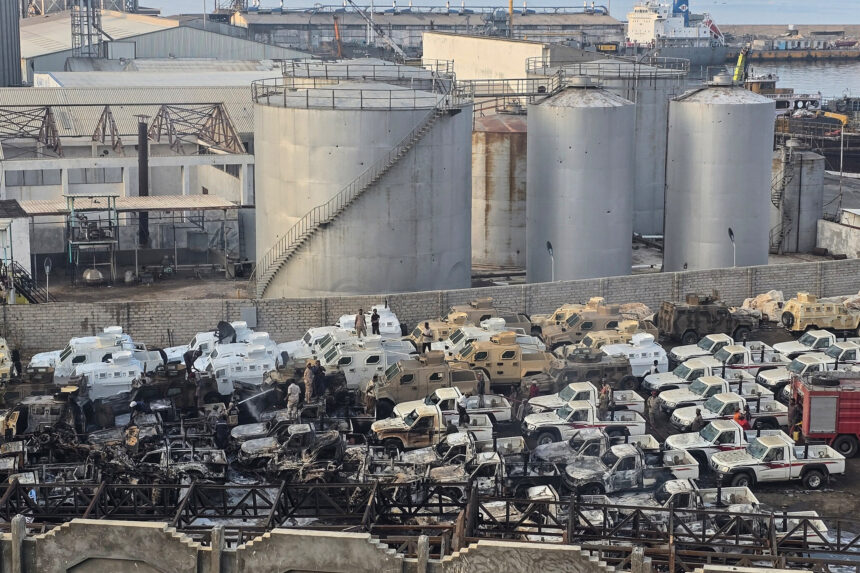
The demand, issued by the Saudi Ministry of Foreign Affairs on Tuesday, followed a “limited military operation” by coalition aircraft to destroy equipment offloaded at the port of Al-Mukalla. The ministry expressed “disappointment” with its Gulf ally, accusing Abu Dhabi of pressuring Southern Transitional Council (STC) forces to conduct military operations along the Saudi border in Hadramout and Al-Mahara.
“The Kingdom stresses that any threat to its national security is a red line, and the Kingdom will not hesitate to take all necessary steps and measures to confront and neutralise any such threat,” the Saudi statement said.
The diplomatic rupture intensified as the UAE Ministry of Defence announced later on Tuesday the immediate termination of its remaining counterterrorism personnel in Yemen. While the UAE stated it had concluded its main military presence in 2019, it maintained specialised personnel for counterterrorism missions. The ministry said this withdrawal was being conducted “of its own volition” following an assessment of the current phase and the safety of its personnel.
The escalation began after coalition spokesperson Major General Turki al-Malki alleged that two ships from the UAE port of Al-Fujairah arrived in Al-Mukalla on Dec 27-28, disabling tracking systems to offload “large quantities of weapons and combat vehicles” for the STC without permits. Malki stated the shipment violated UN Security Council Resolution 2216 and was intended to “fuel conflict” in eastern Yemen.
The UAE Ministry of Foreign Affairs “categorically” rejected these claims, stating the shipment contained no weapons and the vehicles were intended for UAE forces, not Yemeni parties. Abu Dhabi said there had been high-level coordination with Riyadh regarding the vehicles and an agreement they would not leave the port.
“The UAE was surprised by the targeting of the vehicles at the Port of Mukalla,” the UAE ministry said, adding that the coalition spokesperson’s statement was issued without consultation with member states.
The crisis has split Yemen’s governing body. Rashad al-Alimi, head of Yemen’s Presidential Leadership Council (PLC), delivered a televised address cancelling a joint defence agreement with the UAE and ordering its forces to leave within one day. Alimi declared a 90-day nationwide state of emergency and a 72-hour air, sea, and land ban on all ports, except those authorised by the Saudi-led coalition.
“The role of the UAE has become directed against the people of Yemen,” Alimi said, describing recent STC military advances as an “unacceptable rebellion.” He ordered Saudi-backed “Nation’s Shield” forces to seize control of military camps in Hadramout and Al-Mahara.
However, four members of the PLC issued a joint statement late Tuesday rejecting Alimi’s “unilateral” decisions. They argued the council must act by consensus and warned that “demonising” the UAE would benefit Yemen’s enemies.
Saudi Arabia reiterated its “full support” for Alimi’s government. While acknowledging the Southern cause as “just,” Riyadh maintained it must be resolved through dialogue rather than military escalation near the Kingdom’s borders.
The UAE ministry noted that the current developments raise “legitimate questions” regarding the handling of the issue, calling for coordination and wisdom in the face of threats from Al Qaeda, the Houthis, and the Muslim Brotherhood. The Saudi Ministry expressed hope that the “principles of brotherhood” within the Gulf Cooperation Council (GCC) would prevail to preserve bilateral relations.
