

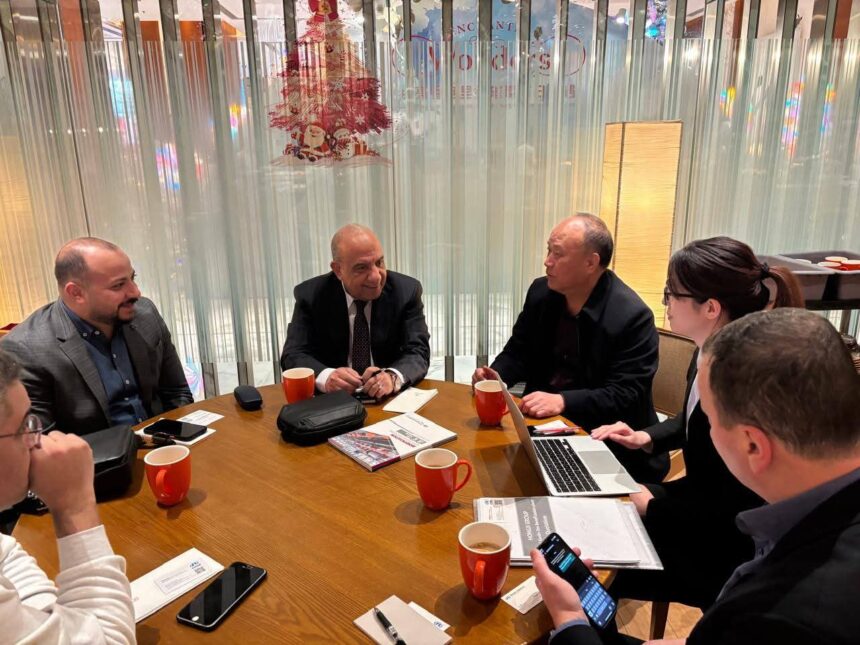
Mahmoud Essmat, Minister of Electricity and Renewable Energy, concluded his meetings and field visits during his current trip to China with a series of discussions aimed at strengthening cooperation and advancing the localisation of electrical equipment manufacturing in Egypt.
The meetings brought together Essmat with Chen Xiaoling, chairperson of the Ancora Group; Chen Xiaoling, chief executive officer of a company specialising in smart electrical equipment and cable terminations; Cao, general manager of the Guitang Group for solar energy support solutions; and Bai Yang, chairperson of Hongji Group for Mining Services and Equipment.
Discussions focused on cooperation and partnership frameworks, as well as the latest developments related to establishing production lines in Egypt to localise the manufacture of high- and extra-high-voltage cable terminations. Talks also covered plans to establish a factory to localise gas-insulated cable technology, in addition to producing a range of equipment supporting cable line installation and smart monitoring systems.
These efforts fall within the Ministry of Electricity and Renewable Energy’s broader strategy to support domestic industry, localise modern technologies and expand the manufacture of electrical equipment. The approach aligns with the ministry’s work plan and the programmes of affiliated companies to raise the local component in renewable energy projects and to develop, support and upgrade the unified electricity grid across all voltage levels.
During his meeting with Hongji Group officials, Essmat reviewed the company’s activities in mineral extraction and the technologies it employs to process kaolin ore. These materials are used in the production of paper, ceramics, coatings and a range of other industrial applications, highlighting opportunities to integrate mining outputs into Egypt’s wider industrial value chains.
Talks with Ankora Group officials addressed progress in completing internal approvals to inject the required investments for establishing production lines in Egypt. Discussions also covered the partnership models applied in the company’s overseas investments, land requirements for launching the first production line, and preparations to commence operations in the Egyptian market for the first time.
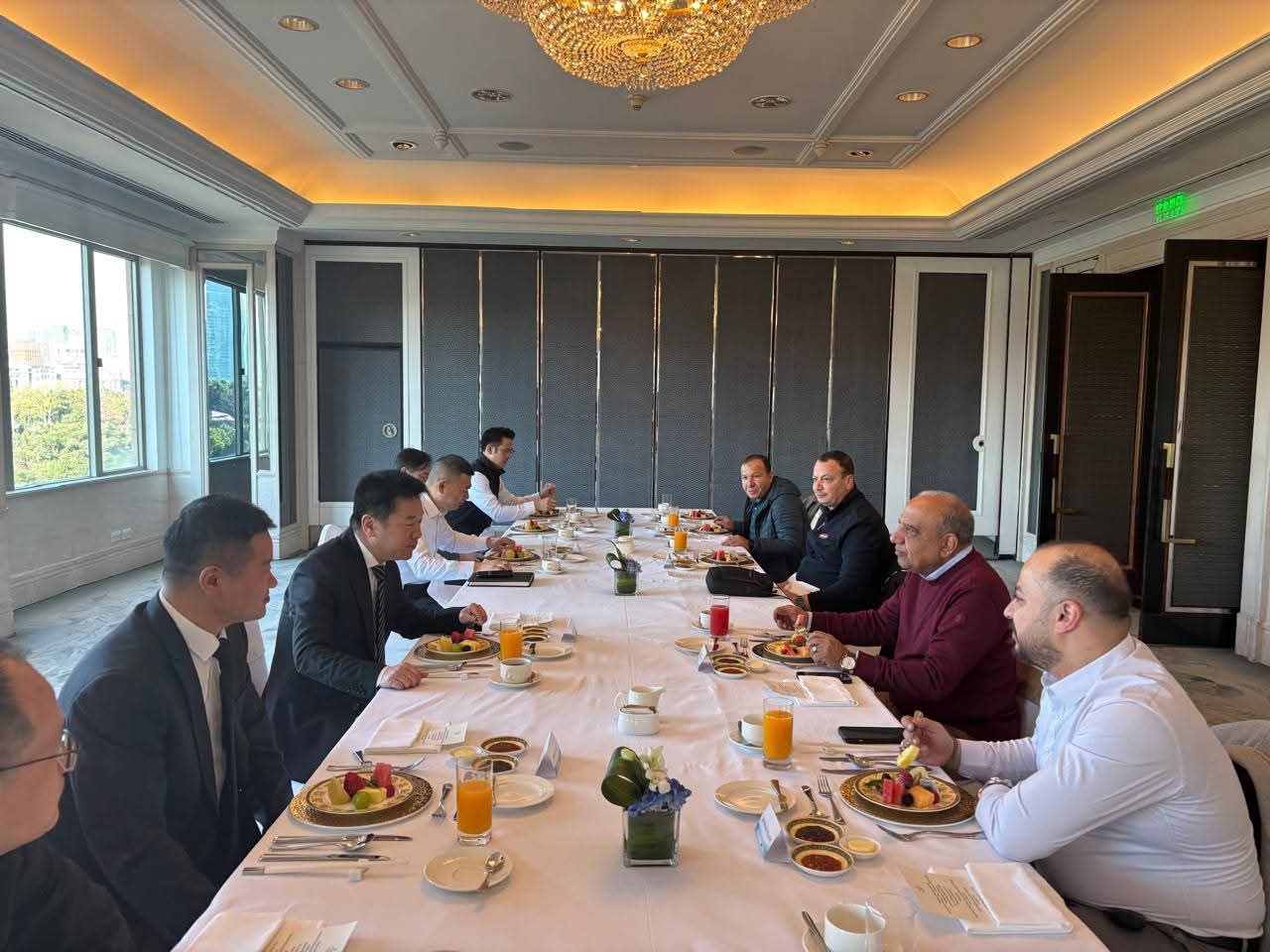
The meeting further reviewed the company’s expertise in manufacturing high- and extra-high-voltage equipment, including medium- and extra-high-voltage cable terminations and accessories rated up to 750 kilovolts, as well as hybrid gas-insulated transmission lines. These systems offer a smart alternative to conventional underground cables and overhead lines, contributing to lower costs, longer operational lifespans and higher safety standards.
The technology relies on aluminium alloy conductors insulated within gas-filled lines, reducing technical losses by more than 60% compared with traditional cables. The discussions also covered the manufacture of oil-filled extra-high-voltage transformers, gas-insulated switchgear, integrated smart transformer and switchgear cells, and modular, fully insulated smart substations with no exposed live parts, designed to withstand harsh weather and environmental conditions.
In his meeting with Jutiang Group officials, Essmat discussed opportunities for cooperation in the establishment of solar power plants, as part of Egypt’s broader strategy to expand renewable energy capacity and diversify its energy mix.
Essmat said Egypt offers a large and diverse local market, alongside a broad regional market encompassing neighbouring countries. He pointed to existing electricity interconnections and trade agreements that enhance Egypt’s position as a gateway for regional energy cooperation and equipment exports.
He added that a comprehensive strategy is being implemented to localise industry, transfer advanced technologies and provide all forms of support to investors and partners. Essmat also outlined ongoing efforts to support and develop the electricity system, highlighting the national energy strategy and the progress achieved in recent years to position Egypt as a regional hub for electrical equipment manufacturing.
The minister highlighted regulatory measures that give priority to locally manufactured products in the implementation of national energy projects and in efforts to support and upgrade the unified grid across all voltage levels.
He reaffirmed the ministry’s commitment to supporting partnership and cooperation with both local and foreign private sector entities, opening the door to their participation in the modernisation and development of the electricity sector, improving asset management and utilisation, and maximising economic returns.


