

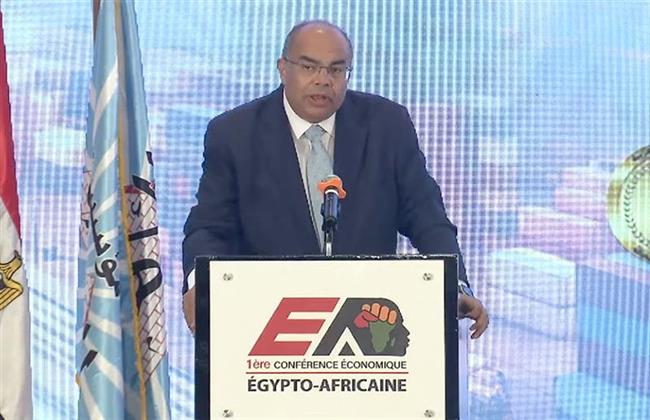
Africa needs a coordinated “Club of Debtors” to negotiate fair restructuring terms and counter the inflated risk premiums that are strangling the continent’s development, a senior United Nations envoy said on Saturday.
Speaking at the 1st Egyptian-African Economic Conference in Cairo, Mahmoud Mohieldin, the UN Special Envoy on Financing the 2030 Agenda, warned that the continent faces a deepening economic divide.
“We are witnessing a divergence rather than a convergence in economic standards,” Mohieldin said.
He noted that while Africa’s population is projected to exceed 20% of the global total by 2030, its share of global income risks falling below 3% if current trends continue.
The “Risk Premium” Trap
Mohieldin argued that international perceptions of doing business in Africa are distorted, leading to unjustifiably high borrowing costs.
Citing data updated over the last 30 years, he pointed out that actual default rates in Africa are significantly lower than averages in Latin America and Asia. Despite this, African nations and businesses often face financing costs that are three to four times higher than their European counterparts.
“There is a ‘risk premium’—an exaggerated perception of risk in Africa that does not match reality,” Mohieldin told the summit.
A New Approach to Debt
With international concessional finance shrinking and private sector investors remaining risk-averse, holding only an 11% share of investment, Mohieldin proposed a more unified front for debtor nations.
Just as creditors coordinate through bodies like the Paris Club, Mohieldin suggested African nations should form a “Club of Debtors.”
“Not to evade payment, but to create a platform for coordination, transparency, and fair restructuring of debts,” he clarified. The goal, he added, is to prevent governments from being forced to choose between servicing debt and funding essential services like education and healthcare.
Demographic Dividend vs. Crisis
The envoy highlighted the stark contrast in wealth distribution, noting that globally, the top 1% controls over 41% of wealth, a disparity particularly acute in developing regions.
However, he pointed to Africa’s demographics as its primary asset. With a median age of 19—compared to over 40 in Europe—the continent possesses massive human capital potential, provided it can secure the “fair financing” needed to invest in them.
Mohieldin also urged a crackdown on Illicit Financial Flows, noting that significant capital leaves the continent illegally through tax evasion, requiring stronger international coordination to stem the tide.
“Africa is promising,” Mohieldin concluded. “But capitalizing on this requires… a shift from simply exporting raw materials to creating value within the continent.”


