

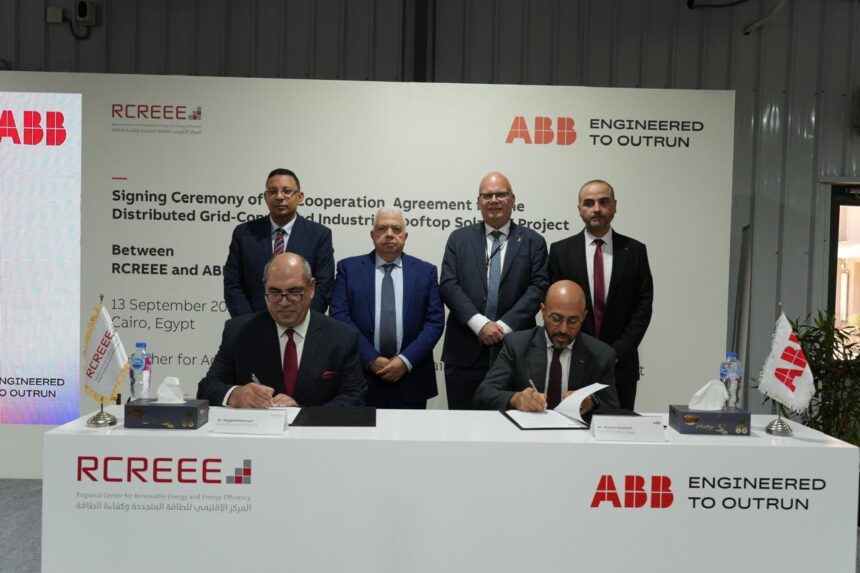
ABB Egypt has begun implementing a rooftop solar energy project across several of its factories in partnership with the Regional Center for Renewable Energy and Energy Efficiency (RCREEE), as part of efforts to reduce industrial carbon emissions and increase the use of renewable energy.
The project has a total installed capacity of 3.3 megawatts and is expected to generate approximately 5.05 gigawatt-hours of electricity annually. It is projected to reduce carbon dioxide emissions by around 2,846 tonnes per year, equivalent to avoiding the consumption of more than 1.22 million litres of fuel annually.
The project is scheduled to be connected to the national electricity grid in 2027 and is designed to operate for 30 years. It will support the objectives of the “Shams Al-Sinaa” initiative, which seeks to deploy up to 1,000 MW of rooftop solar systems across industrial facilities in Egypt.
Ahmed Hammad, Chairperson of ABB Egypt, said the project demonstrates the company’s commitment to supporting Egypt’s transition towards more sustainable industrial operations. He added that ABB would continue investing in electrification, automation, and digital technologies to improve industrial efficiency and reduce carbon emissions.
Abdullah Kassem, Board Member and Electrification Commercial Lead at ABB Egypt, said the project would help improve energy efficiency, strengthen power-supply reliability, and reduce operational costs. He added that ABB aims to shift 70% of its operational energy consumption to solar power by 2027.
Maged Mahmoud, Acting Executive Director of RCREEE, described the partnership as a practical example of cooperation between regional institutions and the private sector to accelerate the transition towards a lower-emission industrial sector.
ABB Egypt said the project forms part of its wider efforts to reduce its environmental footprint and support the adoption of renewable energy and energy-efficiency solutions across industrial facilities.

