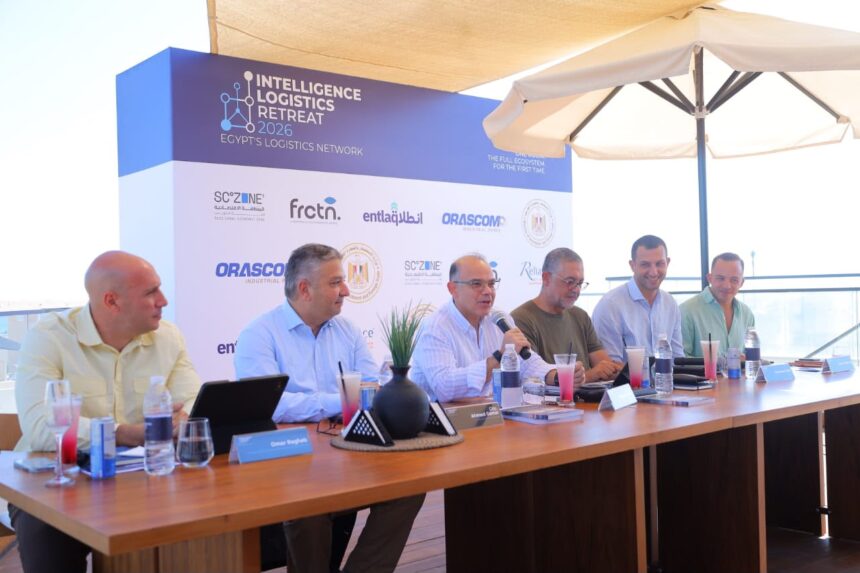
Mohamed Farid, Minister of Investment and Foreign Trade, said the Ministry is maintaining close coordination with the Ministry of Finance, the Customs Authority and other relevant agencies to expedite the release of goods.
He noted that the average customs clearance time had fallen from around 16 days in June 2024 to approximately 5.8 days, with work under way to achieve a target of two working days. This is being pursued through an integrated system covering pre-clearance, electronic documents, bills of lading and electronic certificates of origin, risk management and enhanced digital connectivity among relevant authorities.
Farid made the remarks during his participation in a conference and dialogue sessions with representatives of several companies operating in the logistics services sector, organised by Entlaq. The discussions focused on challenges facing services supporting foreign trade, as well as ways to support companies and develop their capabilities in shipping, storage, handling, insurance and other services linked to the movement of trade, thereby enhancing the efficiency of domestic supply chains.
Farid said developing the capabilities of the logistics services sector is a strategic priority for strengthening the competitiveness of Egypt’s foreign trade. He noted that the efficiency of systems for transporting, storing and distributing products and production inputs has a direct impact on production costs and the ability of Egyptian products to compete and reach foreign markets.
He explained that the Ministry aims to work with companies operating across various segments of the logistics system to identify challenges hindering their expansion and efforts to improve efficiency, while exploring ways to support them and develop their capabilities. This would help build more efficient and resilient domestic supply chains capable of meeting the needs of productive and export-oriented sectors.
The Minister of Investment and Foreign Trade stressed the importance of integration among the various services linked to the movement of trade, from transporting production inputs and goods through shipping, handling, storage, warehouse management and insurance services to moving products to domestic markets and export outlets. Improving the efficiency of each link in this chain helps reduce time and costs while enhancing the competitiveness of Egyptian products.
Farid said investors view their operations as an integrated journey that begins with establishing and operating a project and extends to their ability to bring in production inputs, move goods within the domestic market and efficiently reach local and international markets. This makes logistics services a key enabler of investment, production and exports.
He stressed that digital transformation is an important tool for improving the efficiency of the logistics sector. He also noted that the Ministry is working to develop a regulatory environment for testing new technological solutions in digital trade documentation, goods tracking, supply chain management and logistics technology. This would allow such solutions to be tested in cooperation with relevant government authorities before successful models are rolled out more widely.
Moreover, Farid pointed out that technology offers significant opportunities to improve the utilisation of available logistics capacity by connecting service providers and matching shipments with available capacity, reducing empty trips and increasing the utilisation rates of transport fleets and warehouses. It would also provide smaller companies with greater opportunities to reach customers and access financing.
He added that the Ministry’s vision for the logistics sector extends beyond its role in supporting merchandise exports. It also views logistics services themselves as exportable services, explaining that transit, transshipment, shipping, storage and re-export services can generate additional economic value by leveraging Egypt’s strategic location and infrastructure.
The Minister of Investment and Foreign Trade stressed the Ministry’s commitment to ensuring that discussions with private-sector representatives produce practical outcomes by identifying the most significant bottlenecks and challenges affecting trade flows, operating costs and exports. He also highlighted the importance of distinguishing between issues requiring infrastructure development, those requiring regulatory and procedural reforms, and those that can be addressed through technology, data and more efficient use of existing capacity.
Farid stressed that developing the logistics services system and improving the efficiency of domestic supply chains are integral to efforts to enhance the competitiveness of the Egyptian economy. He reaffirmed the Ministry’s continued partnership with the private sector to translate challenges and proposals into practical measures that reduce the cost and time involved in trade flows, support the expansion of productive and export-oriented sectors, and strengthen Egypt’s ability to access regional and international markets.