

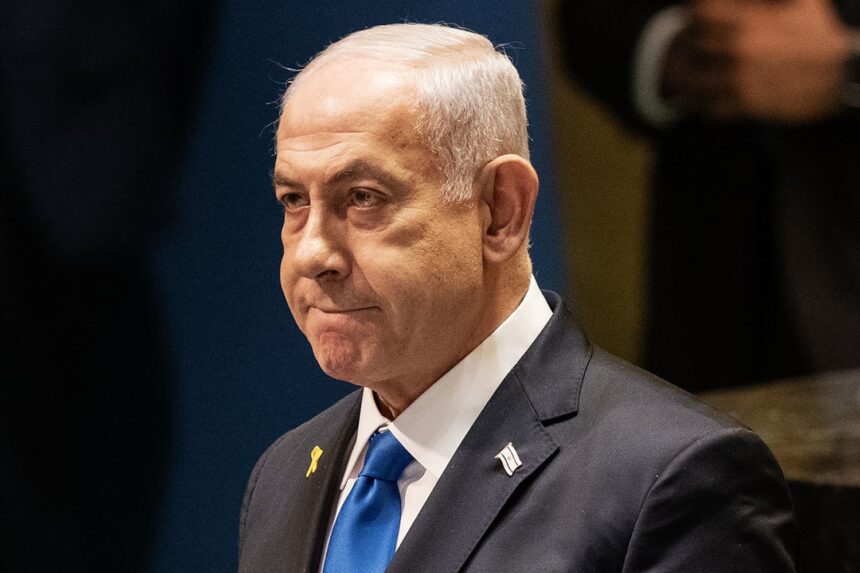
For Benjamin Netanyahu, war remains the ultimate political lifeline. Without it, his grip on power could weaken, exposing him to the legal consequences of corruption and bribery cases that have long shadowed his career. Israel’s domestic landscape today resembles a surreal tableau where the ambitions of politicians and parties collide with a deeply divided society, exhausted by a war that has stretched across multiple fronts.
As the next general election, scheduled for October, approaches, political tensions have escalated following the Supreme Court’s refusal to hear petitions filed by families of those killed in the October attacks. The petitions demanded the establishment of a state commission of inquiry into the events of October 7 and the war that followed—a move Netanyahu had sought to postpone.
The controversy stems from an unresolved legal debate over whether the government is constitutionally obligated to establish such a commission. Historically, state inquiries in Israel have often resulted in sweeping political and military accountability, as seen with the Agranat Commission following the 1973 Arab Israeli War and the Kahan Commission, which investigated the Sabra and Shatila massacres in Beirut in September 1982.
Experience has repeatedly demonstrated that Netanyahu performs at his political best during periods of national crisis. His career has become closely associated with a strategy of “political survival through crisis management,” transforming existential security challenges into electoral assets or mechanisms for delaying political and judicial reckoning.
His repeated invocation of “total victory” has become more than a military slogan; it functions as a political instrument that links his personal future to the achievement of an open ended military objective, effectively granting his government an indefinite mandate to remain in power. Likewise, high profile military operations—such as strikes targeting Iran’s nuclear infrastructure—are widely viewed as opportunities to bolster Likud’s standing among voters. Netanyahu has also consistently highlighted his close relationship with successive US administrations, particularly President Donald Trump’s current administration, portraying himself as uniquely capable of securing unwavering international backing for Israel’s military campaigns.
Equally significant has been his ability to place the opposition in what many observers describe as a “patriotism trap.” During wartime, rivals such as Benny Gantz and Yair Lapid face considerable difficulty mounting forceful criticism while Israeli soldiers remain on active battlefields. The result has been a weakened opposition and enhanced political legitimacy for the prime minister.
The Supreme Court’s decision has simultaneously granted Netanyahu additional room to maneuver before the upcoming elections. Buoyed by opinion polls suggesting that he still commands substantial public support, his political base continues to frame his actions as necessary responses to national security imperatives.
His position has been further strengthened by persistent divisions among opposition parties attempting to build a unified electoral front. According to Israel’s Maariv newspaper, Netanyahu has recently raised the political stakes by declaring that he would even be willing to form his next government with the support of Arab parties, provided he retains authority over selecting ten candidates on the Likud electoral list. He further warned that he could take the unprecedented step of contesting the election outside the Likud Party altogether.
That threat inevitably recalls Ariel Sharon’s dramatic decision in November 2005 to leave Likud and establish the Kadima Party—a move widely described at the time as political suicide. Sharon broke with the party he had helped create after fierce disagreements with Likud’s hardline faction, then led by Netanyahu, over Israel’s disengagement from Gaza. Despite Sharon’s subsequent incapacitation, Kadima ultimately went on to lead the government.
Only a week ago, Naftali Bennett and Yair Lapid announced the formation of a new political alliance, Together, aimed at unseating Netanyahu in the coming elections. Remarkably, despite its infancy, the alliance has already emerged ahead of Likud in the latest poll conducted by Lazar Research in cooperation with Panel4All, securing 46% compared with Likud’s 42%. Yet Israeli electoral politics remains highly fluid, and voter preferences have become increasingly detached from the traditional loyalties that once defined the country’s major parties.
Despite Netanyahu’s carefully cultivated political strategy, current realities present unprecedented challenges. His government has yet to achieve a decisive outcome in Gaza, Lebanon, or in its confrontation with Iran. Even his strongest political asset—the Israeli military—no longer guarantees overwhelming public confidence, while emerging political alliances increasingly focus on what they portray as his inability to translate tactical military achievements into lasting strategic success.
As the war approaches its third year, it has exposed profound fractures within Israeli society. Large scale empirical research points to a noticeable decline in public trust and social cohesion across different sectors of the population. A recent study conducted by researchers at Tel Hai College and Tel Aviv University paints a complex picture of Israeli society after two and a half years of conflict. The findings reveal that 43 percent of respondents now fear internal political divisions more than any external threat, compared with 38 percent who identified rockets, drones, and other security threats from Hezbollah or Iran’s Islamic Revolutionary Guard Corps as their primary concern. Furthermore, many participants viewed rising violence within Israeli society itself as an even greater threat than either political polarization or external security risks.
In essence, this is the environment Netanyahu appears to view not only as an opportunity to retain power but also as a pathway toward leading Israel’s next government—not primarily out of concern for Israel’s security, but out of concern that leaving office could expose him to judicial outcomes capable of ending his career not as a statesman, but as a convicted politician.
Throughout his career, Netanyahu has repeatedly transformed national security into a vehicle for political survival. Today, however, that strategy faces its most formidable test. After years of protracted conflict and mounting domestic fatigue, Israeli society is increasingly questioning whether perpetual crisis can continue to serve as a sustainable foundation for political leadership. The defining question now is whether this model of governance can endure as public trust continues to erode.
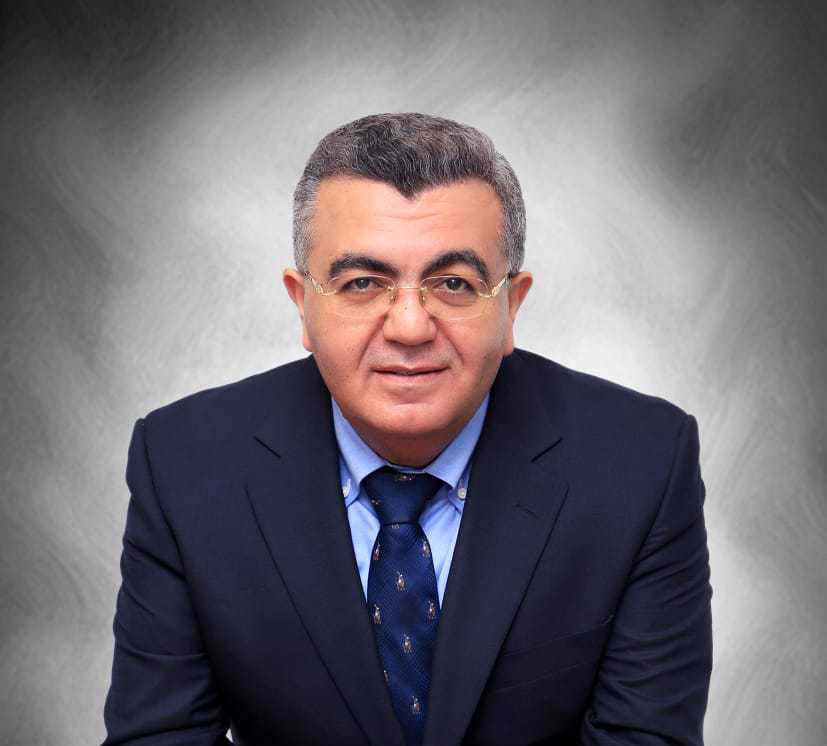
Prof. Hatem Sadek, Helwan University

