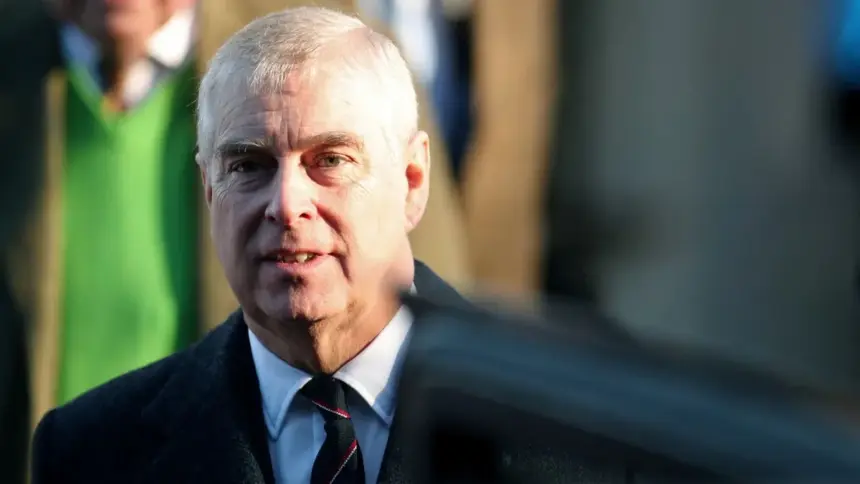
In the quiet corridors of British diplomacy in 2010, the Duke of York held a position of significant trust as the UK’s special representative for international trade. However, newly unearthed emails reveal a startling breach of that mandate. Between meetings and official tours, Prince Andrew was transmitting sensitive government dossiers on Vietnam and Singapore directly to the private inbox of convicted sex offender Jeffrey Epstein.
The revelations, emerging from a fresh cache of documents released in the United States, depict a relationship that went beyond social calls. The correspondence shows the Prince sharing official reports and trade insights gathered during his state-funded travels—documents strictly protected by confidentiality protocols governing trade envoys. For the 65-year-old Prince, who has already been stripped of his royal titles and evicted from his home, these files represent a deepening of a scandal he has spent years trying to outrun.
This latest breach of trust has done more than tarnish a royal legacy; it has ignited a political firestorm that now threatens the very stability of the British government. The “Why now?” of this crisis lies in the intersection of royal misconduct and a burgeoning leadership vacuum within Downing Street. As the Metropolitan Police launch a fresh investigation into “misconduct in public office,” Prime Minister Keir Starmer finds himself apologising for the “lies” of his appointees, while his senior staff flee a premiership many insiders now describe as “counting its final days.”
The Paper Trail: Royal Intelligence and the Epstein Link
The documents in question involve detailed trade and economic assessments of Southeast Asian markets, prepared for the Prince during his official duties. Under standard British civil service rules, such documents are classified as sensitive, intended only for the eyes of government officials and relevant commercial partners. According to the newly released files, Prince Andrew circumvented these rules, providing Epstein with an insider’s view of British economic interests abroad.
While Prince Andrew has consistently denied any wrongdoing regarding his association with the late American financier, the physical evidence of these emails has prompted renewed legal interest. Thames Valley Police confirmed last week they are “reviewing a new allegation” involving the transportation of a woman to an address in Windsor, a claim surfaced by the latest document dump.
The fallout for the Prince has been absolute. Having stepped back from public life in 2019, he was formally stripped of his military affiliations and “His Royal Highness” (HRH) style by King Charles III last October. His recent eviction from the Royal Lodge marks the final chapter in his transition from a key diplomatic asset to a legal liability for the House of Windsor.
A Government in Retreat: The Downing Street Exodus
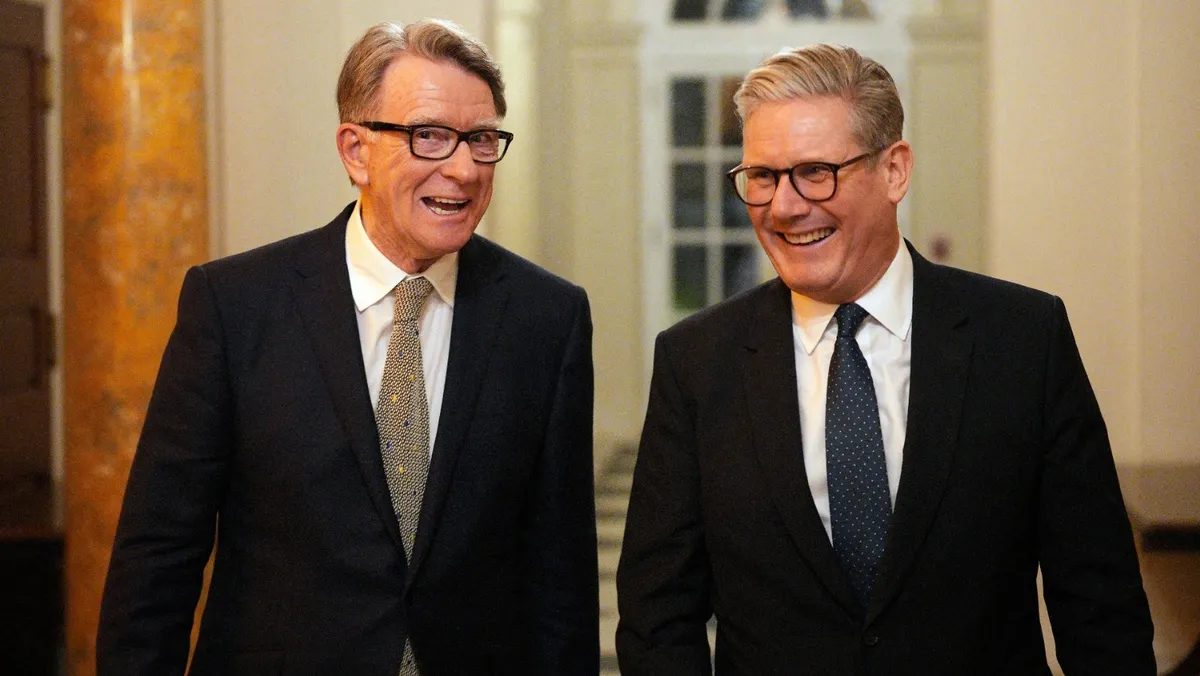
The crisis has rapidly migrated from the gates of Buckingham Palace to the steps of 10 Downing Street. Prime Minister Keir Starmer is currently navigating the most significant internal upheaval of his tenure following the disastrous appointment of Peter Mandelson as the UK’s Ambassador to the United States.
Mandelson, a veteran of the Labour Party, was forced to step down after it emerged that he, like Prince Andrew, had shared sensitive government information with Epstein between 2009 and 2010 while serving as Business Secretary. The fallout has decimated Starmer’s inner circle:
- Morgan McSweeney:The Prime Minister’s Chief of Staff resigned on Sunday, stating he took “full responsibility” for advising Starmer to appoint Mandelson, a move he admitted “undermined trust in the Labour Party.”
- Tim Allan:The Downing Street Communications Director resigned just 24 hours later, after only five months in the role, citing a need for a “new team” to be built around the Prime Minister.
“I am sorry,” Starmer told victims of Epstein during a somber address on Thursday, an unprecedented admission of failure for a sitting Prime Minister. Starmer claimed he had been “misled” by Mandelson regarding the depth of his relationship with the financier. However, the apology has done little to quieten a restless backbench.
Parliamentary Turmoil and the “Toxic” Atmosphere
Inside the House of Commons, the mood has shifted from support to survival. Labour MPs have described the atmosphere as “grim” and “toxic,” with some comparing the situation to the scandals that ended the premiership of Boris Johnson. A pivotal moment occurred when Deputy Prime Minister Angela Rayner had to intervene personally to prevent a government defeat over a motion to release all documents related to Mandelson’s appointment.
“Trust is a finite resource,” one veteran Labour MP remarked under condition of anonymity. “I am not sure I can trust myself to support the Prime Minister in a confidence vote.” While the government eventually agreed to release the documents—subject to police vetting—the delay has led to accusations of a “cover-up” by the opposition.
The Metropolitan Police have currently blocked the release of certain files, citing the risk of prejudice to an ongoing criminal investigation into whether government secrets were used as “currency” in Epstein’s high-stakes social circles.
A Leadership on the Brink
As investigators piece together the timeline of 2010, the focus remains on whether these disclosures led to tangible security breaches or commercial disadvantages for the UK. For Keir Starmer, the challenge is no longer just policy, but personnel. With his chief architect of victory, Morgan McSweeney, gone and his deputy, Angela Rayner, increasingly seen by the rank-and-file as the “true leader” in times of crisis, the Prime Minister’s path forward is narrowing.
The story that began in 2010 with a Prince sending emails to a predator has, sixteen years later, become the catalyst for a potential restructuring of the British state. Whether the government can “clear out the poison,” as one MP suggested, remains to be seen, but for now, the shadow of Jeffrey Epstein continues to loom over London’s halls of power.