

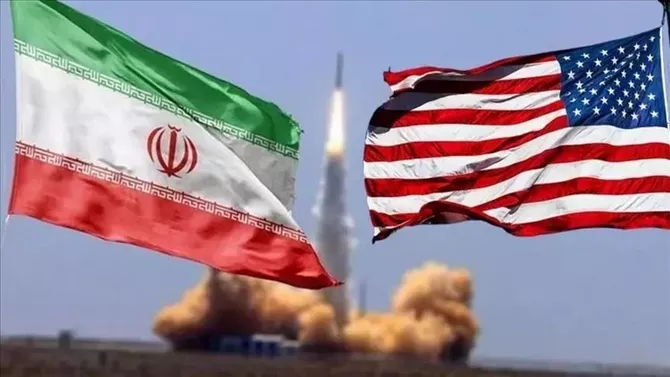
The drums of war are beating faster across the Gulf, even as Cairo leads a marathon of diplomatic efforts aimed at defusing an imminent confrontation between Washington and Tehran—a confrontation that would plunge the region into prolonged instability, with catastrophic repercussions lasting for years. In a scene reminiscent of classic “brinkmanship,” President Donald Trump continues to amass U.S. military power in the region, while deliberately leaving a narrow opening for diplomacy—not out of a genuine commitment to peace, but in pursuit of a formula that would extract historic concessions from Iran, satisfy the ambitions of his ally, Israeli Prime Minister Benjamin Netanyahu, and neutralise Tehran’s regional leverage.
The conditions Washington is brandishing as a means to avert war are effectively impossible and strike at the core of any nation’s sovereignty. The issue centres on Iran’s nuclear and missile programmes and its regional policies—policies that some may argue run counter to mechanisms of regional cooperation. Yet Iran, ultimately, is not Venezuela. Tehran has reportedly conveyed to the U.S. administration its outright rejection of these demands, while Washington insists on immediate compliance and unconditional concessions. Historically, imposing unacceptable terms in negotiations has often served as a pretext for war or for the imposition of sanctions by the stronger party against the weaker—and this is precisely the dynamic unfolding today.
For now, channels remain open between Tehran and Washington to reduce escalation. Still, Trump—adept at brinkmanship and negotiating under fire—appears inclined, to some extent, towards launching a limited strike against Iran. In recent days, U.S. forces completing their build-up near the waters of the Arabian Gulf have begun large-scale aerial exercises, possibly employing the same deceptive scenario once used by Egypt during the October 1973 War, when military drills transitioned into a decisive conflict that ultimately led to the recovery of the Sinai Peninsula.

Trump, a master of the carrot-and-stick approach, recently stated: “We have a very big naval force near Iran—bigger than what we had near Venezuela,” underscoring the scale of the current U.S. military deployment. He did not rule out a diplomatic resolution with Tehran. The American presence in the Gulf provides operational flexibility that does not necessarily imply an imminent military strike; it could just as easily translate into a tightened blockade on Iran. Meanwhile, the uncertainty surrounding the president’s final decision only compounds the crisis and raises pressing questions: Is this unprecedented show of force intended to alter the outlook of the current Iranian leadership, or does it signal a broader effort aimed at regime change?
Realistically, no one knows what Trump ultimately intends to do. Yet if we move from intentions to outcomes, any strike at this stage would weaken Iran’s ruling establishment, potentially reinvigorate popular protests, and expand the cycle of violence and counter-violence in a country already suffering from severe economic collapse. The Iranian rial has plummeted to over one million to the dollar, reflecting the depth of the crisis.
Warfare itself has fundamentally changed over the past decade due to the rise of drones and artificial intelligence technologies. In 2025, Iran carried out large-scale attacks involving the launch of more than 1,000 drones towards Israel, alongside expanded use of ballistic missiles and stealth aircraft. These tools reduce the duration of conflict and minimise the need for direct territorial occupation—along with the heavy military and economic burdens such occupation would impose on an occupying power. Logically, growing concern for living standards and deep reliance on global trade no longer allow for prolonged wars of the kind seen in the twentieth century. Even if the United States were to strike Iran, the conflict would likely resemble the brief twelve-day war of 2025 rather than a drawn-out campaign.
Given the Trump administration’s conduct across political and military arenas worldwide, it is difficult to decipher its precise strategy towards Iran, let alone the metrics of success or failure—particularly in light of past U.S. experiences in conflict zones, from Vietnam to Afghanistan and Iraq, and ultimately Venezuela.
In other words, Washington may succeed in coercing Tehran into compliance, but the story would not end there. Weakening state authority would inevitably embolden the street and could ultimately lead to the collapse of the regime itself—along with any concessions extracted under duress. The conclusion is already clear: a war on Iran will not produce a military victory, as some in Washington or Tel Aviv may imagine. Instead, it would create a power vacuum at the heart of the Middle East, inviting adventurists and opportunists alike.
Undermining Iran’s central state without a cohesive national alternative would not yield democracy; it would mean the “Afghanisation” of the Iranian plateau—turning oil fields and remnants of the nuclear programme into battlegrounds for militias and ethnic gangs. At that point, the world would realise, too late, that the cost of peace—no matter how high—was far cheaper than the bill for a war from which no one would emerge victorious.
Prof. Hatem Sadek – Helwan University

