More often than not, a country’s image is not measured by grand slogans or loud promotional campaigns, nor even by its tangible achievements alone, but by the deep impressions its people leave in the places they pass through.
I admire Germany, its culture and its ability to evolve and lead, while acknowledging its mistakes and striving to reckon with them. Perhaps it is this institutional capacity to recognise errors and transform memory into educational and cultural policies that explains many features of contemporary German character.
This is how I came to know Germany more closely, not only through books or language, but through individuals who embodied the meaning of “building the human being,” as understood and invested in by the German state over the long term. Among them are two German figures I came to know well in Cairo, both of whom left me with a lasting impression of a human and cultural model worth reflecting on: Felix Haala and Wiebke Bachmann.
When Felix Haala oversaw cultural affairs at the German Embassy in Cairo, he was not a diplomat in the conventional sense. He was closer to a quiet cultural mediator, someone who knew how to listen before speaking and how to let cultural initiatives express themselves without display. In his presence, there was genuine respect for the local context and a firm belief that culture is not managed through commands, but through trust and cumulative effort.
What stood out in his work was his attentiveness to everything that could serve Germany’s image and international standing, through constant engagement and a search for individuals and initiatives capable of creating real added value. This calm strategic sensibility allowed his role to go beyond formal duties, becoming a practical expression of cultural diplomacy in its broader sense.
Perhaps this is why his impact continued even after his move from Cairo to his current post in Abuja, Nigeria. What is built around people does not fade with changing locations.
Dr Wiebke Bachmann represents another complementary model, approached through the gateway of education. As Director of the Regional Office of the German Academic Exchange Service (DAAD) in Cairo, she embodies a generation of German educational leadership that combines academic depth with administrative excellence. Her career, spanning university teaching and leading DAAD offices in Istanbul and then Cairo, reflects a clear vision of education as a long-term strategic investment, rather than merely grants or procedures.
What distinguishes Wiebke Bachmann’s experience is not only her expertise but also her working style, calmness, clarity, respect for young minds, and a genuine belief that academic exchange is not a one-way path, but a space for mutual learning. In her presence, education feels like a lived value, not a slogan raised at conferences.
In both cases, culture and education do not appear as secondary tools within German policy, but as part of its deep structural foundations. What I witnessed in Cairo was not an exception, but rather a reflection of a long-term model that sees human development as the essence of soft power, and knowledge as the true capital of influence.
This experience also offers a quiet lesson for Egypt. Representation abroad is not merely a matter of position or protocol, but of careful selection, preparation, and trust in individuals who can carry the country’s image with competence and integrity. Investing in those who represent us is, in itself, an investment in Egypt’s soft power.
What unites Felix Haala and Wiebke Bachmann, despite the different paths they have taken, is their belonging to a clear German model of human development, namely a state that invests in education, accumulates cultural capital, and sends into the world individuals who know how to represent their country without noise. If I had already appreciated German culture and language before, I came to appreciate them even more when they became connected to a genuine human experience, confirming that cultural and educational diplomacy, when conducted with awareness and respect, leaves a deeper impact than any official rhetoric.
Ultimately, countries remain present in the world to the extent that their people succeed in embodying their values. And sometimes, just two individuals in one city are enough to make you see an entire nation in a more humane and compelling light.
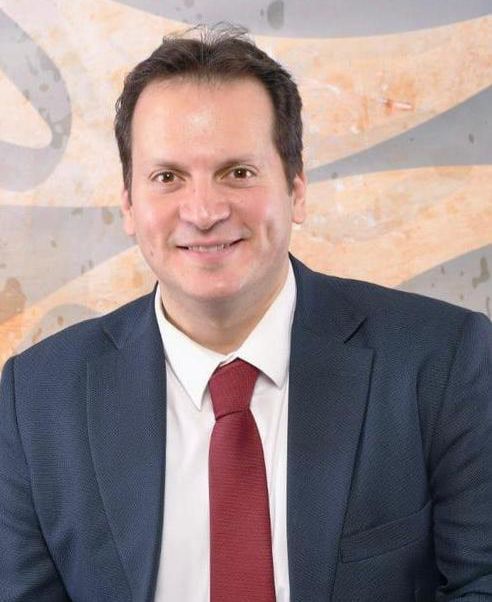
Dr Ramy Galal is an Egyptian writer and academic specialising in public management and cultural policies. He has authored studies on cultural diplomacy, the orange economy, and restructuring Egypt’s cultural institutions.
Galal holds a PHD degree from Alexandria University, a master’s degree from the University of London, and a Diploma from the University of Chile.
A former senator, and former adviser and spokesperson for Egypt’s Ministry of Planning. He was also the spokesperson for the Egyptian Opposition Coalition.