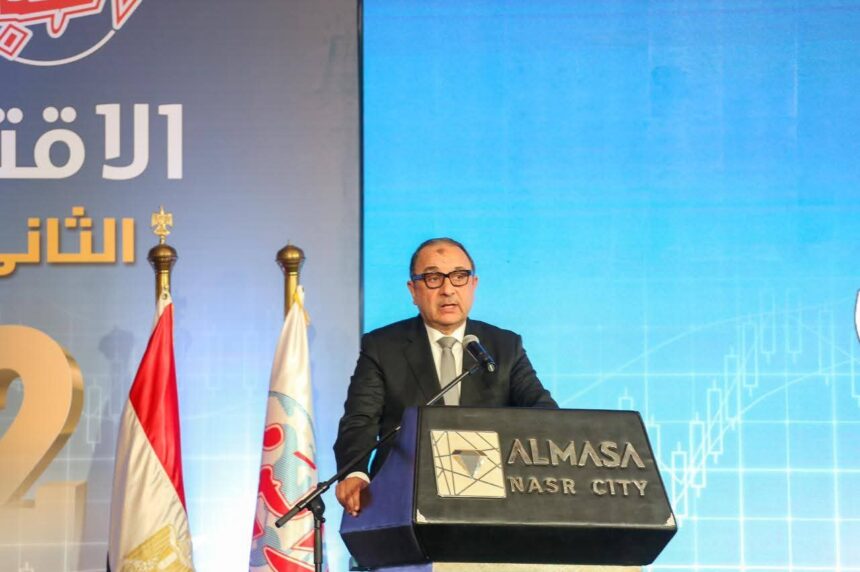
Mohamed El-Shimy, Minister of the Public Enterprises Sector, said Egypt is moving steadily towards building a strong, competitive, and sustainable economy anchored in industry, production, exports, and investment, with young people placed at the heart of the development process as a cornerstone of the “New Republic” and the true architects of its future.
El-Shimy explained that the “New Republic”, whose foundations were laid by President Abdel Fattah Al-Sisi, represents a new way of thinking and an integrated vision centred on building human capital, maximising the value of work, optimising the use of state resources, enhancing asset efficiency, and achieving comprehensive and sustainable development. This vision also focuses on industrial localisation and strengthening the competitiveness of the Egyptian economy.
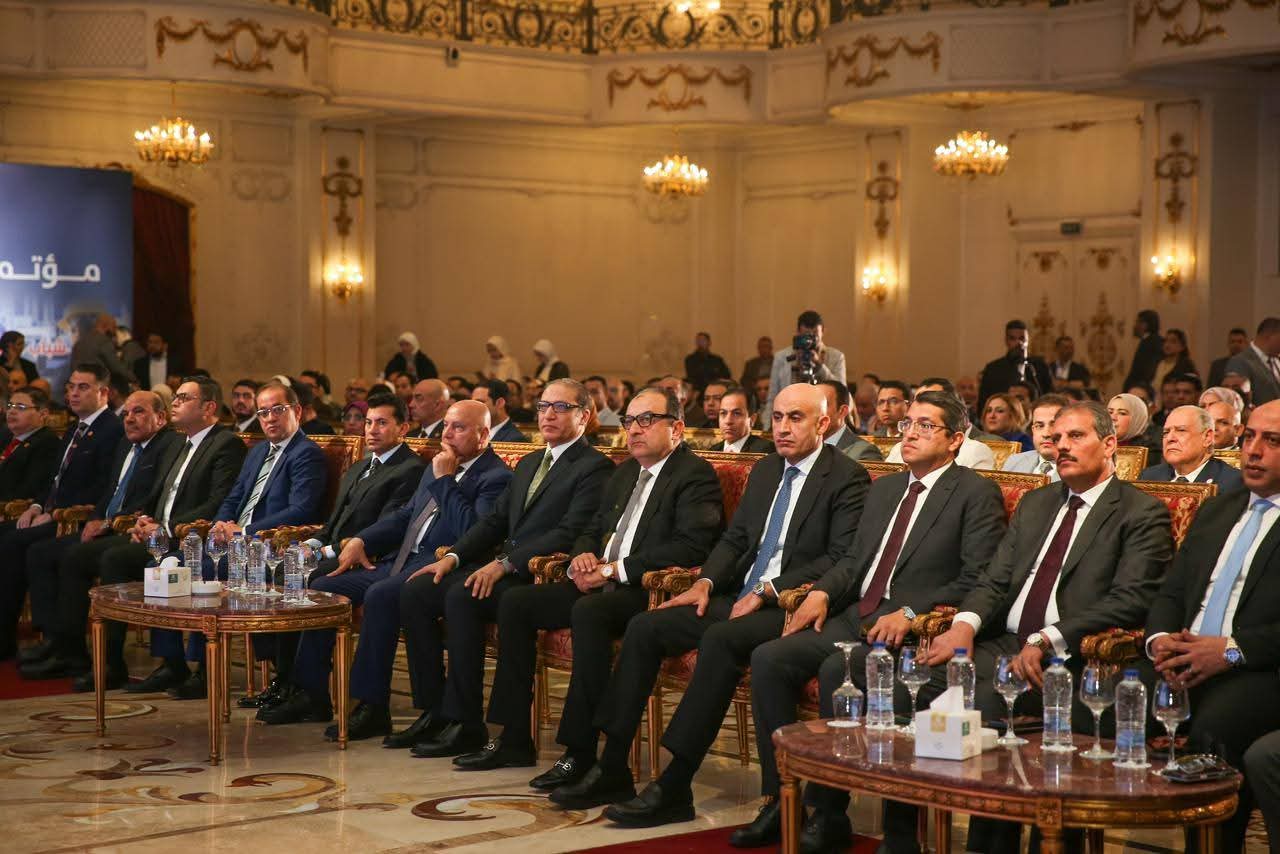
Speaking during his participation in the Akhbar Al-Youm Economic Conference, the minister stressed that the Public Enterprises Sector is a key pillar of the national economy, given its extensive industrial legacy, substantial assets, accumulated expertise, and a qualified workforce and technical base capable of acting as a real engine for industrial and export-led growth.
He noted that the ministry oversees six holding companies operating in strategic sectors, including metallurgy, chemicals, pharmaceuticals, textiles, tourism and hotels, and construction and development. These holding companies supervise 63 affiliated companies, in addition to equity participation in 106 joint ventures, reflecting both the scale of responsibility and the significant opportunities for growth, development, and maximising economic returns.
El-Shimy said the ministry’s strategy is driven by a core objective: achieving the highest possible return on state investments in Public Enterprises Sector companies, increasing their contribution to national output, enhancing their competitiveness locally and internationally, and transforming them into sustainable, growth-oriented economic entities.
He added that this strategy is being implemented through several key pillars, including improving company performance, modernising management and operational methods in line with global best practices, strengthening private sector participation as a key partner for technology and expertise transfer, adhering to international standards for quality, sustainability, occupational safety, and health, and upgrading human capital through continuous training, capacity building, and skills development.
The minister revealed that companies affiliated with the ministry are currently implementing around 157 investment projects across various sectors, with total investments estimated at approximately EGP 184bn, as part of efforts to rebuild and modernise the industrial and service base of Public Enterprises Sector companies. He added that about EGP 32bn has been allocated to environmental and energy projects, including green hydrogen production, renewable energy, energy efficiency improvements, the application of circular economy concepts, and carbon emissions reduction.
These initiatives, he said, are aligned with international environmental standards, support compliance with the EU’s Carbon Border Adjustment Mechanism (CBAM), and enhance the access of Egyptian products to global markets.
On financial performance, El-Shimy confirmed that affiliated companies achieved strong results during the 2024–2025 fiscal year, with total revenues reaching approximately EGP 126bn, marking growth of nearly 20% year-on-year. Net profits amounted to around EGP 24bn, reflecting improved operational efficiency and the success of ongoing development programmes.
In terms of exports, he said total exports by affiliated companies reached approximately $1bn in FY 2024/25, recording growth of 27%. Around 40% of the ministry’s companies export their products to a wide range of markets across Arab countries, Africa, Europe, Asia, and the Americas, underscoring improvements in product quality and international competitiveness.
El-Shimy also praised the role of the Ministerial Committee for Industrial Development, chaired by Kamel El-Wazir, describing it as a successful model of inter-ministerial coordination that helps address industrial challenges, accelerate project implementation, and unify policies supporting production and industrial localisation.
He highlighted several major projects currently under way to deepen industrial capacity and boost exports, including the national project to develop the spinning and weaving industry across seven companies nationwide, the development of fertiliser production at affiliated companies, the upgrading of pharmaceutical production lines in line with global Good Manufacturing Practice standards, the localisation of active pharmaceutical ingredients and biological products, and major expansion projects at Egypt Aluminium Company.
The minister reviewed a number of notable success stories involving the revival of idle assets and the restart of factories that had been out of operation for years. These include the return of El Nasr Automotive Manufacturing Company to production under a modern industrial vision; the reopening of the Egyptian Carbon Anode Blocks Company to support the aluminium industry and exports; the revival of El Nasr Pharmaceutical Chemicals Company; the restart of the ferrosilicon plant at KIMA in Aswan; and the rehabilitation of historic and tourism assets such as the Continental Hotel in Cairo, the Cotton Palace in Alexandria, and the Granada Palace.
El-Shimy affirmed that the Public Enterprises Sector offers promising investment opportunities across industry, energy, tourism, real estate development, and logistics services. He pointed to successful partnership models with local and foreign private sector entities that have attracted new investments, facilitated technology transfer, improved operational efficiency, and created sustainable job opportunities, stressing the ministry’s openness to expanding such partnerships.
In closing, El-Shimy reaffirmed that the youth of the New Republic are the primary partners in the development journey and the drivers of Egypt’s industrial and economic future. He expressed his appreciation to Akhbar Al-Youm for organising the conference and thanked all participants, expressing his hope for Egypt to remain strong through its industry, competitive through its exports, attractive through its investments, and driven by the hands and minds of its people.