Fulbright grants in Egypt are not merely opportunities for travel or study, nor simply an additional line on a résumé. They are profound human and intellectual experiences that reshape how individuals see themselves, the world, and their country upon returning home. A Fulbright journey begins with a letter of acceptance, but it does not end with a certificate; it leaves a lasting imprint on ways of thinking, modes of working, and on the meaning of knowledge itself.
The true value of Fulbright lies not only in what participants learn inside universities or research centers, but in what they discover about themselves while living a fundamentally different experience: a society open to questioning, one that rewards curiosity over rote memorization and values critical inquiry and calm dialogue. This daily exposure produces a quiet inner transformation, often invisible at first, yet enduring long after return.
In the Egyptian context, this impact is magnified. Many alumni return to educational, cultural, and research institutions in urgent need of this different intellectual breath. They come back carrying new tools, not merely technical, but cultural: how ideas are managed, how disagreement is discussed, how collective work is built, and how knowledge moves from rhetoric into practice. This is not a superficial transfer of expertise, but a deeper reshaping of workplace culture.
What gives Fulbright its distinctive standing is its long record of success and continuity. Over decades, it has produced generations of researchers, professors, thinkers, and artists who later became influential figures in academia and public life. Fulbright’s strength lies not in the number of grants, but in the rigor of selection and the global reputation that makes affiliation with the program a mark of academic and cultural trust. It has preserved its meaning over time, remaining synonymous with quality, openness, and intellectual seriousness.
The most important lesson Fulbright, and similar international programs, offers is that culture is not a luxury, but an essential infrastructure of consciousness. Strong societies are measured not only by economic size, but by their ability to manage knowledge, respect difference, and transform diversity into productive energy rather than conflict. This lesson is particularly vital for Egypt at a moment when trust needs rebuilding between individuals and institutions.
Fulbright also demonstrates that investing in educated, open-minded individuals is not a luxury, but a condition for stability and progress. Alumni equipped with critical thinking, collaborative skills, and ethical commitments to knowledge become stabilizing forces within their institutions, capable of breaking stagnation without confrontation. This quiet capacity for change lies at the heart of Fulbright’s cultural impact.
Nor can Fulbright be viewed in isolation from programs such as the German Academic Exchange Service (DAAD) or the British Chevening Scholarships. Despite differences, these initiatives share a core idea: building cross-border human networks and cultivating elites capable of linking the local and the global without losing identity. Together, they have accumulated significant human and cultural capital in Egypt, capital that still requires a national vision to harness it.
The key lesson is that international scholarships should not be seen as isolated individual successes, but as tools within a broader cultural and knowledge policy, one that shifts from sending individuals abroad to building systems of education, research, workplace culture, and knowledge management. Only then does the return on a scholarship become a public good rather than a personal story.
Fulbright, DAAD, Chevening, and similar programs affirm a simple truth: when culture is managed with awareness, it becomes genuine soft power; and when investment is directed toward people, it yields the highest return. The question for Egypt is not how many scholarships it receives, but how it transforms this accumulated experience into a national project of knowledge, awareness, and progress.
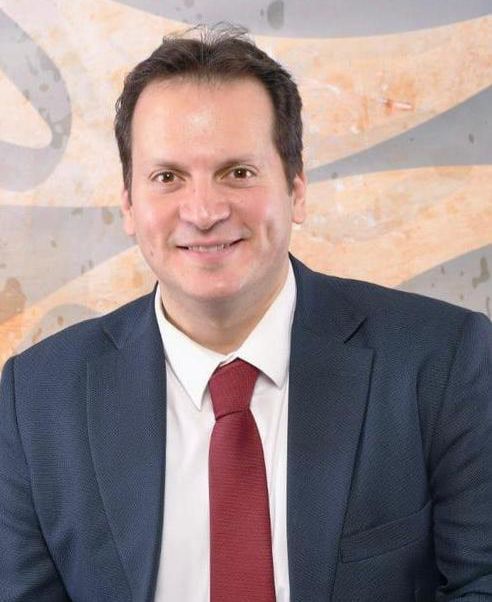
Dr Ramy Galal is an Egyptian writer and academic specialising in public management and cultural policies. He has authored studies on cultural diplomacy, the orange economy, and restructuring Egypt’s cultural institutions.
Galal holds a PHD degree from Alexandria University, a master’s degree from the University of London, and a Diploma from the University of Chile.
A former senator, and former adviser and spokesperson for Egypt’s Ministry of Planning. He was also the spokesperson for the Egyptian Opposition Coalition.