

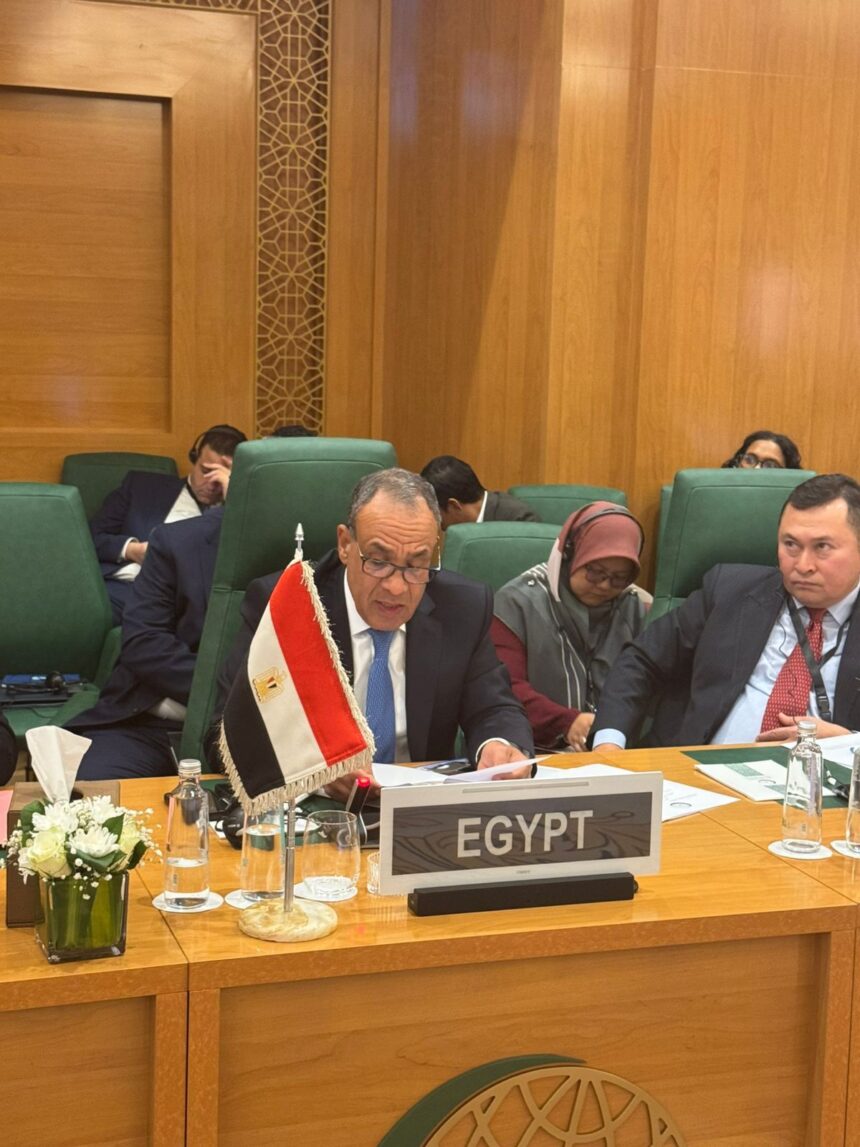
Egypt has accused Israel of using its unilateral recognition of Somaliland to advance “illegal schemes” aimed at the forced displacement of Palestinians and deepening divisions in the Gaza Strip.
Speaking at an extraordinary session of the Organisation of Islamic Cooperation (OIC) Council of Foreign Ministers on Saturday, Foreign Minister Badr Abdelatty stated that Cairo rejects any attempt to employ the recognition of the breakaway region to serve broader illegitimate plans. He emphasised that the move constitutes a “blatant violation” of international law and the charters of the United Nations, the OIC, and the African Union, while posing a direct threat to regional security in the Horn of Africa and the Red Sea.
Abdelatty told the assembly that this “illegal and rejected” measure undermines the global system of international borders at a time when Somalia is undergoing a sensitive transitional phase. He noted that the international community must focus on providing institutional support to Mogadishu to help it regain control over its entire territory rather than stoking divisions. The Foreign Minister reaffirmed Egypt’s categorical rejection of any unilateral actions aimed at imposing an illegitimate fait accompli.
In a bilateral meeting on the sidelines with Somali Foreign Minister Abdulsalam Abdi Ali, Abdelatty reviewed Egyptian diplomatic efforts which recently resulted in a cross-regional statement by 23 countries and two international organisations supporting Somali sovereignty. He confirmed that the imminent opening of a Bonyan-related financial entity or Bank Misr branch in Somalia would significantly facilitate trade and economic cooperation between the two nations. He also urged the international community to secure sustainable funding for the African Union Support and Stabilisation Mission in Somalia to empower its fight against terrorism.
Regarding Gaza, Abdelatty called for the immediate implementation of the second phase of a United States-backed peace plan to ensure a permanent ceasefire and a total Israeli withdrawal. He proposed the formation of a temporary Palestinian technocratic committee to manage daily affairs in the Gaza Strip alongside the deployment of an international stability force. He stressed that a lasting peace is only possible through the establishment of an independent Palestinian state based on the June 4, 1967, borders with East Jerusalem as its capital.
During consultations with Pakistani Deputy Prime Minister and Foreign Minister Mohammad Ishaq Dar, Abdelatty discussed the need for the full implementation of UN Security Council Resolution 2803. Both ministers agreed on the necessity of ensuring sustained humanitarian access to Gaza and starting early recovery efforts. Abdelatty also expressed satisfaction with the momentum in Egypt-Pakistan relations following his visit to Islamabad in November.
In separate talks with Kuwaiti Foreign Minister Abdullah Al-Yahya, Abdelatty addressed the ongoing crisis in Yemen. He reaffirmed Egypt’s support for Yemeni unity and sovereignty, stressing that a comprehensive political settlement must be reached through an inclusive “Yemeni-Yemeni” dialogue. He urged all regional parties to prioritise de-escalation and preserve national institutions to safeguard the resources of the Yemeni people.
Abdelatty concluded by stating that Egypt remains a proactive member of the OIC, committed to taking constructive actions to protect the interests of member states. He reiterated that Cairo’s positions are rooted in a commitment to international legitimacy and the principles of the UN Charter.


