

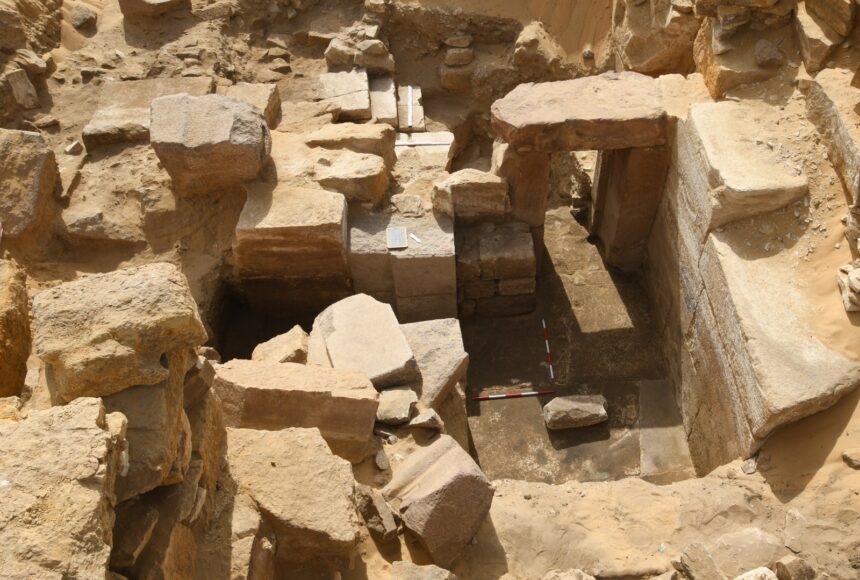
In 1901, the German Egyptologist Ludwig Borchardt stood on the sands of Abusir, certain he had located the entrance to a lost temple of the Fifth Dynasty. Yet, he could go no further; a high water table acted as a barrier, sealing the ruins beneath the mud and keeping its secrets submerged for over a century.
Now, that barrier has been breached.
An Italian archaeological mission has successfully uncovered the Valley Temple of King Nyuserre’s Sun Complex, revealing a massive structure exceeding 1,000 square metres. Co-led by Dr Massimiliano Nuzzolo and Dr Rosanna Pirelli from the Universities of Turin and Naples, the excavation has not only exposed the architecture of royal worship but also offered a rare glimpse into the daily lives of those who occupied the ruins centuries later.
A Monumental Discovery
Dr Mohamed Ismail Khaled, Secretary-General of the Supreme Council of Antiquities, described the find as critical to understanding the Fifth Dynasty, noting that the site is one of only two known Sun Temples in ancient Egypt.
While Borchardt identified the location decades ago, the modern mission has now exposed more than half of the structure. It emerges as one of the largest and most prominent valley temples in the Memphite necropolis, distinguished by a unique architectural layout.
According to Professor Mohamed Abdel-Badei, Head of the Egyptian Antiquities Sector, the temple’s entrance was found buried under a 1.20-metre layer of Nile silt. Beneath this blanket of earth lay the original flooring, a limestone column base, and the remains of a circular granite column—fragments believed to be part of the main entrance portico.
Tracing the Sacred Path
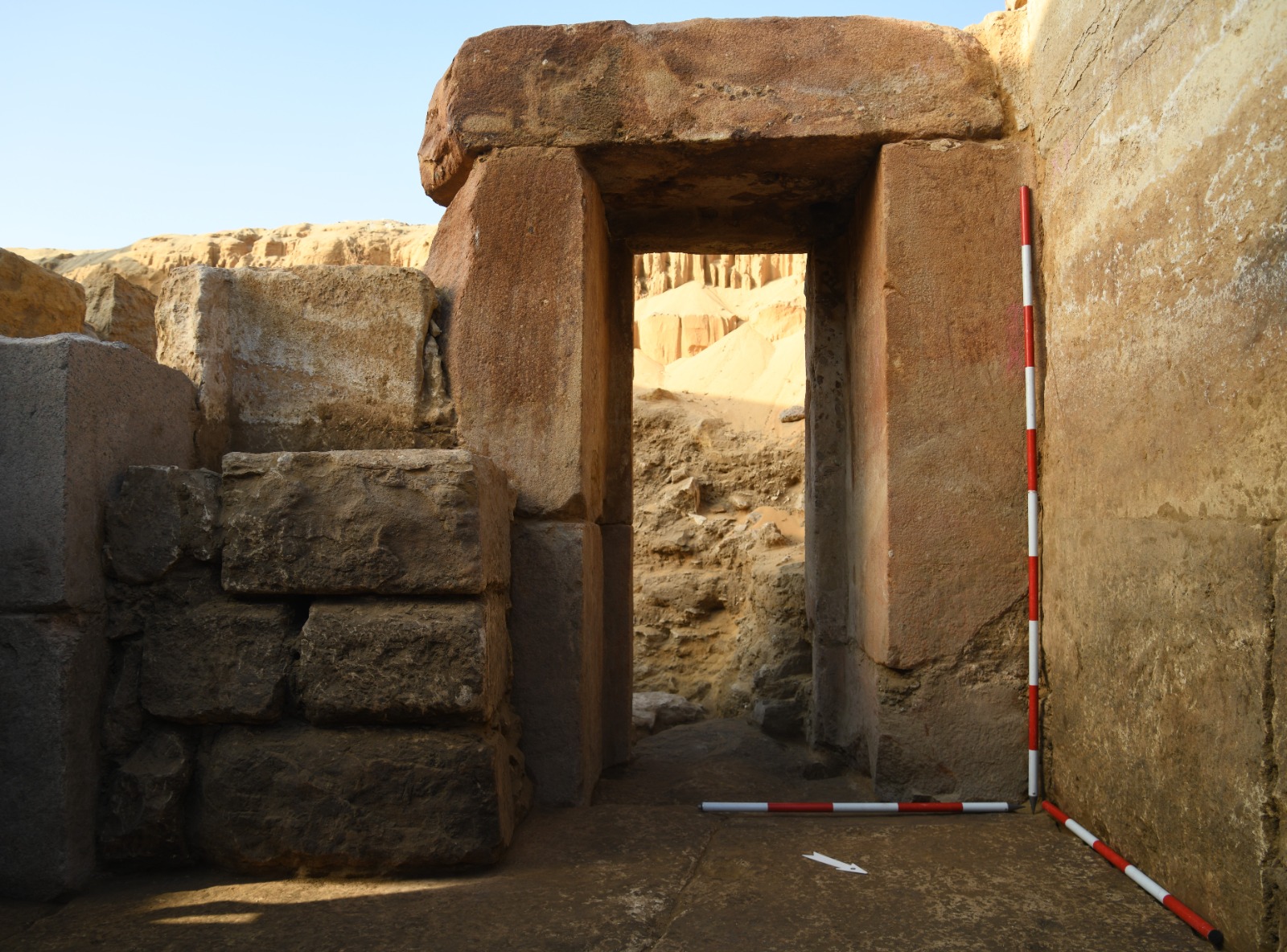
The excavation has allowed archaeologists to reconstruct the pilgrim’s journey through the complex. Sections of the original stone casing were found lining the corridor between the entrance gate and the causeway. In situ discoveries included granite lintels and doorways, still resting where ancient builders placed them.
Dr Nuzzolo highlighted that the current season builds on significant previous finds, including a well-preserved quartzite gate and an internal staircase leading to the roof, which hints at a secondary entrance in the northwestern section.
Perhaps most significantly for the temple’s layout, the team uncovered a ramp believed to have connected the complex directly to the Nile or a nearby branch. Preliminary indicators suggest the structure extends northward, adhering to the architectural style of Fifth Dynasty complexes, such as the nearby Valley Temple of King Sahure.
From Gods to Games
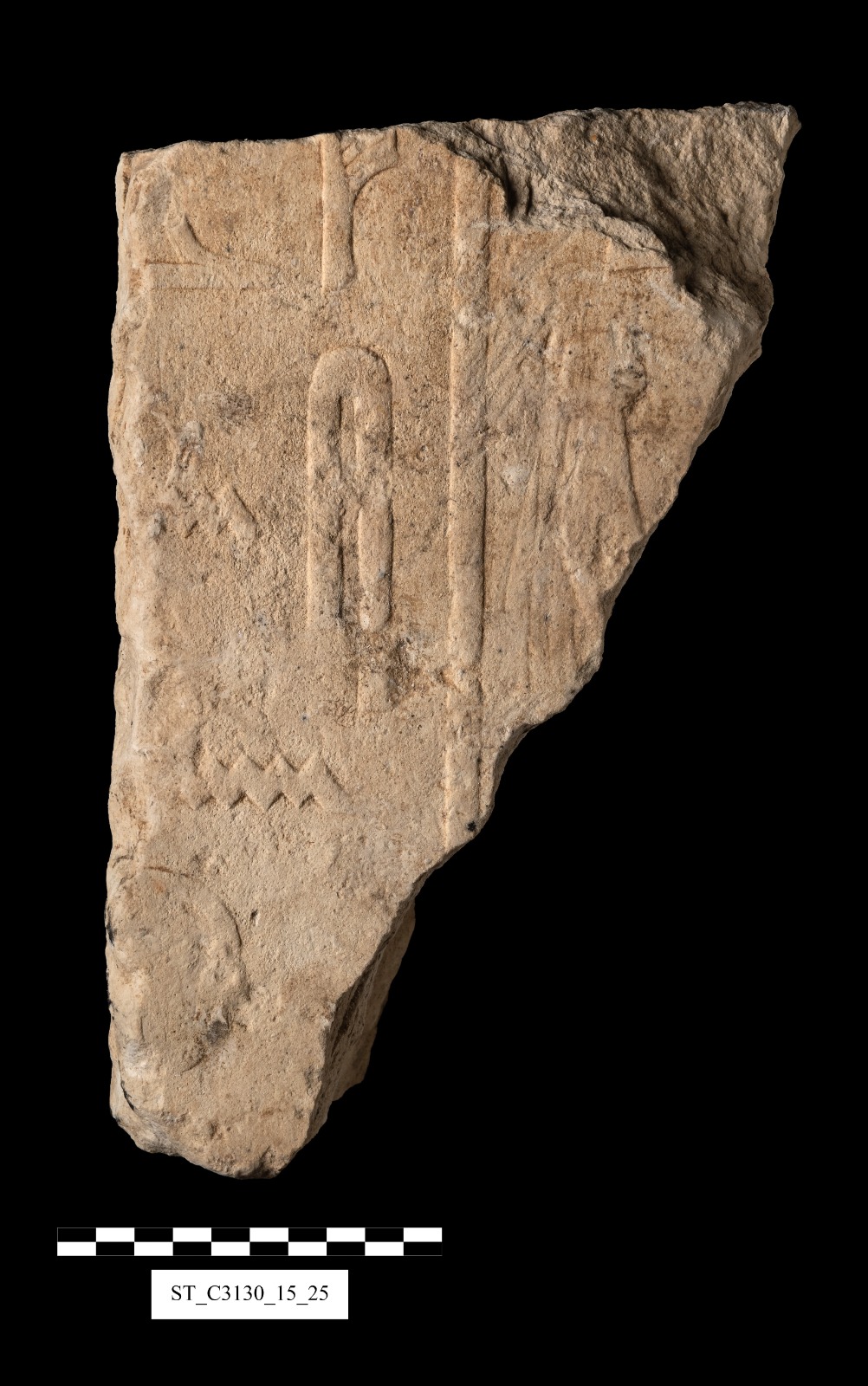
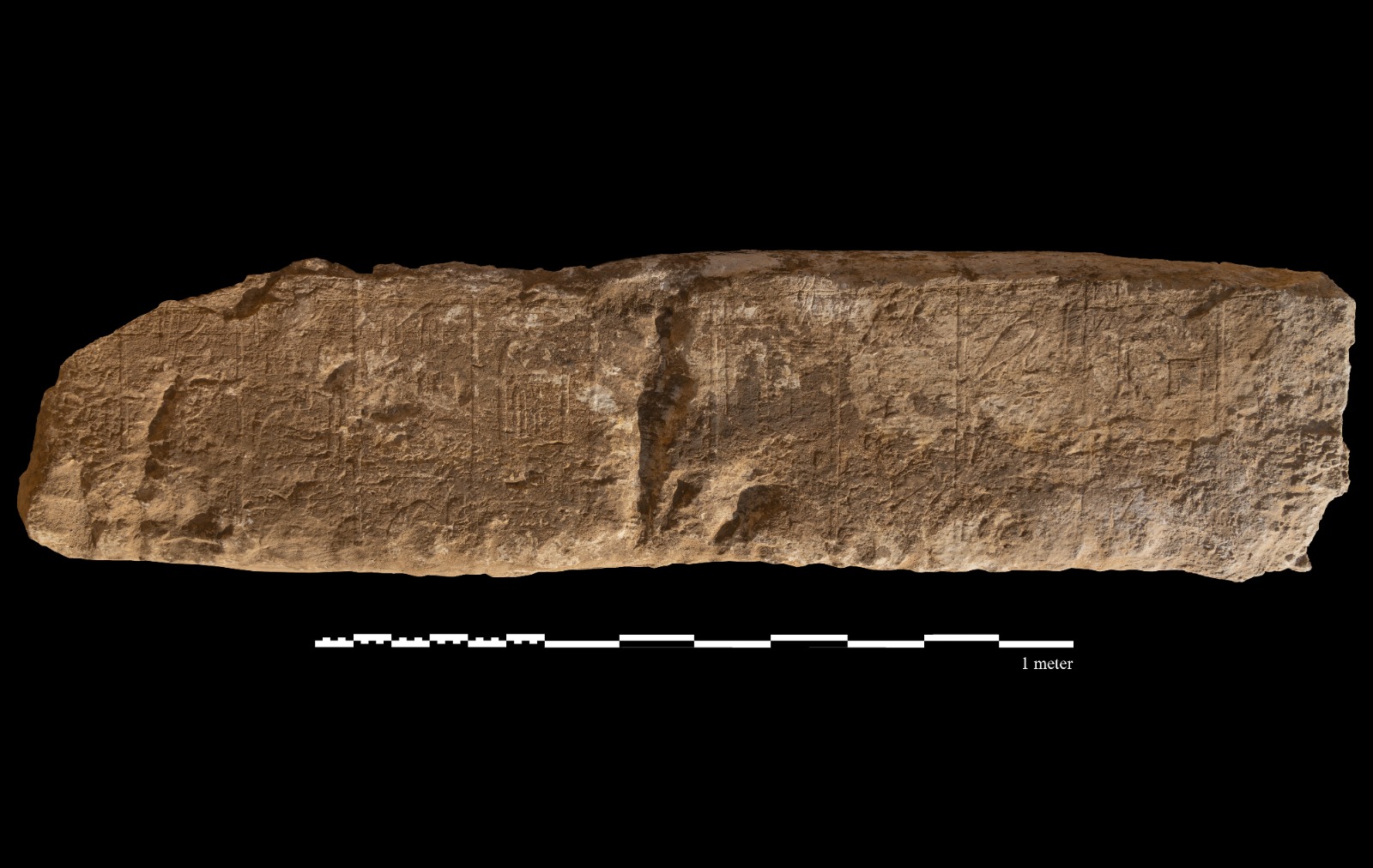
While the architecture speaks to royal grandeur, smaller finds have brought the human element of the site to the surface. Dr Pirelli pointed to the discovery of a massive stone lintel inscribed with a calendar of religious festivals and the cartouche of King Nyuserre.
However, the site’s history did not end with the pharaohs. The mission unearthed large quantities of pottery and two wooden pieces from the ancient game “Senet”—a pastime resembling modern chess.
These artefacts, dating mostly to the First Intermediate Period, suggest a transformation of the sacred space. Preliminary studies indicate that after its role as a place of royal worship ceased, the temple was repurposed as a residential area. This shift provides a valuable new source for understanding the daily life of the Memphis region’s inhabitants during a poorly documented era of ancient Egyptian history.
The mission is preparing to continue its work in upcoming seasons, aiming to unveil further details on the origin and evolution of sun temples, finally completing the work Borchardt foresaw but could not finish.


