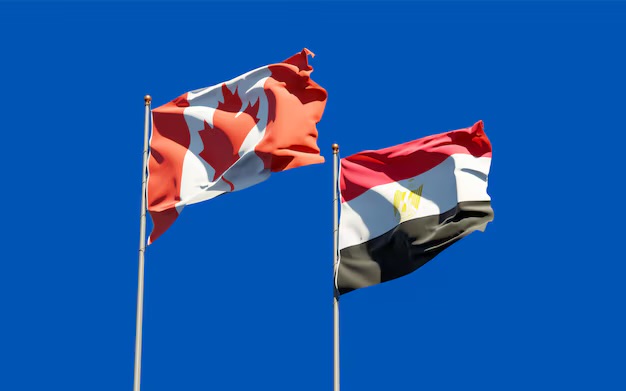
The recent signing of a significant educational partnership between Egypt and South Korea, focused on enhancing vocational and specialized education as well as technology, marked an important step forward. This agreement was far more than a mere technical or knowledge exchange; it underscored Egypt’s potential to be an influential player in education, not only within the Middle East but across the African continent. The South Korean initiative demonstrated how countries can collaborate across multiple domains, paving the way for other strategically important partnerships, particularly in the realm of multilingual education. This development raises a crucial question: if Egypt has already built an educational bridge with Asia, why not establish a similar connection with North America? Specifically, could Canada be the ideal partner to open a new chapter in the story of multilingual education in an era of migration and diversity?
Multilingual education is no longer an optional luxury. In an era of mass migration and increasing demographic diversity, it has become an educational necessity. Countries that fail to implement policies capable of integrating multiple languages and embracing students from diverse cultural backgrounds risk long-term social and economic isolation. In this context, Egypt—with its rich educational history and regional influence—possesses the ability to offer a unique model of international cooperation, leveraging its practical experience and community initiatives, while Canada can contribute its institutional expertise and well-established educational policies.
Canada, through its official policies supporting both French and English, as well as its immersion programs in schools, has demonstrated that linguistic diversity is not a barrier but a tool to strengthen social cohesion and enhance cultural capital. Programs such as French immersion in Ontario and dual-language programs in Montreal have not only promoted language acquisition but also fostered multicultural identities among students, opening broad educational and professional opportunities. The Canadian education system treats linguistic diversity as a strategic investment in the future, turning multilingual students into bridges between economies and cultures and reinforcing Canada’s position as an open and innovative society.
In contrast, Egypt possesses unique expertise in low-cost education tailored to diverse communities. Initiatives such as literacy programs at Mansoura University and community education programs for displaced persons and refugees have proven effective in integrating students and overcoming economic and infrastructural challenges. Egypt also hosts a large number of multilingual migrants, adding another layer of diversity and experience to its educational ecosystem. This hands-on experience, developed under real-world pressures, can help Canada—or any other country facing challenges in integrating immigrant communities—by providing a practical, rapidly deployable, and cost-effective model. Egypt knows how to build educational bridges with limited resources, a form of wisdom equally valuable as institutional policies supported by substantial budgets.

From this perspective, the present moment is ideal for initiating a new North–South dialogue between Egypt and Canada in multilingual education. The Egypt-Korea partnership sets a clear precedent: if Egypt and South Korea can develop successful joint programs in vocational and specialized education, then Egypt and Canada—given their converging educational and academic interests—can innovate an educational model that combines the institutional expertise of the North with the practical flexibility of the South. This dialogue would not be a one-way transfer of knowledge from the developed North to the developing South; it would be a true exchange, where Egypt offers solutions for educational efficiency while Canada provides frameworks for institutional sustainability.
Migrant literature represents an additional tool that can be leveraged in this collaboration. Texts authored by migrants, whether in their mother tongue or a new language, reveal experiences of identity, belonging, and cultural plurality. Incorporating these texts into curricula enriches not only the cultural dimension but also equips students to understand migration as a lived experience, with its linguistic and social implications. This integration of official policies, practical expertise, and cultural literature offers a rare opportunity to design multilingual education that transcends traditional methods and addresses contemporary global challenges. A novel about a Sudanese experience in Canada or an Egyptian story in Montreal can open windows to deeper understanding in classrooms in both countries.
The strategic significance of this discussion extends beyond education alone. Egypt, as a major regional player in the Middle East and Africa, can take a central role in expanding these initiatives to neighboring countries, creating a regional model for multilingual education and international educational partnerships. Conversely, Canada can benefit from this collaboration by developing low-cost educational programs targeting economically disadvantaged migrant communities, thereby reducing public budget burdens and enhancing social integration. The picture is larger than mere knowledge exchange; it is an opportunity to craft a collaborative model in which countries complement each other’s strengths while aligning their visions for an inclusive educational future.
Given these factors, the natural question arises: can Egypt and Canada teach the world a new lesson in multilingual education, just as Egypt did with South Korea last week? Previous experiences indicate that both countries possess the necessary components: Canada with its institutional expertise and educational policies, and Egypt with its practical experience and ability to innovate under resource constraints. Their cooperation is not merely theoretical; it is a practical necessity to address migration challenges, linguistic diversity in schools, and the advancement of an inclusive education system responsive to global shifts.
This partnership will not be without challenges, as gaps in resources and institutional environments are real. Yet these gaps themselves make collaboration worthwhile. Instead of a top-down approach, the partnership can be horizontal, where Canada learns to maximize limited resources while Egypt gains insights into sustainable policy development. Such a collaboration could begin with a flagship project, such as a joint digital education platform offering multilingual content or a shared teacher-training program focusing on culturally diverse classrooms.
In conclusion, multilingual education is no longer optional; it is a strategic tool for sustainable development, social cohesion, and the building of a society capable of addressing the challenges of human mobility and cultural diversity. A future Egypt-Canada partnership, if realized, could become a global model demonstrating that North-South cooperation goes beyond financial or technological resources to include the exchange of expertise, knowledge, and educational visions for the benefit of future generations. The moment of signing the agreement with South Korea was notable, but the real impact will come from our ability to use this moment as a spark for broader, deeper partnerships. The future of education awaits those who build its bridges with willpower and shared vision.
Dr. Marwa El-Shinawy – Academic and Writer