President Abdel Fattah Al-Sisi reviewed progress on a national project to digitise and archive the Egyptian Radio and Television Union’s historical collection as part of a broader effort to preserve one of the country’s largest cultural and media archives and strengthen its digital presence.
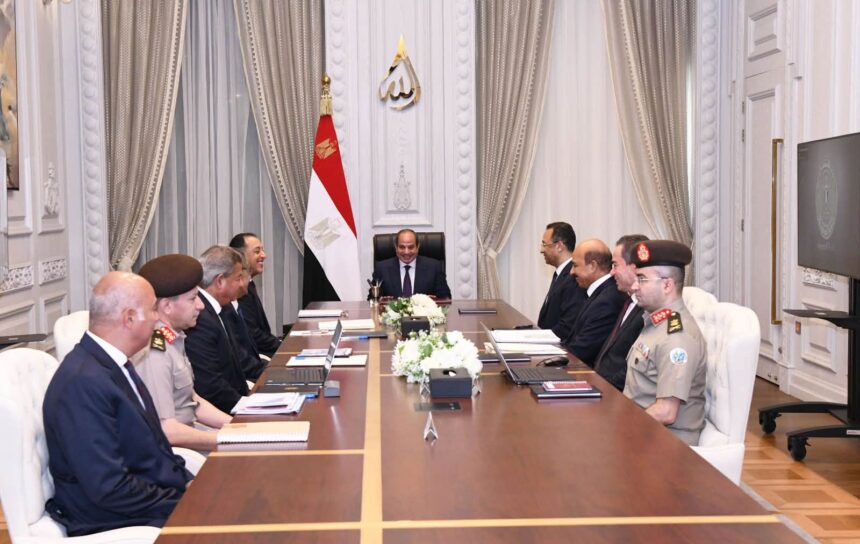
During a meeting in El Alamein City with Prime Minister Mostafa Madbouly, senior media officials, and representatives of the Armed Forces’ communications and information systems departments, the president was briefed on the project’s implementation, according to a presidency statement.
Officials said the archive contains nearly one million audio and video tapes comprising around 800,000 hours of content documenting Egypt’s political, cultural, and social history over several decades.
The project aims to convert the archive from analogue media into high-quality digital formats, establish indexed electronic databases to facilitate storage and retrieval, and implement advanced cybersecurity measures to protect the material.
The presidency said the system will also incorporate selected artificial intelligence applications to support the digitisation, indexing, and management of the archive.
The meeting also reviewed plans to modernise Maspero’s television studios, upgrade broadcasting equipment, and expand digital distribution through online viewing platforms.
Officials briefed the president on the development of the planned Maspero Platform, in addition to projects to preserve recordings of renowned Quran reciters and chanters and safeguard programmes broadcast by Radio Quran since the station’s establishment in 1964.
According to the presidency, these initiatives form part of the government’s “Digital First” strategy to strengthen Egypt’s digital media presence and preserve its audiovisual heritage.
Al-Sisi directed officials to present the progress achieved in the archiving project to the public, highlighting the state’s efforts to preserve what he described as Egypt’s rich media legacy.
The president also stressed that the modernisation of Maspero should combine infrastructure upgrades with the expansion of media content and the digitisation of archival material. He called for closer coordination among state institutions and media organisations to modernise both the public and private media sectors and ensure they keep pace with rapid technological developments.