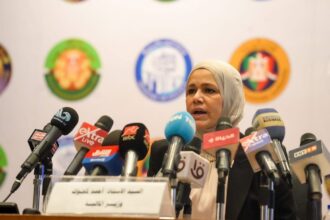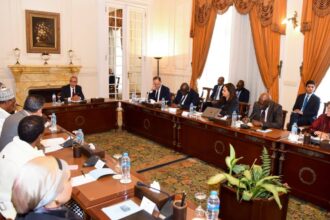

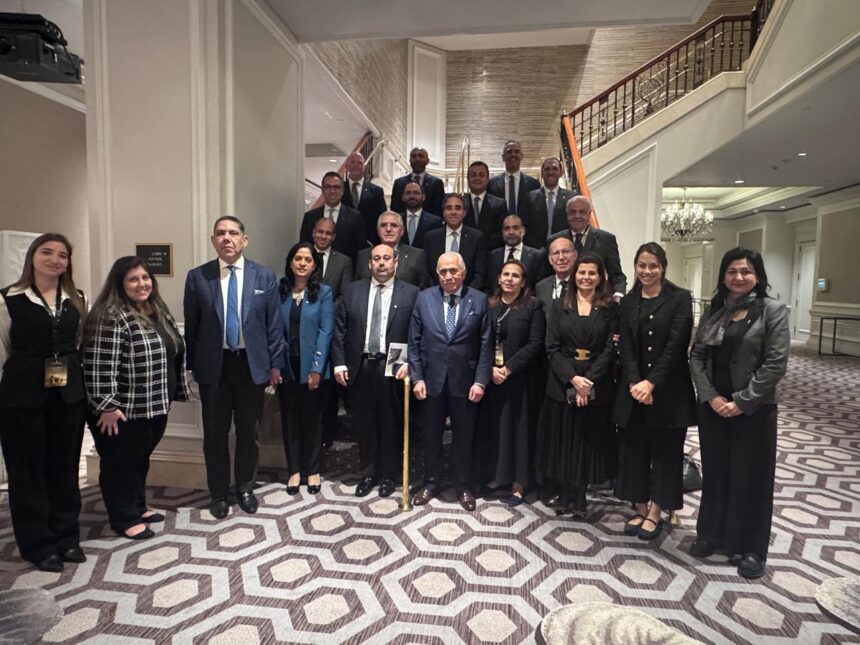
The American Chamber of Commerce in Egypt (AmCham Egypt) is set to launch its annual “Doorknock Mission” to Washington, D.C. on 19 April, bringing together around 20 senior business executives and sector leaders. The initiative forms part of a longstanding non-governmental dialogue platform aimed at strengthening Egyptian-American economic relations, particularly across trade, investment, finance, and technology transfer.
This year’s AmCham Egypt “Doorknock Mission” comes at a critical juncture, as Egypt navigates domestic economic pressures alongside evolving US economic policies and a volatile global landscape marked by supply chain disruptions, geopolitical tensions, and shifting investment priorities.
The delegation will focus on addressing key economic challenges while outlining Egypt’s reform trajectory. Discussions are expected to cover exchange rate policy, arrears owed to foreign partners in the petroleum sector, private sector participation, and the government’s privatisation programme. The agenda also includes improving the business climate, accelerating customs clearance, and ensuring foreign currency availability, in addition to assessing the impact of US monetary tightening and higher interest rates on capital flows to emerging markets.
At the same time, the mission will promote Egypt as a regional hub for manufacturing and re-export, particularly within markets linked through preferential trade agreements. Delegates will spotlight opportunities in renewable energy, green hydrogen, and the digital economy, while positioning Egypt within alternative global supply chains as US firms continue to diversify sourcing away from Asia.
The programme includes meetings with members of Congress, US administration officials, media representatives, and key international financial institutions, including the World Bank and the International Monetary Fund. Engagements are also scheduled with the US Department of the Treasury, the US Chamber of Commerce, and leading think tanks.
The AmCham Egypt delegation carries a clear message: Egypt remains a stable strategic partner in a turbulent region and a critical logistical hub. It aims to underscore the continuity of economic reforms, reinforce the role of the private sector, and highlight efforts to remove investment barriers while presenting high-return opportunities across key sectors, moving beyond the traditional perception of Egypt as primarily a consumer market.
The mission will also advocate for enhanced institutional support from the United States to ease financing constraints and stimulate investment flows. Discussions will extend to US economic priorities in the Middle East and Washington’s perspective on Egypt’s role in reshaping supply chains, securing maritime routes, and supporting energy security. Delegates will further explore tools to bolster economic resilience, including expanded development finance, trade facilitation programmes, and investment guarantees for US companies operating in Egypt, alongside reviews of international assessments of Egypt’s reform progress.
Omar Mehanna, Chairperson of AmCham Egypt and head of the mission, said the organisation has long played a key role in sustaining economic dialogue. However, he stressed that the current phase requires a broader mandate, shifting from defending interests to creating opportunities, facilitating large-scale joint projects, and deepening engagement across Egypt’s diverse economic sectors. This includes building partnerships with US chambers of commerce at both federal and state levels.
Mehanna added that amid ongoing economic and geopolitical transformation, traditional government diplomacy alone is no longer sufficient. “Business diplomacy” is emerging as a more agile tool to unlock new avenues of cooperation and strengthen ties with the US private sector, particularly in finance, trade, technology, transport, logistics, and industry. Over more than four decades, he noted, the mission has evolved into a strategic platform defined by clear messaging, targeted engagement, and consistent follow-up.
He concluded that the mission’s success will ultimately depend on translating dialogue into tangible outcomes, through the development of a joint policy paper, the establishment of structured follow-up mechanisms with US stakeholders, and broader participation that includes startups and emerging technology sectors, marking a shift from simply “knocking on doors” to effectively “opening doors.”