

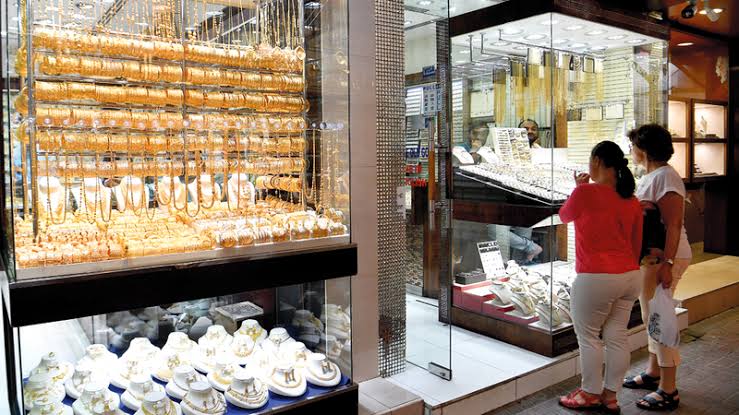
Gold prices recorded a notable increase in Egypt’s local market, tracking gains in the global ounce amid ongoing geopolitical tensions linked to the US–Iran conflict. These developments have continued to influence energy markets and reshape global monetary expectations, according to a report by iSagha.
Saeed Imbabi, Executive Director of the platform, said local gold prices rose by around EGP 175, pushing the price of the 21-karat gram to EGP 7,100. Meanwhile, the global ounce increased by approximately $66 to reach $4,560.
At the retail level, the 24-karat gram stood at around EGP 8,114, while the 18-karat gram recorded approximately EGP 6,086. The gold pound reached nearly EGP 56,800.
Imbabi attributed the rise in domestic prices primarily to the increase in the global ounce, in addition to the continued strength of the US dollar, which has surpassed EGP 54 in Egyptian banks. He noted that the gap between local and global gold prices has narrowed to about EGP 107.
He added that markets are closely monitoring developments in foreign currency inflows – particularly tourism revenues and remittances from Egyptians abroad – alongside interest rate decisions and import financing needs, all of which remain key determinants of exchange rate movements.
Globally, gold has drawn support from a softer dollar, although expectations of continued monetary tightening have capped its upward momentum, given that gold does not offer yields.
At the same time, investor expectations are increasingly tilted towards tighter monetary policy by major central banks, especially amid rising energy prices driven by the conflict, which are fuelling inflationary pressures.
These concerns have intensified with growing fears of further military escalation and reciprocal attacks in the region, raising risks to global supply chains – particularly through strategic corridors such as the Bab el-Mandeb and the Strait of Hormuz – while also supporting higher oil prices.
In this context, the Organisation for Economic Co-operation and Development (OECD) has raised its forecast for US inflation to 4.2%, up from significantly lower previous estimates. It also expects interest rates to remain elevated for an extended period, while market pricing indicates a probability exceeding 50% of a rate hike in 2026, according to the FedWatch tool.
Although geopolitical tensions typically enhance gold’s appeal as a safe-haven asset, current market dynamics suggest a more complex picture. The strength of the US dollar and rising bond yields have encouraged investors to favour liquidity and yield-bearing instruments over precious metals.
Gold had previously reached a record high of $5,608 at the end of January before retreating by around 25% to nearly $4,100. It has since stabilised near $4,500, marking a sharp correction following the exceptional rally of 2025, during which prices surged by roughly 65% on the back of strong central bank purchases and increased hedging demand.
This correction triggered widespread liquidation of leveraged positions in futures markets and exchange-traded funds, as higher yields and a stronger dollar raised the opportunity cost of holding gold.
Overall, current market trends point to a notable shift, with macroeconomic factors, particularly monetary policy and dollar strength, playing a more decisive role than gold’s traditional safe-haven appeal, amid persistently high inflation and tighter global financial conditions.


