

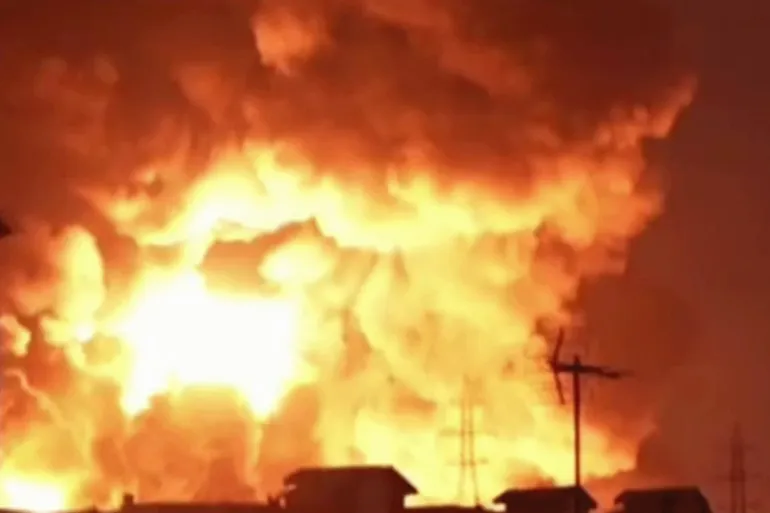
A sharp military escalation is unfolding across the Middle East, marked by cross-border attacks, interceptions, and increasingly hardline rhetoric as hostilities expand across multiple fronts.
In Qatar, the Ministry of Defence said its armed forces intercepted an Iranian drone attack. Meanwhile, Iran’s military announced it had launched drone strikes targeting US support and accommodation facilities at Azraq Air Base in Jordan.
Jordan’s armed forces said they intercepted one missile and two drones over the past 24 hours. A security spokesperson added that authorities responded to 26 incidents involving falling debris and projectiles, with no reported injuries but minor damage to three vehicles.
In Israel, air raid sirens sounded in Beersheba and Dimona following Iranian missile launches for the third time in a single day. Emergency services reported that four people were injured after a ballistic missile struck Beersheba.
The Israeli military said it carried out more than 140 airstrikes over the past 24 hours targeting Iran’s missile systems in central and western Iran, signalling an intensification of retaliatory operations.
In the Gulf, Iran’s Islamic Revolutionary Guard Corps said it had struck Prince Sultan Air Base in Saudi Arabia, claiming the destruction of an aerial refuelling aircraft and an E-3 AWACS surveillance plane, along with damage to other aircraft. These claims could not be independently verified.
Iran’s military also said it had shot down an MQ-9 drone east of the Strait of Hormuz, raising the total number of drones downed by its air defences to 138.
Shahram Irani, commander of Iran’s navy, warned that any US aircraft carrier group, including the USS Abraham Lincoln, entering Iranian firing range would be targeted, adding that its movements are under constant surveillance.
A senior aerospace commander within the Revolutionary Guard said high-value US targets could soon be added to Iran’s strike list, signalling the risk of further escalation.
Mohammad Bagher Ghalibaf, Iran’s parliament speaker, said the United States is planning a ground attack despite ongoing diplomatic engagement, reflecting a further hardening of official rhetoric.
Regionally, Youssef Raji, Lebanon’s foreign minister, condemned what he described as Iranian violations of Arab sovereignty. Meanwhile, Fuad Hussein said Iraq would not allow its territory to be used as a platform for regional conflict or attacks on neighbouring states.
Separately, Iran’s intelligence ministry said it had seized weapons shipments and dismantled alleged cells accused of espionage and transmitting military information.
The developments underscore a widening regional confrontation, with growing risks to security, energy flows, and global trade routes as tensions continue to escalate.

