

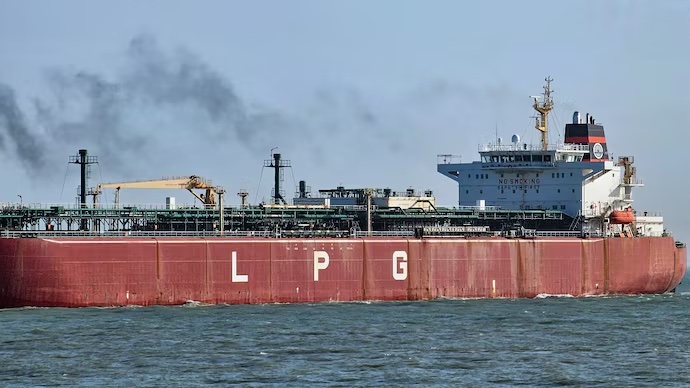
Iran has begun charging some commercial vessels up to $2m per trip to transit the Strait of Hormuz, Bloomberg reported, citing people familiar with the matter, effectively imposing an informal toll on the world’s most critical energy chokepoint.
The people, who requested anonymity due to the sensitivity of the issue, said Tehran is seeking payments on an irregular basis, reflecting a tightening of its control over the waterway. While some vessels have reportedly paid these sums, the payment mechanisms and the currencies used remain unclear, and the practice does not yet appear to be applied systematically.
The new fees highlight Iran’s influence in the Strait, through which approximately one-fifth of global oil and gas supplies pass daily, alongside significant quantities of food and minerals. As the conflict involving Iran enters its fourth week, the move underscores the urgency for some consumers to ensure the continued flow of energy.
The payments have been imposed without an official announcement, according to the sources. The lack of transparency and ambiguity regarding future targets in the conflict has increased tension in the shipping lane. Only a very limited number of vessels have transited the corridor since the outbreak of hostilities, most of which were linked to Iran. A few other ships appear to have followed similar routes close to the Iranian coast.
India, which managed to move four ships carrying liquefied petroleum gas (LPG) out of the Arabian Gulf through the Strait on Tuesday, said international laws guarantee freedom of navigation and that no party has the right to impose fees for using the passage. The Iranian Foreign Ministry did not immediately respond to a request for comment, and the state continues to impose restrictions on communications and internet access.
While Iran is currently demanding fees on a case-by-case basis, it has floated the idea of legalising these charges as part of a broader post-war settlement, according to one person. An Iranian member of parliament stated last week that the legislature is moving forward with a proposal to require countries to pay Iran for using the Strait of Hormuz as a safe shipping lane. Arab producers in the Gulf view the imposition of any fees—even informally—as unacceptable due to sovereignty concerns, noting that such charges would set a first-of-its-kind precedent and potentially treat the vital trade route as a weapon.
Energy markets remained volatile following the news. Brent crude rose past $100 per barrel, recovering from a sharp 11% drop on Monday that occurred after U.S. President Donald Trump delayed a threat to target Iranian energy facilities for five days to allow for purported talks. Iran denied that any negotiations took place, while Israel continued its attacks. U.S. benchmark West Texas Intermediate (WTI) rose by approximately 2%.
Brent has climbed nearly 40% this month on fears that hostilities between the United States, Israel, and Iran could trigger a global energy crisis and fuel inflation. The conflict has nearly halted transit through the Strait, forcing Gulf producers to curtail millions of barrels of daily oil production. Refined products such as diesel and jet fuel have risen even more sharply than crude, pressuring consumers and alarming governments.
Market participants are currently monitoring tanker movements in the Strait more closely than official statements, according to Bloomberg data. The effective closure of the waterway has disrupted about one-fifth of the world’s oil and a similar portion of liquefied natural gas (LNG) supplies. U.S. officials have attempted to calm markets in recent weeks, with Trump’s comments on Monday viewed as the latest attempt to restrain prices.
Wall Street banks have gradually raised their oil price forecasts due to the conflict. Goldman Sachs, prior to Trump’s social media post on Monday, said it now expects crude to average $85 per barrel this year, up from its previous estimate of $77. While a cessation of hostilities would likely ease inflationary pressures, the bank noted that resuming energy supplies could take time.
Questions regarding market transparency emerged after data showed contracts for millions of barrels of oil were traded roughly 15 minutes before Trump’s post on Truth Social, which led to a 14% price drop. Futures equivalent to at least 6m barrels of Brent and WTI were sold within two minutes starting at 6:49 a.m. Washington time on Monday, exchange data compiled by Bloomberg showed. The average volume for the same period over the previous five trading days was approximately 700 contracts, or 700,000 barrels.
Trump’s post, published at approximately 7:05 am, stated the US would delay strikes against Iranian energy infrastructure for five days, citing “productive talks.” This followed a threat on Saturday to launch attacks within 48 hours unless Iran opened the Strait. The notional value of the contracts traded just before the post was approximately $650m.
“Yesterday, we were counting the hours until Trump would start [erasing] Iranian power plants, and today we are counting the days before a [deal] is reached with Iran,” said Robert Rennie, head of commodity and carbon research at Westpac Banking. “Traders face a major challenge in managing risk and volatility between these two parties.”
It remains unclear if those trades were part of a broader strategy involving other derivatives or who the counterparties were. Rennie added that the last thing market participants want to see are signs of large, highly profitable trades executed immediately before such sharp price swings.