

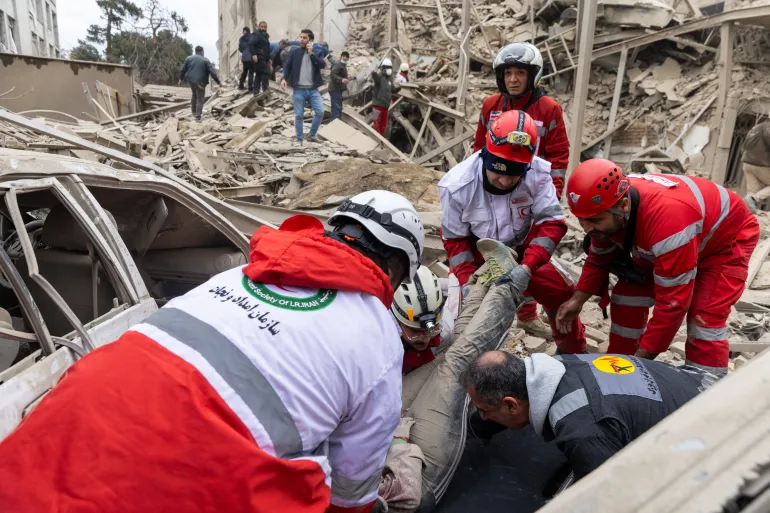
The pace of military escalation in the Middle East is accelerating as the confrontation between Iran and Israel enters its third week, with intensified missile and drone exchanges and rising tensions spilling across the Gulf, amid faltering diplomatic efforts.
In a major development, Israel claimed that it had killed Iran’s top security chief Ali Larijani, marking a significant escalation in Israel’s targeting of high-profile figures linked to Iran’s political and security establishment. Iranian authorities have not issued a formal confirmation of the circumstances, but state media reported mourning messages linked to ongoing military losses.
On the ground, Israel’s Home Front Command said missiles had been launched from Iran toward central Israel, triggering air raid sirens across the greater Tel Aviv area and other locations. The Israeli military said its air defence systems were intercepting incoming threats, while explosions were reported in Jerusalem following alerts in northern regions.
The Islamic Revolutionary Guard Corps (IRGC) in Iran announced it had launched strikes across the region against what it described as the “U.S.-Israeli enemy,” targeting bases allegedly used in recent American operations. A senior commander said Iranian units stationed on Gulf islands were on high alert and ready to “crush the enemy” if the conflict escalates further.
Tensions have also spread into the Gulf. The Ministry of Defense UAE said its air defence systems were intercepting missile and drone attacks originating from Iran. Explosions were reported near the port of Sharjah, though no confirmed damage to commercial shipping or infrastructure was recorded. In Qatar, blasts were heard over Doha, prompting authorities to raise the security alert level and urge residents to remain indoors.
Politically, Israeli Prime Minister Benjamin Netanyahu said the military campaign aims to “destabilise the regime” in Iran and allow its people to shape their future, warning that such an outcome “will not happen quickly or easily.”
In contrast, an Iranian official said Mojtaba Khamenei had rejected ceasefire proposals relayed through mediators, stressing that Tehran’s stance on retaliation against the United States and Israel remains “firm and very serious.”
Diplomatic efforts appear increasingly strained. The United States Department of State has reportedly instructed diplomats to press allied governments to act swiftly to curb Iran’s capabilities, warning of heightened risks of further attacks.
Separately, Israel said it had killed Gholam Reza Soleimani in an airstrike in Tehran, part of a broader campaign targeting senior Iranian military figures. Iranian media also reported the seizure of hundreds of Starlink devices in a nationwide security operation.
In the United States, the head of the National Counterterrorism Center announced his resignation, citing opposition to the war and arguing that Iran had not posed an “imminent threat,” highlighting potential internal divisions over the escalation.
The widening scope of attacks underscores the growing risk of a broader regional conflict, as military escalation intensifies and prospects for de-escalation remain increasingly uncertain.
