

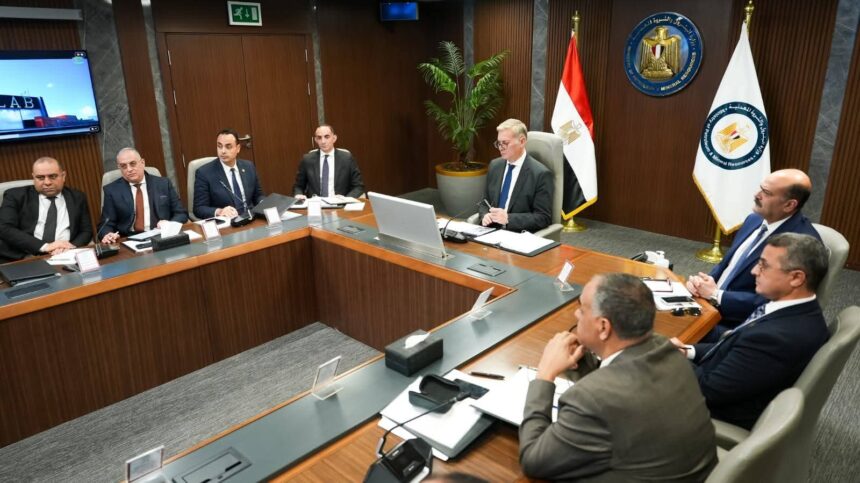
The Egyptian Linear Alkyl Benzene Company (ELAB) recorded its highest production levels since its establishment, producing 141,000 tonnes of Linear Alkyl Benzene (LAB) during the 2025 fiscal year, according to results presented at the company’s general assembly meeting.
During the meeting, Egypt’s Minister of Petroleum and Mineral Resources, Karim Badawi, highlighted the company’s ability to produce high-value products that support a wide range of industries and generate significant economic returns through exports to global markets.
Badawi noted that ELAB plays a vital role in Egypt’s petrochemical industry by meeting growing domestic demand while exporting surplus production to international markets.
He also stressed the importance of strict adherence to the highest standards of occupational safety and health, given the high-risk nature of petrochemical operations and the presence of specialised workers across multiple production units and upcoming projects.
The minister further commended the company’s five-year strategic vision, emphasising the need to develop clear execution plans for future projects and explore opportunities to introduce new products that would support ELAB’s ambitious growth strategy.
Badawi also directed the company to closely monitor regional and international competitors in order to anticipate market trends and develop expansion strategies based on accurate market data.
He underscored the importance of coordination with the Ministry of Industry to identify opportunities for expanding the company’s activities.
For his part, ELAB Chairperson Ayman El-Garm reviewed the company’s financial and operational results for the 2025 fiscal year, noting that the company achieved its highest LAB production rate since operations began in 2008, reaching approximately 141,000 tonnes while maintaining strict compliance with environmental protection and occupational safety standards.
El-Garm explained that LAB is the company’s primary product and a key raw material used in the manufacture of industrial detergents.
He added that ELAB successfully marketed all of its production by meeting domestic demand while exporting surplus quantities to international markets, including countries in Western Europe, Africa, and Asia.
The company is also working to increase LAB output through a capacity expansion project aimed at strengthening its ability to meet rising demand in both local and global markets, further reinforcing Egypt’s position as a reliable exporter in the petrochemical sector.
El-Garm added that ELAB has implemented several strategic pillars of the Ministry of Petroleum’s development plan, including raising production to 141% of the plant’s design capacity, enabling the company to fully meet local market demand.
He also noted that coordination with the Egyptian General Petroleum Corporation helped increase the supply of kerosene feedstock to the company. This allowed approximately 80% of the kerosene used as feedstock to be converted into jet fuel that meets international specifications, thereby maximising the added value of the material.
In addition, ELAB transformed its administrative building into a fully green facility by installing a solar power plant with a capacity of 465 kilowatts, reducing reliance on conventional energy sources and supporting environmental sustainability.


