

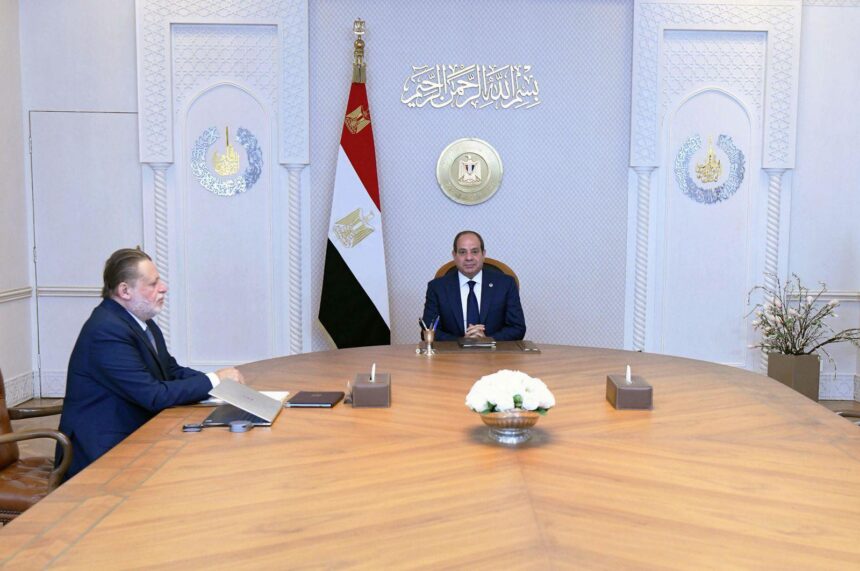
Egypt’s President Abdel Fattah Al-Sisi met Central Bank Governor Hassan Abdalla on Saturday to review developments in the banking sector and monetary policy, as official data showed foreign reserves climbing to a historic high, according to a presidential statement.
The meeting examined financial sector performance in 2025, underscoring what the presidency described as continued financial stability and the resilience of the Central Bank of Egypt (CBE) and the broader banking system in supporting macroeconomic stability.
Abdalla said net international reserves rose to $52.6bn in January 2026, marking the highest level on record, compared with $33.1bn in August 2022. The reserves now cover approximately 6.9 months of merchandise imports, exceeding internationally recommended adequacy benchmarks, the statement noted.
Net foreign assets in the banking sector reached $25.5bn in December 2025, the highest level since February 2020. This was driven by improvements in commercial banks’ net foreign asset positions, which stood at $12.2bn. The presidency also cited a rebound in remittances from Egyptians abroad to record levels, alongside higher tourism revenues and increased foreign investment in Egyptian government debt instruments.
Net foreign assets at the central bank itself rose to $15.1bn in January 2026, according to the statement.
The meeting further reviewed Egypt’s improved sovereign credit outlook. Standard & Poor’s upgraded Egypt’s long-term credit rating to B from B- with a stable outlook – the first upgrade in seven years – while Fitch Ratings affirmed the country’s long-term foreign currency rating at B with a stable outlook.
Officials also discussed progress in advancing financial inclusion and accelerating digital transformation, as well as the central bank’s corporate social responsibility initiatives, particularly in the health and education sectors.
Al-Sisi stressed the importance of sustaining efforts to contain inflation through targeted market oversight, ensuring the availability of essential goods and maintaining price stability. He also called for reinforcing financial stability and transparency, pursuing policies that support sustainable growth, and expanding incentives to attract investment and strengthen the role of the private sector as a driver of economic activity.

