

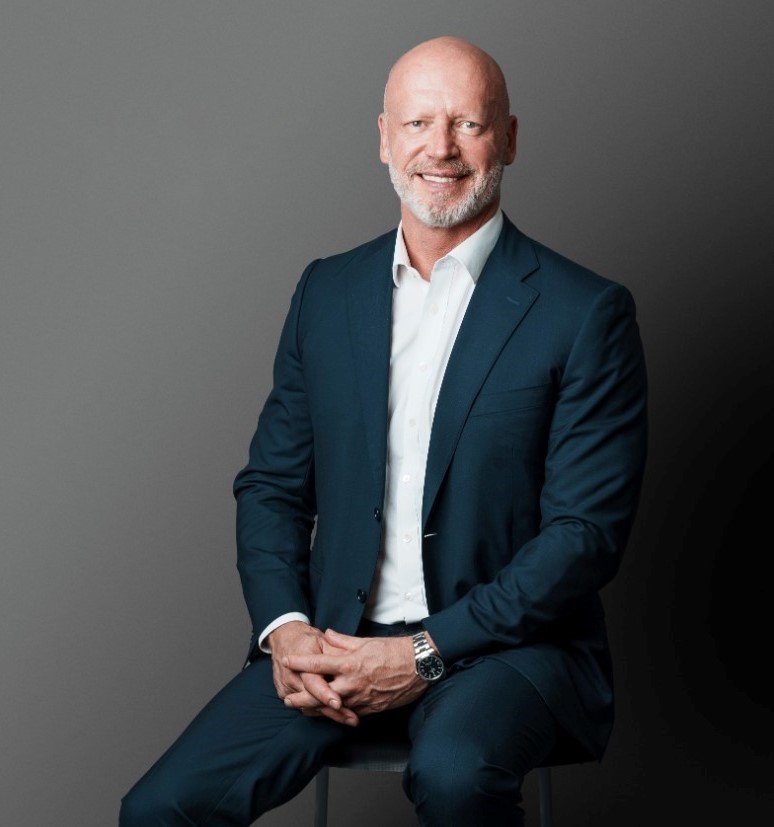
In this exclusive interview with Daily News Egypt, Todd Wilcox, CEO and Deputy Chairperson of HSBC Bank Egypt, discusses the bank’s instrumental role in navigating Egypt’s evolving economic landscape. From leading landmark sovereign debt issuances to pioneering digital treasury solutions, Wilcox outlines how HSBC acts as a vital bridge between global capital and local opportunity. As the country moves toward a more resilient, market-driven footing, he shares insights into the sectors driving growth and the bank’s long-standing commitment to Egypt’s sustainable development.
What role does the bank play in serving the Egyptian economy?
HSBC has been on the ground in Egypt for more than 44 years now. Our role and main goal have always been to act as a bridge, bringing our global network to support the government’s vision, especially in attracting foreign investment and leading in sustainable finance and digital transformation.
We have been right at the centre of some of the country’s most significant transactions on multiple fronts, whether involving mega-infrastructure and industrial projects or landmark deals in debt markets and export finance. We were mandated in 2025 for the ninth consecutive sovereign bond issuance in Egypt, having led all public debt issuances since 2020. This underscores the role we play as a key facilitator of inward, international investment into Egypt and highlights the value of the relationship we’ve built with the Egyptian government over many years.
We have been very active this year in using our global network to connect Egyptian businesses to the world while helping international investors see the massive potential that exists right here. For example, we have seen significant growth along the China-Egypt corridor. We are deeply committed to supporting Chinese multinationals as they invest here, and we’ve taken a unique approach to that. We are the first and only bank in Egypt to provide our corporate and institutional clients from China with on-the-ground, native Mandarin-speaking relationship managers. Having that dedicated strategic support here, in Egypt, has been a game-changer; for three consecutive years, our client activity doubled in size in 2023 and again in 2024. This strong growth continued in 2025, where the volume of new and pipeline mandates in the last 13 months matches in size our pre-2025 book.
On digital, this year we reached a major milestone with the launch of our Treasury APIs. This tool allows businesses to plug directly into HSBC’s systems, giving them real-time visibility and control over their cash. It simplifies risk management, reduces fraud, and improves corporate governance. We’ve coupled this with our ‘7-Day Cash Concentration’ solution, which allows corporates to manage liquidity 24/7, even on weekends. The UAE and Egypt were HSBC’s first markets to introduce the new solution.
Digital transformation is a key pillar of the economic diversification strategies in many parts of the Middle East and has led to the region becoming one of the fastest adopters of real-time payments and digital business models. According to the World Economic Forum, the region has become the fastest-growing real-time payments market globally, and the market is expected to reach US$2.6 billion by 2027. This is clearly recognised by our clients as well, as HSBC Egypt was voted the #1 Best Cash Management Provider in Egypt in the 2025 Euromoney Cash Management Survey. As another vote of trust, the bank secured the first position overall and in every sub-category, including product, technology, and service.
What is the bank’s vision for the Egyptian economy considering declining inflation and market stability?
Our views are largely positive regarding the outlook of the current transition. While we’re always mindful of the regional and global landscape, the local indicators we’ve seen throughout 2025 and into early 2026 show that Egypt is moving toward a much more resilient footing.
The moderation of inflation is a vital element. We’ve seen the average rate across 2025 and into early 2026 trend significantly downward, which is a major turning point. It gives the Central Bank the room to navigate toward lower interest rates. This allows businesses to move away from a ‘survival mode’ and start focusing once again on long-term capital investment. Additionally, the shift to a more transparent, market-driven exchange rate system restored the predictability that global investors demand by ensuring there is a single, credible price for the currency.
Our role at HSBC is to help our international clients understand these shifts—as the narrative on Egypt moves from ‘managing risk’ to ‘identifying growth.’ We are playing a key role in proactively facilitating dialogue for our clients, including organising several high-level roundtable discussions bringing together the Ministry of Finance, the Central Bank of Egypt, and major global institutional investors. These sessions are about ensuring that international investors fully understand the structural progress we’re seeing on the ground. With the economy finding its balance, the banking sector is now on a healthier foundation. Our focus remains on providing the strategic insights and global reach our clients need to take full advantage of Egypt’s long-term potential.
How does the bank view the current investment climate and structural reforms in Egypt?
The investment climate has evolved significantly. While the policies themselves are much more refined now, creating a more business-friendly environment, the real value we’re seeing is the transparency now available to international investors.
One of the most impactful changes has been in customs and trade facilitation. The government has successfully slashed customs clearance times—from what used to be several days or even weeks, down to a matter of a few days, with a clear goal of reaching a 48-hour turnaround this year. For businesses, this is a massive win as it reduces logistics costs and improves cash flow. We’re also seeing a much more streamlined investment policy. The move toward a ‘One-Stop Shop’ through GAFI and the new digital licensing platforms has removed a lot of the traditional administrative bureaucracy. Being able to secure a business licence in a fraction of the time it used to take is a strong signal to the international community that Egypt is serious about the ease of doing business.
At HSBC, we’ve taken a very active role in bridging the gap between potential international investors and key government stakeholders. We’ve hosted high-level delegations from key corridors, including the UK, China, and Hong Kong, providing them direct one-to-one access to the leadership from the Suez Canal Economic Zone (SCZONE) and GAFI to discuss how the different structural reform initiatives will practically impact their projects.
To support this, we have also facilitated a series of high-level economic updates featuring our Chief Economist for Central & Eastern Europe and the Middle East, Simon Williams, along with our Global Chief Economist, Janet Henry. These sessions are vital because they provide our clients with a comprehensive, independent macro-view. Our economists have been clear: while we must remain disciplined, the ‘rebalancing’ currently underway in Egypt is laying the groundwork for a proper recovery. In fact, our view is that if Egypt stays the course with these structural reforms, it has the potential to become an ‘8% growth story’ in the long term.
Which economic sectors offer the strongest growth opportunities in the coming period?
Egypt has gained remarkable attention from global investors recently by successfully shifting its narrative from a consumer-driven market to an export-led industrial hub. According to the Ministry of Planning, the state is targeting a 19% jump in industrial output this fiscal year. You can see this momentum clearly in sectors like Automotive, Electronics, and Textiles, where the country is leveraging its strategic location and trade agreements to become a primary manufacturing hub for the region.
Parallel to this, the country is making massive strides in Renewable Energy. The goal to reach 42% renewable energy by 2030 has turned Egypt into a magnet for green investment. What’s equally impressive is Egypt’s progress toward becoming a global digital and data hub. Based on figures from the Ministry of Communications and Information Technology, Egypt’s digital exports have already surged to $7.4 billion, and the state is firmly on track to hit its target of $9 billion by late 2026.
We have seen the success of this model firsthand. We established our Global Service Centre here in Smart Village in 2010; we’ve grown from a team of just 85 employees to over 2,600, serving almost 40 countries across four regions and acting as a Global Centre of Excellence for complex areas like Trade and Cash Management. Ultimately, whether it’s manufacturing, green energy, or data, the focus in Egypt has shifted toward long-term, productive growth, and that is what’s creating such a compelling story for the international community today.
What role does the bank play in Corporate Social Responsibility (CSR) and sustainability?
Our work in the community is about being a long-term partner to Egypt’s development. We focus on where we can have the most meaningful impact, following two main pillars: Financial Literacy and Nature.
On the Financial Literacy side, we’re focused on removing barriers and opening doors to opportunity. For instance, we’ve partnered with the Global Fund for Widows to implement a micro-banking programme that has already economically empowered 1,150 women. It’s incredibly rewarding to see that this has led to a 500% increase in their savings, directly improving their families’ access to healthcare and education. We’re also looking toward the future of the workforce; through our partnership with the Ghabbour Foundation, we’ve enabled the graduation of a full class of mechanics specialising in Electric Vehicle (EV) technology, preparing young people for the growing green job market.
When it comes to Nature, we see our role as a catalyst for long-term resilience. A major focus for us is our nature-based solution project in partnership with the American University in Cairo (AUC). This involves developing a Participatory Mangrove Ecosystem Restoration Model (MERS)—a five-year project aimed at adopting Nature-based Solutions (NBS) to address climate change challenges. It enhances the environmental, social, and economic resilience of the most vulnerable local communities through the restoration and rehabilitation of the mangrove ecosystem in Egypt, as well as creating a commercially viable business to attract future investments. In 2025, the project planted 23,300 seedlings, completed a biodiversity report, launched a women-led mangrove honey business, introduced Egypt’s first digital GIS platform for mangrove mapping, and secured permits for the “Mangrovy Hamata” ecotourism initiative.
Historically, we’ve always stepped in where needed, whether it was building 350 community schools with Misr El Kheir to help 12,000 students in underserved villages or providing clean drinking water to over 100,000 families through filtration stations. For us, it’s about piloting these financial mechanisms and social programmes so they can eventually be scaled up to create lasting, sustainable change for the whole country.


