The decision by the Financial Regulatory Authority (FRA) to grant the Egyptian Exchange (EGX) a licence to establish and operate a futures exchange marks a pivotal moment in the evolution of Egypt’s capital markets. It reflects a strategic shift towards deepening market sophistication, broadening the range of financial instruments, and aligning Egypt’s regulatory and trading infrastructure with international standards.
This step does not merely introduce a new product. It signals the beginning of a structured derivatives market designed to enhance price discovery, improve risk management, and strengthen investor confidence. If implemented prudently, it could represent one of the most significant capital market reforms in recent years.
According to the announced framework, the rollout of futures trading will take place in stages. The first phase will focus on index futures, beginning with contracts based on the EGX30 index, which tracks the performance of the largest and most liquid listed companies. This will be followed by futures on the EGX70 index, which reflects the performance of small and medium-sized enterprises.
Subsequently, futures contracts on individual shares are expected to be introduced. In a later phase, the market will expand further to include options contracts on both indices and individual equities. This gradual implementation is essential to ensure market readiness, investor awareness, and the development of appropriate risk management systems before moving to more complex instruments.
Such sequencing demonstrates regulatory prudence. Derivatives markets require not only trading platforms but also clearing mechanisms, margin systems, settlement guarantees, and strong supervisory oversight. A phased model reduces systemic risk while allowing participants to build expertise.
A futures contract is a binding agreement between two parties to buy or sell a specific asset at a predetermined price on a specified future date. Unlike spot transactions, where settlement occurs immediately, futures lock in today’s price for future execution.
These contracts are widely used in global markets for two primary purposes: hedging and speculation. For institutional investors, futures provide an efficient mechanism to manage exposure to price volatility. For traders, they offer opportunities to profit from anticipated price movements without owning the underlying asset outright.
In markets characterised by volatility — as is often the case in emerging economies — futures contracts can stabilise expectations. By enabling participants to lock in prices, they reduce uncertainty and facilitate better financial planning.
Index futures are among the most commonly traded derivatives worldwide. Contracts based on the EGX30 allow investors to hedge against fluctuations in the overall market. For instance, an asset management company concerned about a potential downturn can sell EGX30 futures to offset losses in its equity portfolio.
Similarly, futures on the EGX70 index will provide risk management tools tailored to smaller-cap stocks. This is particularly relevant for funds and institutions with exposure to growth-oriented or mid-sized companies.
Because index futures are cash-settled and based on broad market performance, they tend to be less susceptible to company-specific manipulation. They also enhance liquidity and improve price discovery across the broader market.
The introduction of futures contracts on individual shares represents a further step in market development. These instruments allow investors to hedge exposure to specific equities rather than the market as a whole.
For example, a company anticipating downward pressure on its stock price due to temporary economic conditions may sell futures contracts on its own shares as a hedging strategy. If the share price declines, gains from the futures position can offset losses in the underlying holding.
Conversely, investors expecting positive developments may take long positions in share futures to benefit from anticipated appreciation without committing the full capital required to purchase the shares outright.
Share futures also enable short selling within a regulated framework, contributing to more efficient pricing and balanced market dynamics.
While futures impose mutual obligations on both parties, options contracts offer a different structure. An option grants the holder the right — but not the obligation — to buy or sell an asset at a specified price within a defined timeframe.
There are two primary types of options: call options and put options. A call option allows the holder to buy at a predetermined strike price, typically used when price increases are expected. A put option allows the holder to sell at a fixed price, offering protection against potential declines.
Options provide enhanced flexibility in risk management. An investor holding shares can purchase put options as insurance against downside risk, limiting potential losses while retaining upside exposure. Similarly, call options enable strategic participation in market rallies with limited capital.
When introduced on indices such as the EGX30 and on selected shares, options will significantly expand the strategic toolkit available to Egyptian investors.
The introduction of derivatives is expected to deepen liquidity within the Egyptian market. By attracting institutional investors, hedge funds, and sophisticated market participants, futures and options can increase trading volumes and narrow bid-ask spreads.
Moreover, derivatives contribute to more accurate price discovery. Because futures markets incorporate expectations about future economic conditions, they often act as leading indicators for spot markets. This improves transparency and enhances the informational efficiency of the exchange.
For foreign investors, the availability of hedging instruments reduces perceived risk. The ability to manage currency and equity exposure is often a prerequisite for large-scale institutional participation in emerging markets.
However, the success of this initiative depends fundamentally on regulatory precision. Derivatives can amplify risk if not properly supervised. Excessive leverage, insufficient margin requirements, or weak clearing systems may expose markets to instability.
Therefore, the FRA must maintain a delicate balance: encouraging innovation and market expansion while enforcing strict transparency, disclosure, and capital adequacy standards. Clearing houses must operate with robust risk models, daily mark-to-market settlement mechanisms, and adequate guarantee funds.
Investor education will also be critical. Derivatives are sophisticated instruments that require a solid understanding of risk dynamics. Market participants must be aware that while derivatives can hedge losses, they can also magnify them if misused.
Consider a practical scenario: an investment firm holding a diversified portfolio fears a temporary market downturn. By selling futures on the EGX30, it can lock in current index levels. If the market declines, profits from the futures contract compensate for losses in the portfolio.
Similarly, a shareholder concerned about volatility in a specific stock can use share futures or put options to mitigate downside risk. In both cases, derivatives function as financial insurance mechanisms.
These applications illustrate how futures and options can contribute to overall market stability rather than speculation alone.
The establishment of a regulated futures exchange is not an end in itself but a foundation for broader capital market development. It must be accompanied by macroeconomic stability, clear monetary policy signals, and sustained institutional reforms.
The implementation phase requires careful calibration, gradual expansion, and continuous monitoring. If executed with discipline and foresight, Egypt’s derivatives market can become a cornerstone of a more diversified, competitive, and transparent financial ecosystem.
Ultimately, futures and options are not merely trading instruments. They are tools that, when responsibly managed, can strengthen resilience, attract investment, and position the Egyptian capital market on a more advanced and globally integrated trajectory.
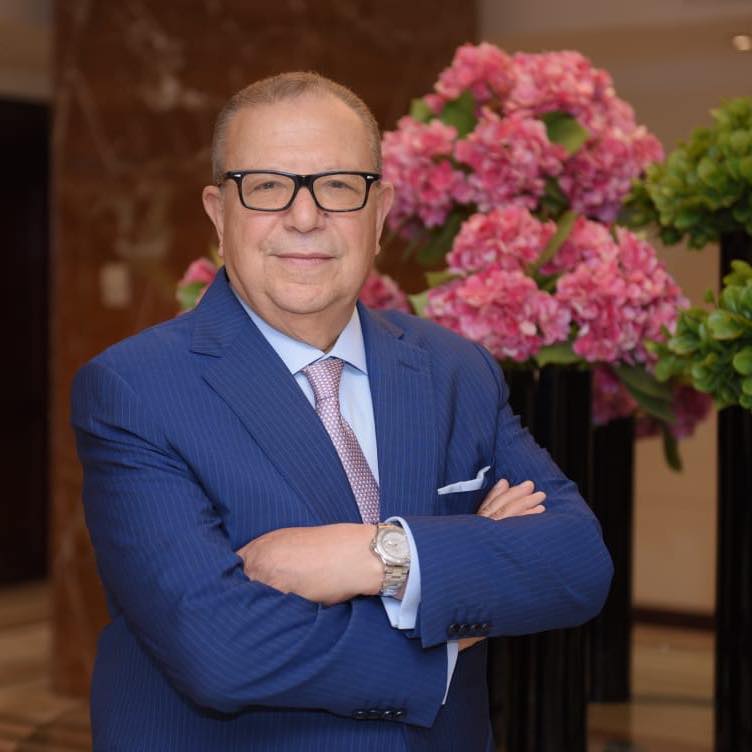
Mohamed Abdel Aal – Banking expert